Mickey Mouse is an cartoon character co-created in 1928 by Walt Disney and Ub Iwerks.









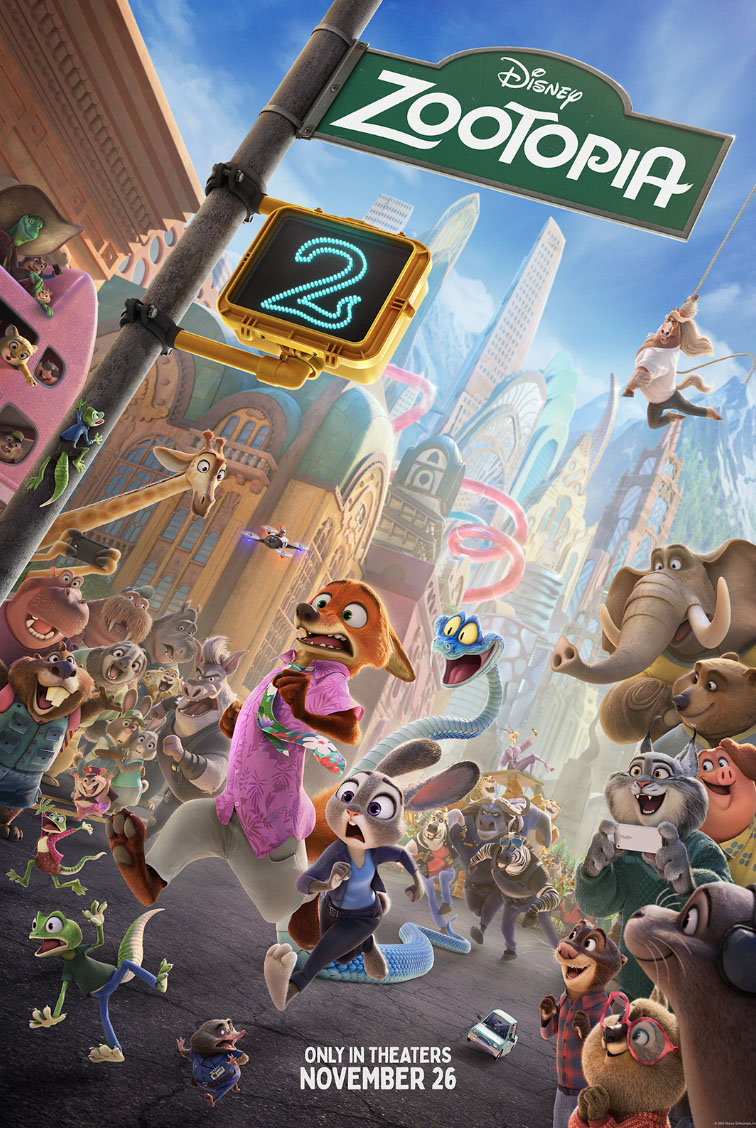
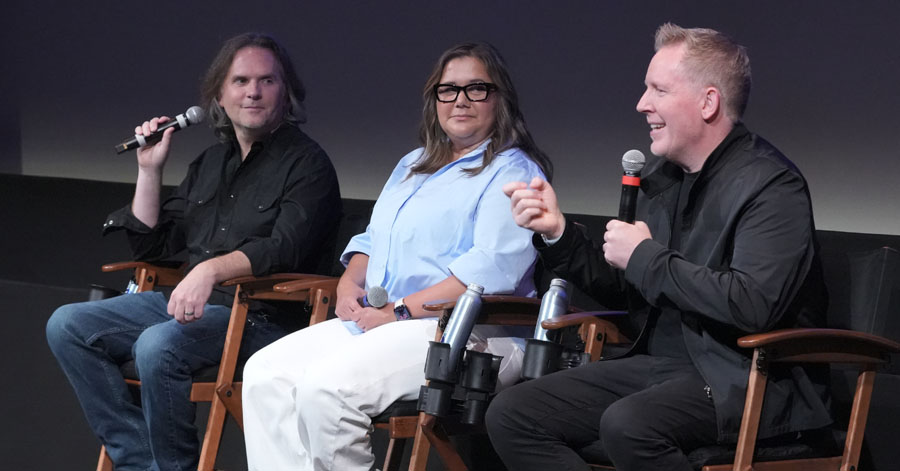
At Disney Animation’s recent long lead junket for Zootopia 2 (November 26), Animation Scoop had the chance to screen 30 minutes of footage, speak with directors Jared Bush and Byron Howard, head of Animation Chad Sellers and heads of Story Carrie Liao and David VanTuyle. We were also treated to a Q&A with composer Michael Giacchino conduced by Tom MacDougall, president, Walt Disney Music.
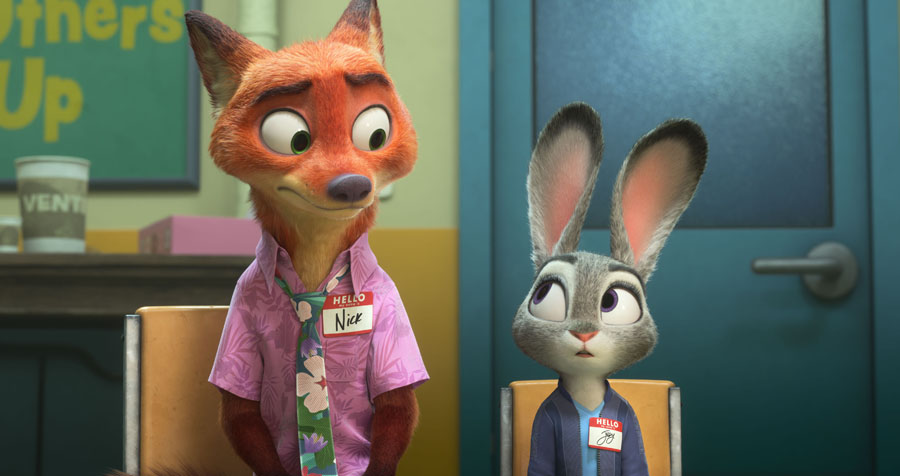
Here’s what we learned: Zootopia 2 continues right after the Oscar-winning original, with Judy the rabbit (Ginnifer Goodwin) and Nick the fox (Jason Bateman) trying to cope with being new partners at Zootopia Police Department. Their opposite personalities (energetically optimistic and cynically sharp-witted) even lands them in therapy after a frantic chase gone wrong involving Zootopia’s first reptile (pit viper Gary De’Snake, voiced by Oscar winner Ke Huy Quan). Turns out there is an elusive book that Gary is after, which will unravel the mystery of why reptiles have been excluded from the vast Zootopia metropolis.
The new voice cast also boasts Andy Samberg, David Strathairn, Macaulay Culkin, and Brenda Song as the Lynxleys, one of the most prominent families in Zootopia, along with Patrick Warburton as Mayor Winddancer, a stallion and former actor, and Maurice LaMarche as Mr. Big, a Godfather-esque crime boss.
The highlight of the footage were sequences that take place in a new addition to the Zootopia: Marsh Market, a vast market pier on the swampy outskirts that serves as a port for shopping, eating, and entertainment. A wild chase through a water tube showcased how the sequel has upped the production design and animation in scope and action.
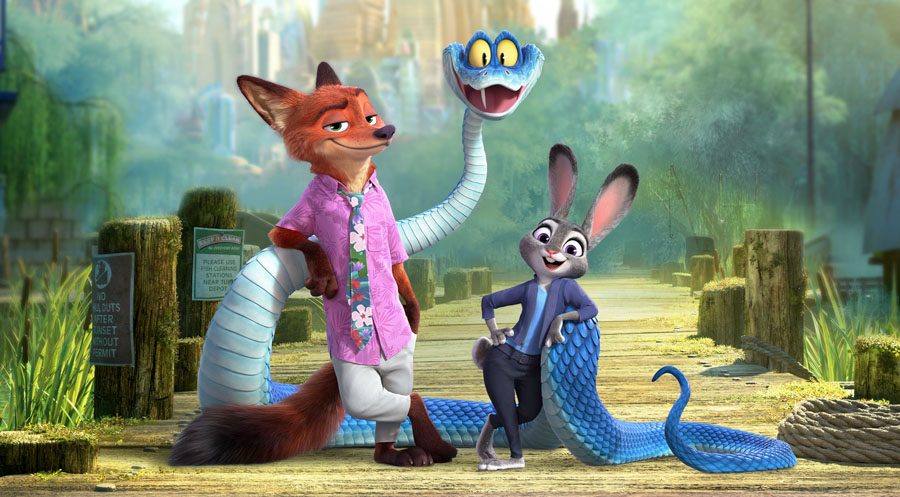
However, the buddy comedy further explores the clash between Judy and Nick as they learn to understand and accept their differences, which dovetails with the murder mystery they try to solve. “Clashing personalities, as an example with Jared and myself, it’s all day long,” said Howard, who’s collaborated with Bush for 15 years. “What I loved about what Jared did with the script is it’s really about relationships. People coming back to this world especially want to see what’s up with Nick and Judy. There’s a whole bunch of different characters that really need to figure out what they’re all about together. But that’s what this place is all about.”
It actually took the duo and producer Yvett Merino quite a long time to figure out how long after the first movie the sequel should begin. “We had a version where it was five years later,” added Bush, who also serves as chief creative officer of Disney Animation. “Then we went to a month later and then ultimately found out it should just be right after the first one ends because we wanted to explore what it’s like for them as partners. We liked the idea that they really were on that case for 48 hours in the first film.
“Now how do they progress as a team?,” Bush continued. “Judy’s been pushing forward her whole life. So what does this mean for her to have a partner. Nick was always on his own and now he has a partner as well. And so that was a fun dynamic to play with.”
But the introduction of Gary drives the narrative and theme. “Ke is the key to Gary, and, if you’ve ever met him, he’s just the most wonderful, giving, open, hopeful, great person,” added Howard. “As I see it from what Jared did in the script, Gary is really about hope and resilience and determination in a very different way than either Nick or Judy. That’s why it’s such a refreshing character to have.”
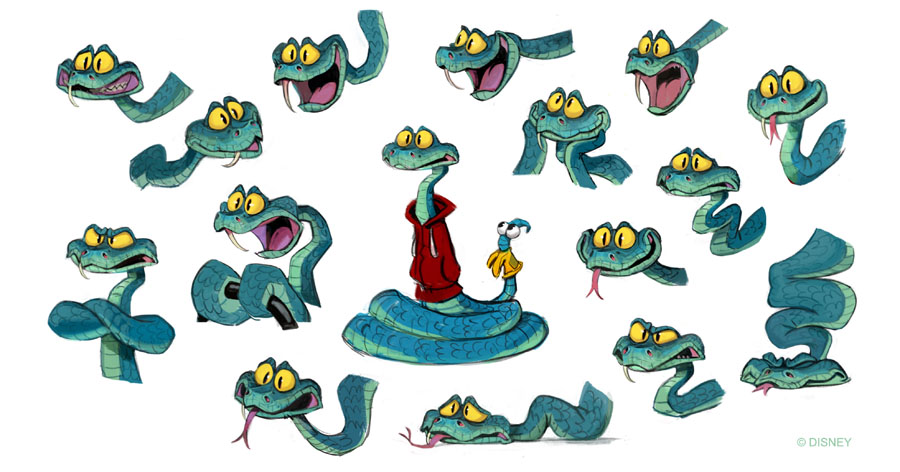
The introduction of Gary and other reptiles came in direct response to their necessary exclusion from the mammal-driven Zootopia. “I think a lot of people have this natural inclination to be icked out by reptiles,” Bush said. “And people have an innate fear of snakes, so from the get-go, we wanted to have a snake character that flipped all those tropes.”
Not surprisingly, Gary, a very beautiful blue pit viper, represents a landmark in Disney snakes in terms of pushing animated rigging and texturing. He joins the likes of Kaa (Sterling Holloway) from The Jungle Book, the viper Madam Mim (Martha Wentworth) from The Sword in the Stone, Sir Hiss (Terry-Thomas) from Robin Hood, Snake Jafar (Jonathan Freeman) from Aladdin, and Juju, Mama Odie’s (Jenifer Lewis) loyal snake from The Princess and the Frog.
“Gary is such a fun character with a distinct personality [with both forked and regular tongues], and working with animation and also with the story artists was helpful for pushing the limits of what he could do,” said Liao. “And a lot of it came from Ke as a voice actor and what shapes we could get him into, like turning him into a chair or an arrow.”
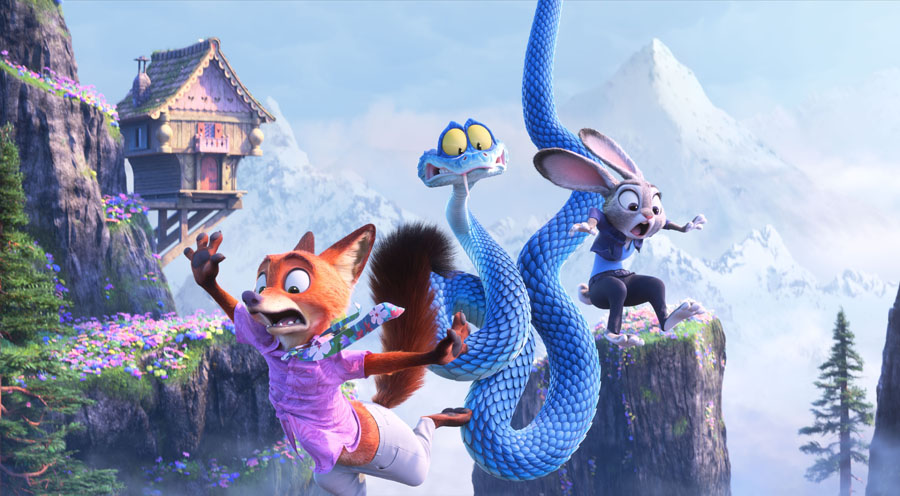
Essentially, Gary was a very long rope with a head, which allowed for very elaborate movement and gesturing. They craftily utilized his upper body to act like arms “We didn’t want to make it seem too unnatural,” added VanTuyle, “but I think the natural rope shape and how snakes move and their bodies are articulated lent itself to having fun.”
Yet Gary required three rigs to lengthen him, in which the bodies were attached and the head was hidden. “The whole Gary team, texturing all the way down to lighting, rigging, and animation had to collaborate to figure out how to make Gary work,” said Sellers. ‘Because he had to bend and curl and wrap around things. And in order to keep the preservation of the scales so it’s not stretching, took so much R&D.”
Facially, it came down to matching Ke’s voice and using that as inspiration for the various shapes. “And making sure we preserve the cheek volume and keep him on model so we’re not breaking the rig but we’re able to push him and maintain the appeal in the shapes,” Sellers added. “The amount of controls were extensive and you can do anything with that rig. It was very cartoony. You could stretch him and pull his eyes around. And the way his brows were designed to push that emotional face was also impressive. You could get any emotion out of him, but that all came from the story and what the directors needed Gary to be.”
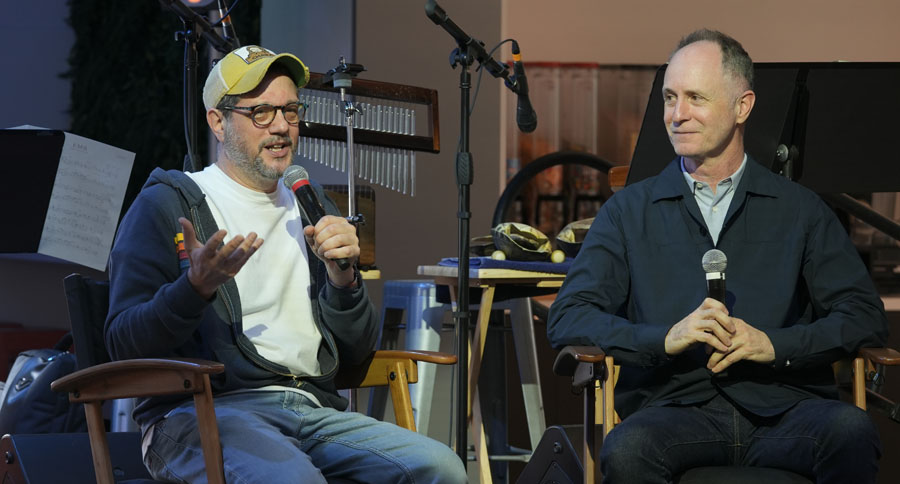
Meanwhile, for the returning Giacchino, this was probably the most “insane score” he’s every written. “I was completely encouraged by Byron and Jared to just go for it,” he said. “I think with Zootopia 2, maybe there’s like 10 seconds of silence. Every bit of music in this movie is doing something specific to either help the characters or the storytelling or set the scene. So many of their requests were, ‘Can you make it dumber?’ ‘Yes, I can’. It was constantly a test of how far we could push this thing, how cartoony can it get in the most incredible way?
Then it became a balancing act of keeping the emotional core of the story while going insane everywhere else. For that, the composer let loose on percussive energy and jazz-inspired melodies (including a reptile speakeasy number that was performed live).
“And when I say insane,” Giacchino added, “I mean, you’re going from down home banjo in one cue, and then making a left turn to ’70s cop show, and then a right turn into French bistro restaurant, and then a slight left turn into heavy metal with with scream. Oh, my gosh, we’re all over the map here.”