Mickey Mouse is an cartoon character co-created in 1928 by Walt Disney and Ub Iwerks.











In honor of Toy Story’s 30th anniversary and theatrical re-release on September 12, I spoke with five Pixar luminaries about their experiences making the first CG-animated feature and its continuing impact on the studio and the industry: Pete Docter (chief creative officer and three-time Oscar-winning director, who served as supervising animator), Bonnie Arnold (a producer, who later joined DreamWorks and oversaw the How to Train Your Dragon franchise), Bill Reeves (supervising technical director), Sharon Calahan (a technical director, before becoming director of photography on such films as the Oscar-winning Ratatouille), and Lee Unkrich (who served as editor before directing the Oscar-winning Toy Story 3 and Coco).
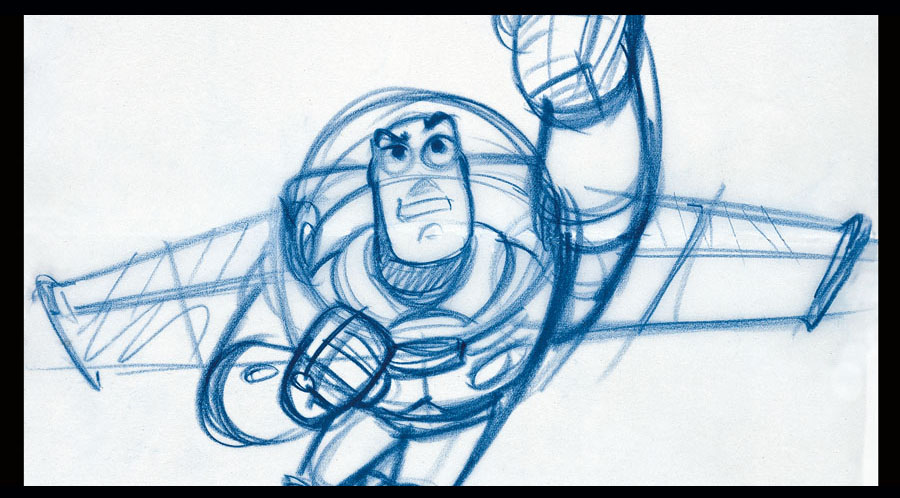
Docter on animating Woody and Buzz to ‘Infinity and Beyond’
“At the time,” Docter said, “we were just trying to do what Walt Disney did, and we read as much as we could about those days, as well as what Disney was doing in the ’80s, just trying to figure out: How does this work? I think our ignorance was strength.
“I remember we had a meeting once where we were trying to plan how many people we needed and we thought we could do it with about nine animators. I think we ended up with [33] animators and nowadays we have in the 50s or higher. I don’t think we knew what we were in for. Of course, it worked out. So, in some sense, when people ask, what was your favorite film to work on, I often go back to Toy Story.”
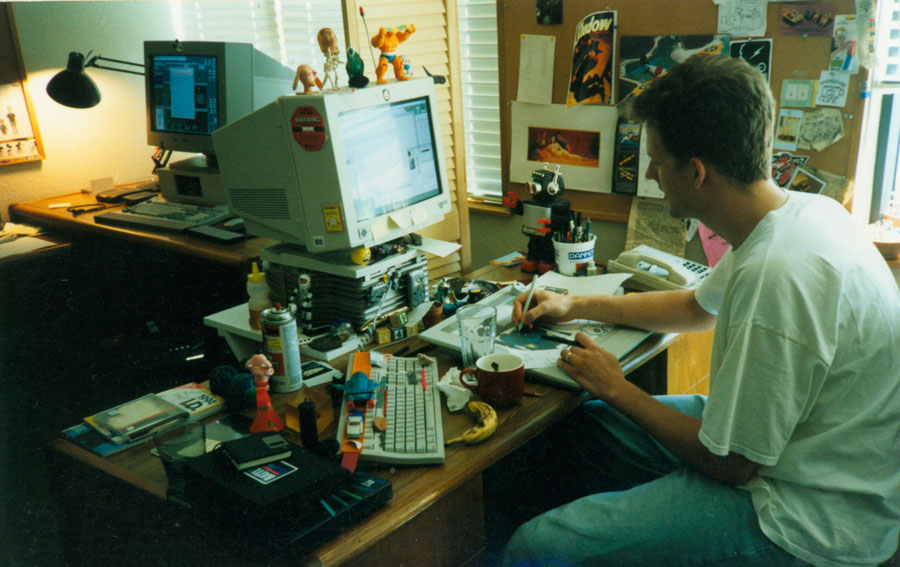
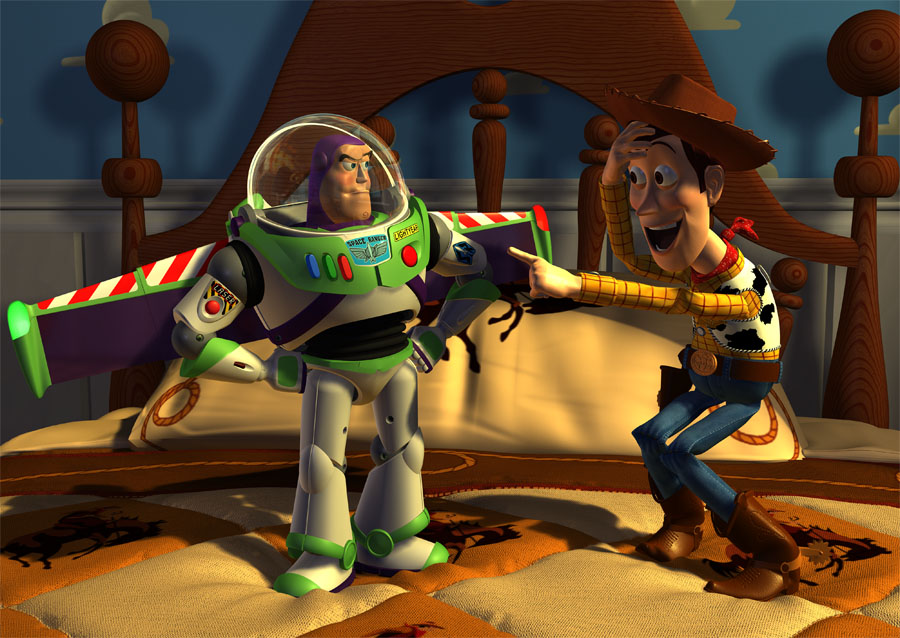
Toy Story obviously defined the Pixar aesthetic and ethos as a buddy film, centered around the rivalry between Woody (Tom Hanks) and Buzz Lightyear (Tim Allen). For Docter, it was fun animating both of them because of their contrasting personalities and materials. “I think a lot of times you struggle a little bit with who is this character until you put them up against some else,” he added. “And maybe that’s even true in life. It’s that we are really defined in our relationships with other people.
“And so Buzz showed up as Dudley Do-Right or Space Ghost kind of Buzz, where he was completely about the rules and the academy, very uptight, anal-retentive. And that evolved, obviously, when we got Tim Allen. He has a little more swagger, like a space cop.”
But the stroke of genius was having Buzz unaware that he’s a toy. “That also made him a pain in the ass to Woody because it pushed all his buttons and he couldn’t control things,” said Docter. “A lot of times, these are formed in opposition. We knew we wanted Woody to arc from selfish to selfless, and so we made him an absolute ass at the beginning and everyone hated the movie. And then we realized that should emerge. Like most of us, it’s not just present all the time. It’s only when you poke at it, threaten his position as the favorite toy.”
John Lasseter, who creatively oversaw Pixar and directed Toy Story, emphasized “Truth in Materials” as the defining philosophy of computer animation. “John’s belief — and I think he’s right — is that when something looks so photorealistically accurate it has to behave properly,” Docter recalled. “It looks wrong to bend metal because that’s not what we’re used to. So we really were figuring out where were the parameters of computer animation. And John felt strongly that let’s find two materials that are very opposite. I think if the the technology was better, we could have pushed Woody more to be floppy because bending like that was very hard. And Buzz was very rigid, solid plastic, only rotates, no bends. I did some of the early testing, trying to figure out where the parameters are.”
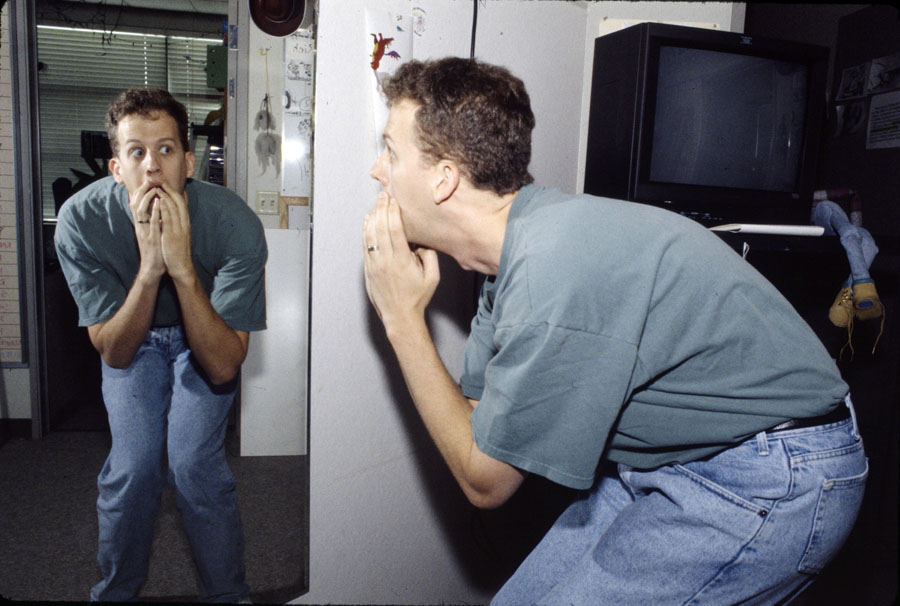
There were some wonderful discoveries along the way, including the fight between Woody and Buzz under the truck at the gas station. “I remember sitting in dailies where I think it was Mark Oftedal who put in these little eye darts [on Woody] that I would have never thought to do in hand-drawn because you can’t do that, it looks like a mistake or a pencil wobble,” added Docter. “But the accuracy of computers allowed him to do these and, suddenly, my hair stood on end because the character was alive in a way that I had never anticipated.”
It was during Toy Story that Andrew Stanton (the Oscar-winning director of Finding Nemo and WALL-E) emerged as a story guru. “The plan was originally that he and I would both go and become animation supervisors,” Docter said. “His strengths became obvious so he stayed figuring out the tough stuff as I went to animation. So we had planned that Sid puts a match in Woody’s holster, and he would remember and use it to light the rocket. But Andrew said everybody’s going to be ahead of us. And he boarded this whole scene where the match goes out and that was one of the great joys of watching the movie with a crowd at the time because they didn’t know this was going to happen”
In Toy Story 5 (June 19, 2026), the first of the franchise sequels directed by Stanton, high tech serves as the new shiny object that displaces Bonnie’s playtime with the beloved gang. “It’s virtual, but it’s also a character,” added Docter. “So it has a screen with a frog design to it. Lillipad is the name. It maneuvers Woody and Buzz by a lot. It’s way faster, sharper, funnier, all these things. So it’s a real challenge for them. Who’d have thought 30 years later we’d still be working on this?”
Arnold on producing animation with live-action know how
Arnold, who was a producer on Toy Story with Pixar co-founder Ralph Guggenheim, first cut her teeth in live action (serving as associate producer on Dances with Wolves). The Atlanta native was recruited by Peter Schneider (Disney’s president of feature animation) and Lasseter, and it took her a while to wrap her head around the ground-breaking animation they were embarking on. Before moving up to Northern California to join Pixar, she hung out with the tech guys at the ’92 SIGGRAPH in Chicago.
“It did sort of change the face of animation, and we’ve come a long way, in a good way,” said Arnold, who followed-up by producing Tarzan at Disney before joining Jeffrey Katzenberg at DreamWorks to produce Over the Hedge and the Dragon franchise.
“Nothing was easy about Toy Story, but that was supposed to be a simpler thing to tackle in terms of animating those geometric objects versus something that is more organic,” she continued. “I think the first sequence in the animation was the army men because we felt like as much as the technology was changing so rapidly, that we needed to pick a look and stick with it, we just couldn’t keep changing it.”
One of Arnold’s first tasks was to find an art director Although Disney had recommended a husband and wife team who had done some impressive design work on the movie, she was adamant that they hire the late Ralph Eggleston, who became a fixture at Pixar. He worked on a dozen features and got the Oscar for the animated short, For the Birds. “I had never done an animated feature but I’d done live-action features and I knew a lot about the process. I called Disney and told them to send me someone who had a clue about art direction because that’s a crucial position. They sent us Ralph and we loved Ralph from day one.”
A favorite moment for Arnold was figuring out how the fight between Woody and Buzz at the gas station was going to play at. “Buzz is still [displaying] his delusional self and Woody is trying to set him straight that he’s just a toy, which is a very fun and a pivotal moment,” Arnold said. “I distinctly remember having a conversation about the scene, looking at dailies or the story reel and Andrew Stanton did a lot of the scratch voice for Woody. And we were practicing different things that we could take to Tom Hanks to let him play with us.”
But they all pulled together after the disastrous “Black Friday” screening of the first production reel with Woody coming off as totally unlikable. This was the unintended consequence of Katzenberg (then chairman of Walt Disney Studios) mandating that Woody be edgy. Now Pixar was able to make the movie it wanted with a more appealing, if conflicted, protagonist.
“It was an adjustment that needed to happen to make movie what it was,” added Arnold. And if it wasn’t for Disney supporting us doing that, it could have been much rougher. But we were able to make that adjustment. Disney knew a lot, but getting those notes and making it work happened because we had such a great team. I loved being a part of that process and being able to chime in at certain times. It was endlessly educational for me. I was the one with the feature experience but we all learned from each other.”
Reeves on creating the workflow for Pixar features
For tech wiz Reeves, it was important to build an infrastructure to handle the demands of a feature film. They needed a tracking system for 1,500 shots and 120,000 frames. They built a new animation system and used text-based modeling and brought in the fledgling PowerAnimator from Alias. They also greatly improved the in-house RenderMan, which gained prominence with Toy Story.
It was all about animating plastic toys, which were the most practical back then. “Everybody had a good set of memories from the toys that we all had as kids, and we all encouraged those toys to be put into the movie if it made sense,” Reeves said. “We had to be as inclusive and inventive as possible, but we had to be realistic. They had to be popular toys that people were familiar with. But the aliens we invented.
“We didn’t go too far out of our wheelhouse in terms of some of the characters or some of the ideas,” he continued. “I remember part way through the movie, Buzz and Woody are captured by Sid, and there was this note from the story department: Can we make it rain? And so we ended up putting raindrops on the window streaks and sort of a wet-looking painting.”
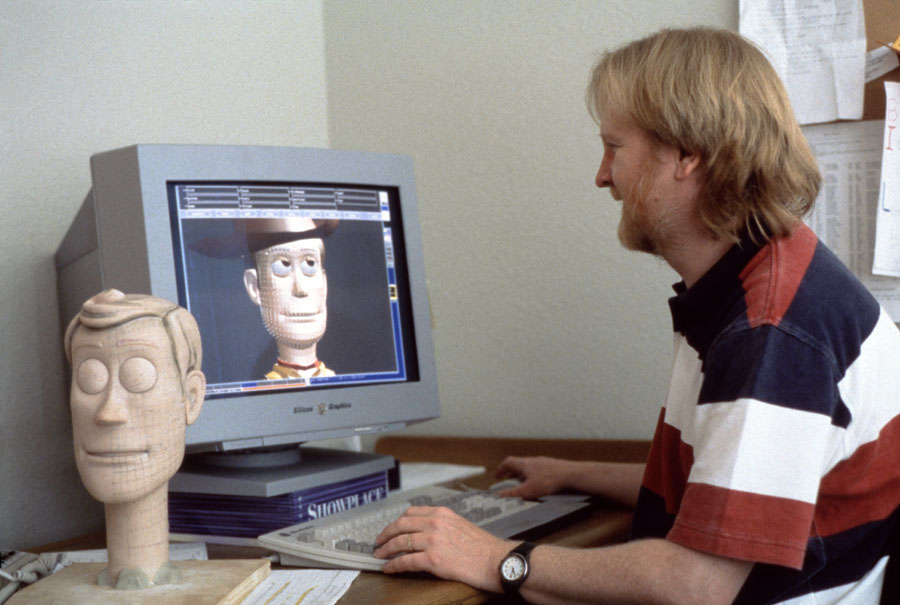
In addition to leading the tech team, Reeves modeled, rigged, and shaped Woody. When his face contorted during the rocket scene at the end, Reeves was surprised that the squash-and-stretch in CG didn’t break the rig. It was a remarkable result that surprised everyone at Pixar.
“I still claim that to this day as one of my favorite moments,” Reeves added. “You should not have been able to push it that far. But the animator decided, ‘What the hell?’ Through his artistry and exploration, he made it work. He made magic.”
With Toy Story 5, they’ve been able to increase efficiency while reducing the cost and crew size. “It makes a difference because the cost of doing business and the cost of labor is so high,” Reeves said. “But at the same time, 5 is going to be a really good movie. Andrew is very creative and has come up with some great ideas. And he’s very thoughtful about the human condition.”
This article is divided into two parts: Docter, Arnold, and Reeves in part one and Calahan and Unkrich in part two, which will be posted later this week.