Mickey Mouse is an cartoon character co-created in 1928 by Walt Disney and Ub Iwerks.










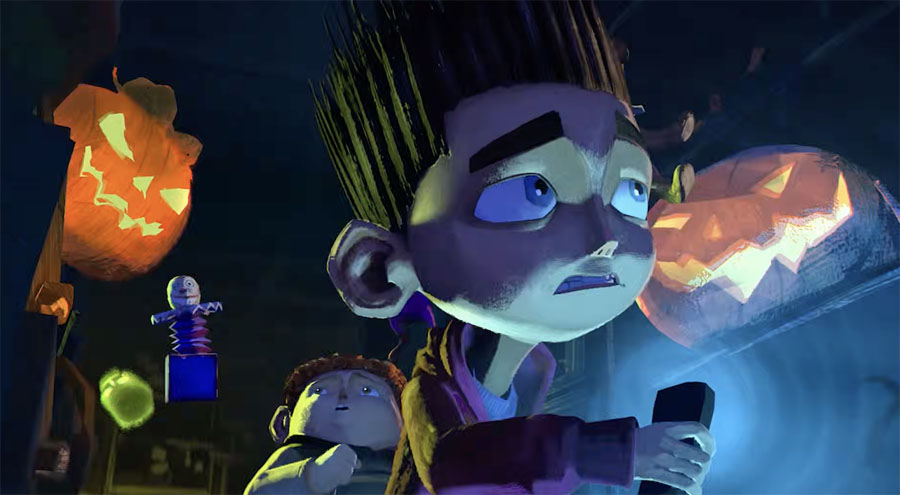
ParaNorman: The Thrifting, a seven-minute short starring characters from the Oscar nominated 2012 stop-motion horror comedy — and some new ones — is LAIKA’s first venture into CG animation. Norman is looking for a Halloween costume… and discovers much more. The Thrifting has two nominations at this weekend’s 53rd Annual Annie Awards, in the TV/Media Storyboarding and Production Design categories. Director Thibault Leclercq (who’s also Character Designer on LAIKA’s upcoming feature Wildwood) joins me for this Animation Scoop Q&A. (This Interview was edited for length and clarity.)
Jackson Murphy: Congratulations on the Annie Awards nominations. How does it feel to be an Annie nominee?
Thibault Leclercq: We’re so, so happy. The whole team worked really hard on the project, so I’m really happy that we’ve got those nominations. Everybody’s really happy that we get some recognition.
JM: I love at the beginning of your short, the LAIKA intro with the characters is fabulous. You’ve been with the company as a character designer since 2018. Yeah. What do you love so much about being at LAIKA?
TL: The part I love the most is like the fact that the studio never repeats itself. Even though I’ve been there for almost eight years now, not one year looked like the previous one. Every project has always been a new challenge. I’ve been pushed into a new universe, new areas. Every time that we explore a new project, we explore a new story and we explore new ways to handle it. And I think that’s been the part that has really kept me excited. I know I’m always gonna learn and I’m always gonna be pushing to explore the unknown.
JM: How did you get involved in this? Did you hear that there were rumblings that there would be a new chapter in the “ParaNorman” saga? How did you become director of this?
TL: It’s the 13th anniversary of the original feature. And obviously “ParaNorman” at its core is a love letter to horror and horror cinema. And 13 is probably the number associated with horror. So we knew we wanted to celebrate it and we wanted to do something special about it. Doing a short film felt like the best way to celebrate this anniversary, and it [was] released around Halloween season. So we knew we were gonna do a Halloween theme. So Chris [Butler] and I gathered some artists and we started brainstorming altogether. Then we landed on the story that felt really appealing to us and the right kind of story for the celebration, and we pitched it to the studio and there we go.
JM: Fantastic. How did it feel having it be in theaters through Fathom Entertainment [last] October?
TL: It was great. It was really meant to be seen on the big screen. You can see it on the picture. We went really intricate and really cinematic with the approach to it all. And seeing it on the big screen was really great. Rediscovering those characters on the same kind of format and the same experience that we had 13 years ago felt really good.
JM: So collaborating with Chris Butler on this fun, spooky story. Take me through that process a little bit.
TL: The characters and the universe that Chris created 13 years ago is already on its own, a universal character I really connected to as an audience. It was one of the movies that really had a huge impact on me and the reason of why I went to work with LAIKA in my career. And I think the fact that he really wanted to not repeat on what he already created, but really expand on what he created was super exciting for me because I was able to be a part of a world that I really fell in love with. Being able to join this world and expand off what was possible to do with those characters and this universe was really fun. So I know that when we were brainstorming with Chris, he didn’t want zombies or witches or anything that he’s already explored with it. Obviously we wanted to make sure we stay true to “ParaNorman” DNA, so we’re gonna have horror references. We are gonna have the same type of comedy and blend of action and horror and comedy altogether, which is the really unique tone and aspect of the original one. We knew all of those ingredients are gonna be in there, but we wanted to have a new set, even new characters, and new horror elements.
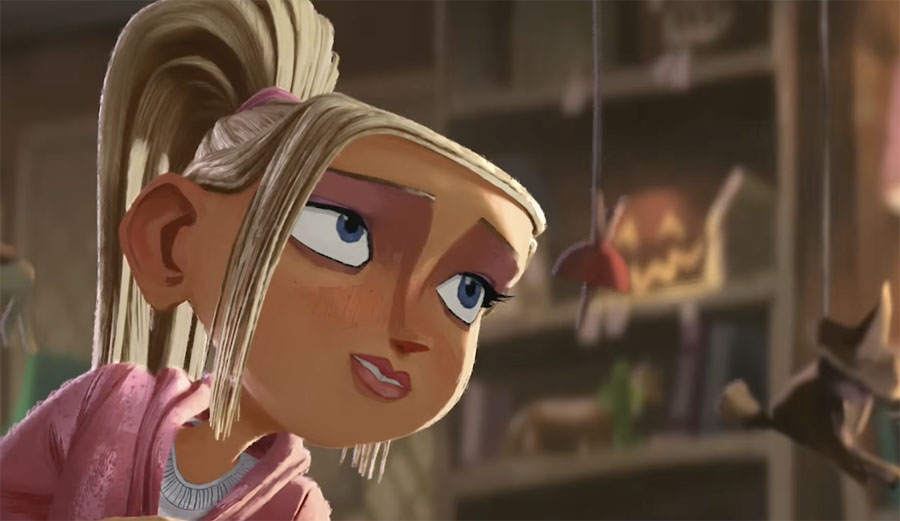
JM: I enjoyed this experience. Yes, you expanded it out, but also it’s a nice accompaniment to the movie — especially how the final section plays out. We’re not gonna spoil things, certainly, but I really like that it is with the first one. And I’m sure that was intentional for you guys as well.
TL: Oh, a hundred percent. Yeah, exactly. We wanted to make sure we reconnect with those characters just a little bit after the movie. It doesn’t feel like they are too disconnected.
JM: Obviously this is CG, not stop-motion. What was most challenging for you about translating these stop-motion characters into CG and making this CG world?
TL: The stop-motion medium was such a strong signature of the original movie. The biggest challenge is exploring new mediums and new techniques in a way that doesn’t feel too foreign to the original character and universe. That was also the most exciting part because in a way it was so new to see how they would translate. So we made sure to kind of capture the sense of the original film with the CG and with the 2D. And I remember like going back to the origins of the style and talking a lot with Chris about how he came to that look in stop-motion. Even though it’s not stop-motion, we ended up still capturing a lot of what makes that look very unique. Stop-motion inherently has the human touch — very charming imperfection that we love, and I wanted to make sure we were gonna keep this. And that’s why I went with this brushy painted quality where everything was painted by hand. All the backgrounds, all of this is literally painted by illustrators because I wanted to have that imperfection, this kind of made by hand feel. And we have the kind of immersive stop-motion feel, which is normal because you have real camera filming on real objects and real sets. So you’ve got this very dimensional kind of feel to the environment and the characters. So that’s where the CG became a natural addition. We have that hybridization of 2D organic handmade feel with the brush strokes and the whole color treatment. And we’ve got the CG elements of the whole thing — bringing back this immersive, dimensional feel to the whole movie that you have also naturally with the stop-motion.
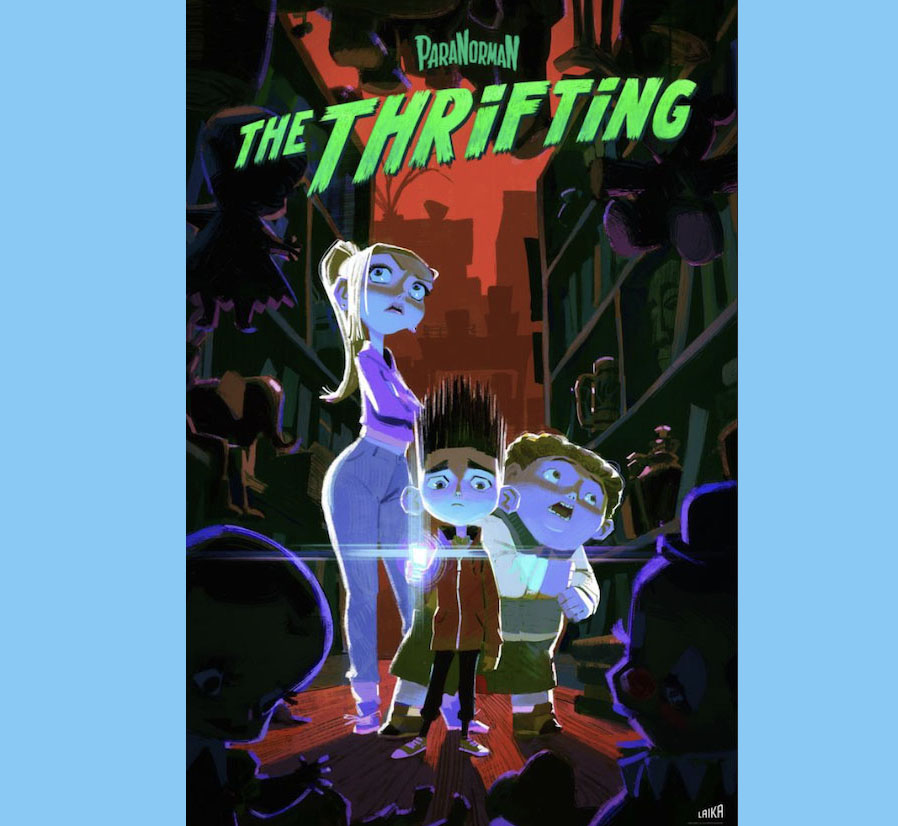
JM: It looks so good. You are Annie nominated for the production design along with your team, and I’m sure all of what you were just talking about went into the store that the gang goes into — and everything on the shelves. What are you most proud of when it comes to what you and your team accomplished with the production design that you are nominated for?
TL: We’re really proud of the homage we’ve been able to have in the production design to the genesis of ParaNorman’s universe, which is like classic horror film. I’m sure you’ve noticed the whole production design is basically an inspiration from all the old movie posters — hand-painted, vintage horror movie posters. Those acrylic, very strong, very bold color and very stylized in a way. And that goes along with all the props and all the shelves elements — the toys. I’m sure you’ve seen there is a lot of Easter eggs from our previous films and also from a lot of classic horror.
JM: And were they part of the storyboarding, which is also nominated for an Annie Award?
TL: A lot came in the storyboard, We worked with the story artists alongside building the script and building the story. So a lot of the jokes and the Easter eggs came from just brainstorming with the story artists and having them find ways to visually incorporate those references. I’m really happy how we’ve been able to keep a lot of our early kind of freeform exploration in the storyboard at the end when we tied everything together. And I think that the story artists did an amazing job to reconnect it and make it a whole cohesive look.
JM: Absolutely. Anna Kendrick is back as the voice of Courtney. How was it working with her on this short?
TL: It was great. She’s such a terrific actor. It was so impressive for me to see how quickly she reconnected with the role and quickly with a character that she created over 13 years ago now. And I remember just the first run through everything was like, “There it was.” We just did the first run through and she reconnected so quickly to Courtney. Naturally, she brings so much life, so much energy, and so much comedy to the character that we’ve been able to use and reference in the animation.
JM: The next LAIKA movie is “Wildwood”, which is coming out in October, also through Fathom. What can you say about “Wildwood”?
TL: It’s gonna be an amazing, epic movie. People are gonna be really, really impressed by how far we went with this story. I’ve been working on “Wildwood” for several years now, I’ve been overseeing all the character design and character development processes from early sketch to the final look of the character. And I’m so happy and proud of what we’ve accomplished with this cast of characters and this universe. I think people will be really, really glad to see it on screen.