Mickey Mouse is an cartoon character co-created in 1928 by Walt Disney and Ub Iwerks.














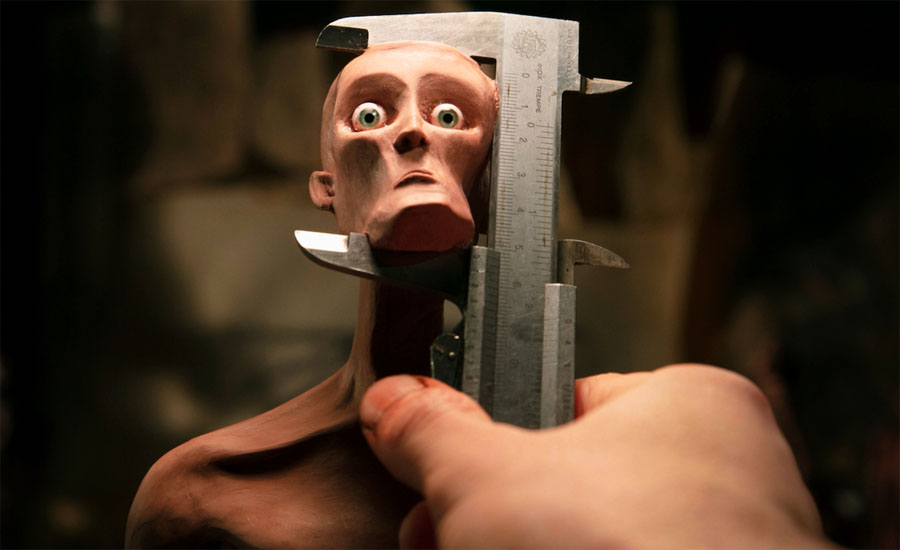
A sculptor is in his workshop. His clay creations are on the table. The drama unfolds. Playing God, from director Matteo Burani and animated by producer Arianna Gheller, screened at the 2025 Tribeca Festival and is now on the 2026 Academy Awards Best Animated Short Film shortlist. (This Animation Scoop Interview was conducted as an Email Q&A, with answers submitted by Burani and Gheller, and was edited for length and clarity.)
Q: A fascinating concept. What interested you the most in exploring clay creations come to life?
A: I have always been fascinated by the idea that the material itself could tell a story. Clay, unlike other materials, conveys a palpable sense of life. Every imperfection, every deformation becomes an emotional detail. Modeling and animating the puppets frame by frame meant almost sensing the breath of the material. We wanted the audience to feel the humanity and fragility of our characters, making their pain, flesh, hopes, and search for belonging tangible. It was a way to connect the “puppet world” with the human one, creating a living, grotesque, yet deeply empathetic universe. That was the goal.
Q: How meta and surreal did the experience get of making an animated short about an animator and his work?
A: It was an extremely meta and surreal experience because, in the film the animator becomes an integral part of the story itself. I lent my body for the pixelation, while Arianna animated everything else, making me both a performer and an “animated object.” This fusion of reality and animation turned every scene into a tiny, painfully intense cinematic experiment, where the boundaries between creator and created dissolve. Being on set, interacting with the puppets, and feeling every micro-movement in real time transformed the work into a kind of live performance and it was extraordinary. For me, experimenting with this type of pixilation was a Medieval torture, but unquestionably, the true master behind it all was Arianna Gheller with her incredible talent and dedication.
Q: “Playing God” is about decision-making. What was the most important decision you had to make when it came to this film?
A: The most important decision was definitely dedicating years of my life and the team’s, to this project with an unwavering desire to create something unique. At first, we had no knowledge of business or production, nor did we know how to find funding for such an ambitious short, filmed in a small basement. It seemed insane, and to many, we were crazy. Over time, the project grew with us: it shaped us as much as we shaped it. Animating a 50-second long take took over 90 days, and shooting lasted almost two years. Amid uncertainties and total focus, we avoided looking into the abyss of possible failure. Among all the choices, however, the most important was the collaboration with Pier Danio Forni for the music: a friend since high school and an extraordinary musician, he captured the soul of the film and transformed the project’s emotions into something sublime.
Q: What was most challenging about having the tone be dramatic and horror-like?
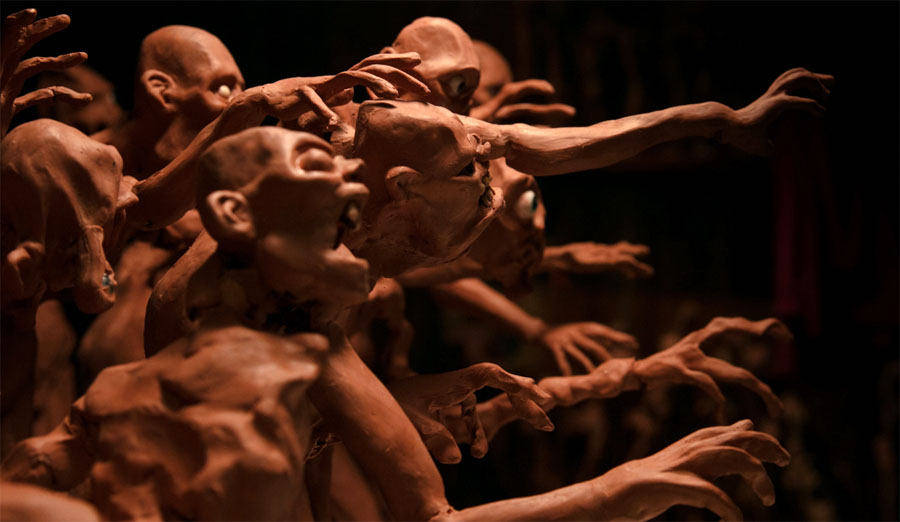
A: The real challenge was balancing darkness and tension with the emotional component of the characters. We wanted the audience to sense the fragility, loneliness, and suffering of our characters, without making the film purely visual horror. Every scene, from the clay deformations to the dark lighting and puppet movements, had to evoke unease while also conveying empathy. It was crucial that the drama didn’t crush the poetic side, creating a fusion of tension and humanity that made the film’s world credible and engaging.
Q: What was fun about shooting the intense close-ups of the body parts?
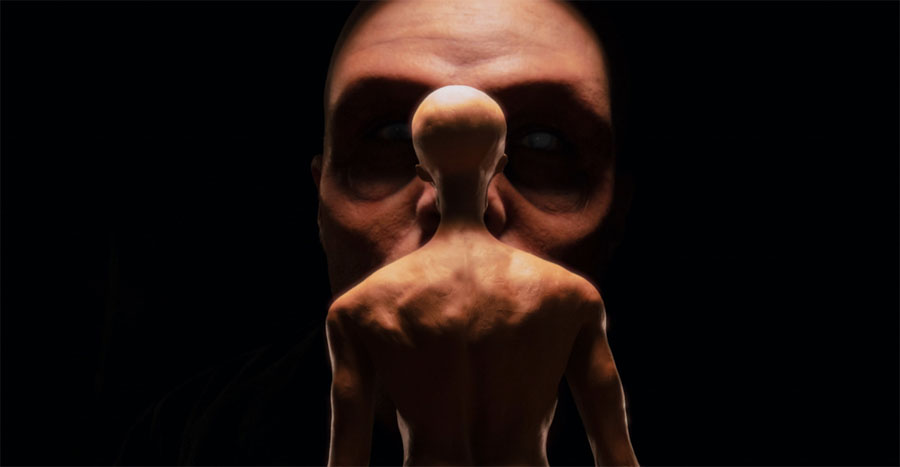
A: Filming close-ups of arms, hands, and puppet details was incredibly stimulating. In the case of pixilation, my hands and body became a living part of the scene, while Arianna animated each frame. This direct collaboration turned every movement into a small game of trust, almost a dance between performance and animation. The challenge of making tiny details realistic, micro-expressions and gestures, made every take intense but also very fun, because every frame was a small visual miracle.
Q: What makes animation so powerful?
A: Stop-motion animation has the unique power to make the impossible possible. What you see on screen truly exists: someone built it, shaped it, brought it to life, yet it remains motionless in our reality. When an animator moves it skillfully, frame by frame, the magic comes alive: hour by hour, day by day, that inanimate object becomes alive. Transferring one’s feelings, one’s “soul,” into a puppet to move the audience is perhaps the form of magic closest to reality in today’s entertainment world. The idea, perseverance, and teamwork of true artists make this possible. It requires soul to transfer it to the puppets: you give them your soul, and they return it to everyone through the screen. magic.
Q:What would an Academy Award nomination for “Playing God” mean to you?A:
It would be an incredible confirmation of the journey undertaken by a small independent studio, a recognition of the work of a six-person team who dedicated seven years to creating a 9-minute short. It wouldn’t just be a personal award but a testament that even independent productions, with limited resources but burning passion, can tell universal, profound stories and reach this stage in such an important context. For us it would represent a historic milestone and recognition of the courage to take risks, to value one’s own voice and artistic vision, and to persevere even when faced with the tallest mountain in the solar system. In short, it would be the greatest step of our career and the realization of a dream. Fingers crossed.