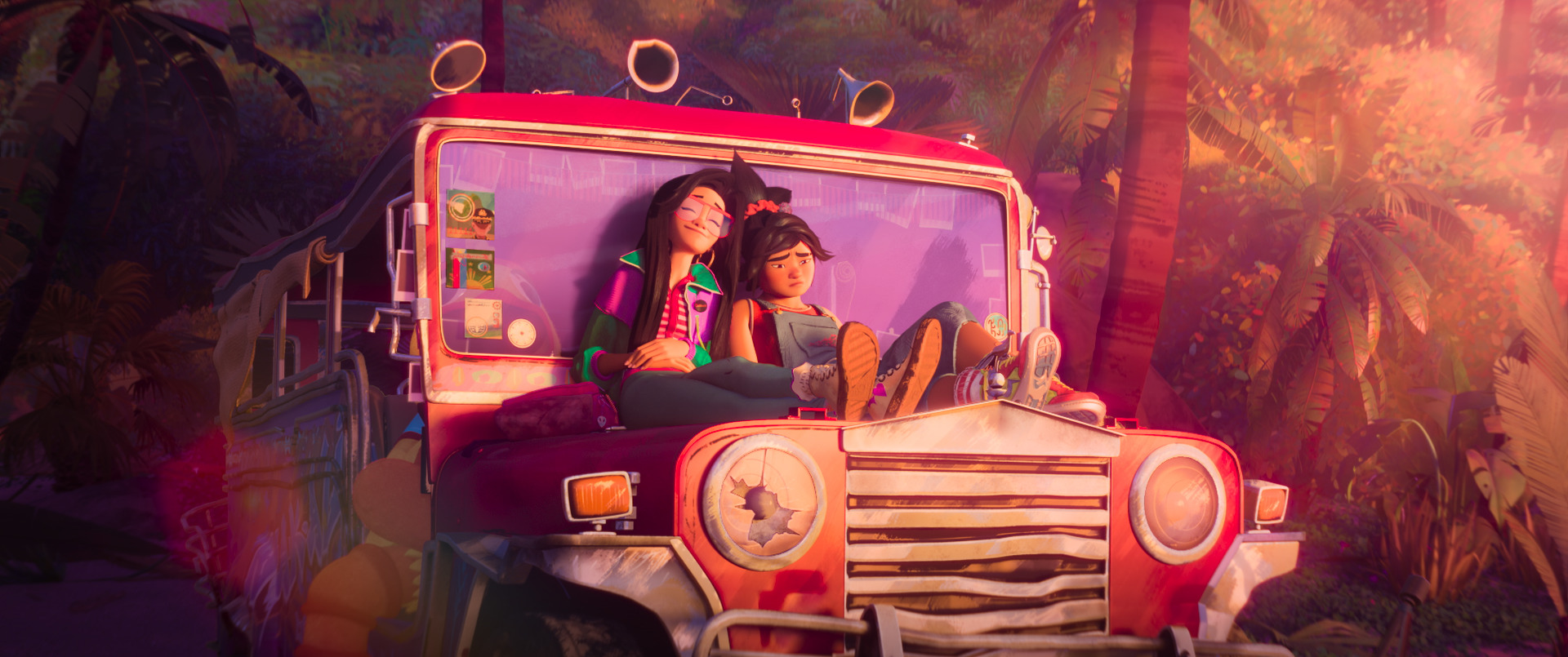
Mickey Mouse is an cartoon character co-created in 1928 by Walt Disney and Ub Iwerks.











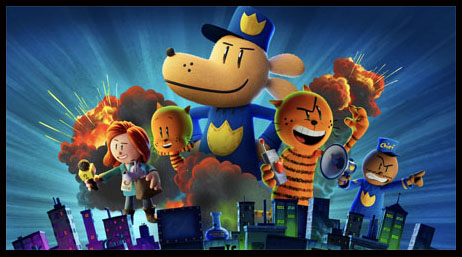
Peter Hastings is a six-time Emmy-winner who’s worked on the DreamWorks Animation Television Epic Tales of Captain Underpants and various Kung Fu Panda spin-offs. Now he’s the director of the studio’s new theatrical Dog Man movie, in theaters this Friday January 31st. Adapted from author Dav Pilkey’s popular books, this is an action and comedy packed adventure about a part-man, part-dog cop who faces-off against a crime-loving cat, with the TV news cameras constantly rolling. (This Animation Scoop Q&A with Hastings was edited for length and clarity.)
Jackson Murphy: Congrats on this. How did it feel capturing the zaniness and that energy from the books and translating that to the screen?
Peter Hastings: It feels great. It also feels great that you think I captured it. I love the books. They’re so much fun to read. And there was so much in them that in the telling of the books that was really important to keep in the movie to do that stuff. So it was actually just really fun. Dav Pilkey is a guy who loves to promote creativity and inspire people. I was definitely inspired working on this.
JM: There are a lot of successful random comedy bits that you have within the story of how Dog Man is created and Petey [the cat] and all of that. There’s so many bits like “All Fur One”, which I think is hilarious, and “Life’s Not Fair”. I wonder how you decided on something random that works vs. something random that doesn’t work. What went into that evaluation?
PH: Just trying it. This is one of the great things about animation is you kind of get to do drafts of your movie. You can put it up and watch it and then go like, “And let’s change that part”, which would be so much more complicated in live-action to do a reshoot. The two bits you mentioned honestly just fell out of my head in the most random way while I was writing. I’m sort of doing a pass and I’m not editing myself and those kinds of things come out. And a lot of times the ones that I didn’t really think about too much end up being the most successful. So we storyboard them, you put them up in the editing, you watch it and then you just go like, “Hmm, yeah that didn’t work.” There’s definitely stuff that I dropped, but there’s other things. It’s kind of like if I show… “Just try it, just try it, just try it”, and then we watch it and everybody in the room cracks up, [then it’s in].
JM: There’s so much complexity to the humor. There’s a lot aimed at kids, there’s a lot aimed at adults, and the visual factor of it all as well. Was the script for you the most challenging aspect?
PH: The script is always the most challenging part for me because even if you’re referencing a book you still have to make up something out of nothing just with words. And then also Dav has so many great moments and beats, plus the stuff I’m coming up with, so it’s a big puzzle to kind of make all the pieces work. Once it gets rolling, when I’m going in, watching a storyboard, I’m going, “Let’s do this and that”, and then we’re watching an edit and I go, “Change this thing or that”, I’m super comfortable and it’s easy and fun. It’s still challenging, but the writing is the toughest part for sure.
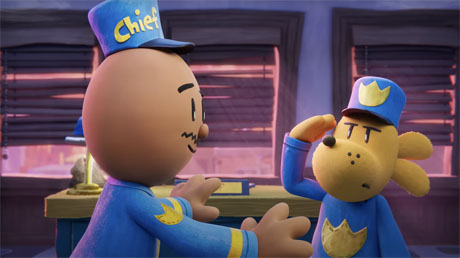
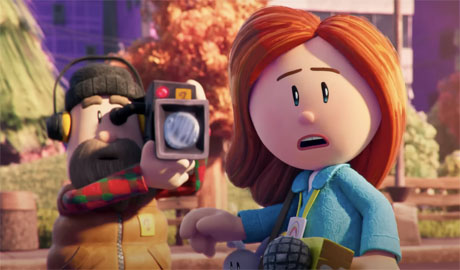
JM: And then, on top of all of that, what’s so fun about the movie is there’s a newscaster element, Sarah, voiced by Isla Fisher, and her camera guy, Seamus. And there are a lot of graphics that pop up. There’s a lot of text on buildings. There’s maybe more of that than in any other animated film I’ve seen in a long time. Was that a lot for you to keep track of — all the words and all the pop-ins and pop-outs.
PH: Yeah. Well, I had a lot of help with that. I told Nate Wragg, our production designer, and Chris Zibach, our art director, that we wanted to do that stuff. And they would just go for it. I’ve probably seen [the film] a hundred times. I am still seeing things that I haven’t seen before.
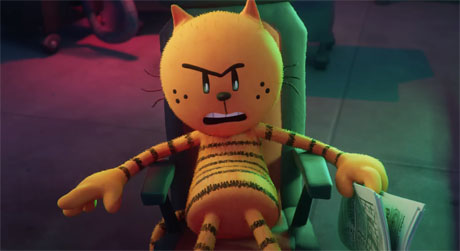
JM: Pete Davidson is really good in the role of Petey the cat. He captures a bunch of different emotions that Petey has throughout with some grit, with some honesty. How was it working with Pete Davidson? I think this voice acting aspect of his career is going to flourish based off of this.
PH: Pete was great to work with. A lot of times actors will come in and they’re sort of like, “What did I sign up for?” And then we get into it and they start to relax and they start to have fun. And then when they see themselves actually animated, they tend to get pretty excited about that. But Pete has a great mix of kind of a crazy energy and then he’s a very sweet guy. He’s a very sweet person and so he’s able to go big and be villainy and have fun and yell and scream.There’s a lot of screaming in the movie. And then really get to the sweet spot that that character needed to get to.
JM: And the Lil’ Petey character — there’s a lot of emotion and humor and heart. I think parents will love Lil’ Petey. And I wonder, as you were making this, did you keep coming back to Lil’ Petey to… keep things grounded and the story on the track?
PH: Lil’ Petey, I refer to as sort of the truth mirror. He’s sort of young and innocent enough. He’s not intended to be precocious and a know it all little kid. When he says in the movie, “I want to be miserable too” so innocently, he doesn’t know if that’s a good thing or a bad thing. That’s why he ends up making friends with Dog Man and creating a relationship with Petey which becomes kind of a central conflict. It was just important to keep him as the innocent truth mirror to all the characters. And he’s played by Lucas Hopkins, who’s the son of our editor [Brian Hopkins]. So he did the temp voice for us and then we go, “I don’t think we’re going to beat this. Let’s use it.” So Lucas is in the movie.
JM: Good call! Good decision, because that’s a terrific voice performance. There are a lot of touching moments in “Dog Man” about missing your dog, missing your owner, missing your house — the place you used to live. Those emotions really come through. And I’m sure amongst the DreamWorks crew, tons of members have dogs. How did it feel for all of you working on this and working on those particular scenes that I think are going to hit home with a lot of people?
PH: The emotional part was really important to me because as audience members, that’s what we really respond to. If you see something that’s just crazy action and crazy story after 20 minutes, it’s like, “I’m a little tired”. So it is really an emotional story that pulls the train. So I was really interested in making sure that was present. And then at the beginning too, I need to give Dog Man a little hill to climb. After this transformation, he loses his family and kind of wants one. The big emotional story with Petey and Lil’ Petey is really key for me in making the movie. I really wanted to pull that whole element in. And it’s surprising when you read the book. It’s so zany and silly, and then [Dav] goes into these very earnest, legitimate, emotional places. I love them.
JM: And you do the Dog Man voice! Was it fun?
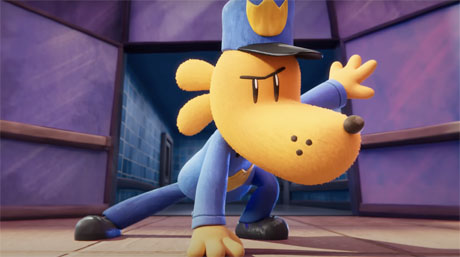
PH: Yeah. It was kind of like Lucas playing Lil’ Petey. I just did the temp version of it. And then we thought “Maybe it’d be funny if we get some megastar to do this.” Of course, “By the way… you have no lines.” So I ended up getting it sort of by default. And it’s not the most amazing dog sound. There are people who do better things. But then I thought, “He’s half man, half dog.” I tried some legitimate sound effects of dogs, and it was kind of a little too real in a way. And it took some of the humanity out of him.
JM: Going from episodic television to a feature film within the DreamWorks universe — What surprised you about that step to feature film directorial status?
PH: Well I don’t know if it’s a surprise, but what I love is that you get to fix things. And you get to spend so much more time on these moments and really finesse them in a way that in TV you’re like, “I just need to get to the next one.” In TV, in three years I could make 43 half hours of television. And in three years I’m making 80 minutes in a movie. I get to fix a lot more things [and] dive deeper. I always describe it like this, “If you ever had a conversation with someone and when you walked away, you said, ‘Oh, I know what I should have said.’ Here, you get to go back and say it.” You go, “Oh, I know what the answer to that is.” It takes a long time. It’s a slow job. (laughs)
JM: (laughs) But you get to have the time to be able to go back and look at everything again. So that’s gotta be rewarding.
PH: Really, really enjoyed it. I’ve enjoyed it a lot.
JM: What do you think are the possibilities of Dog Man transitioning into that episodic television format?
PH: It’s such a strong franchise and people love it. I don’t have any particular say in that, but I don’t know. It could happen.