Mickey Mouse is an cartoon character co-created in 1928 by Walt Disney and Ub Iwerks.










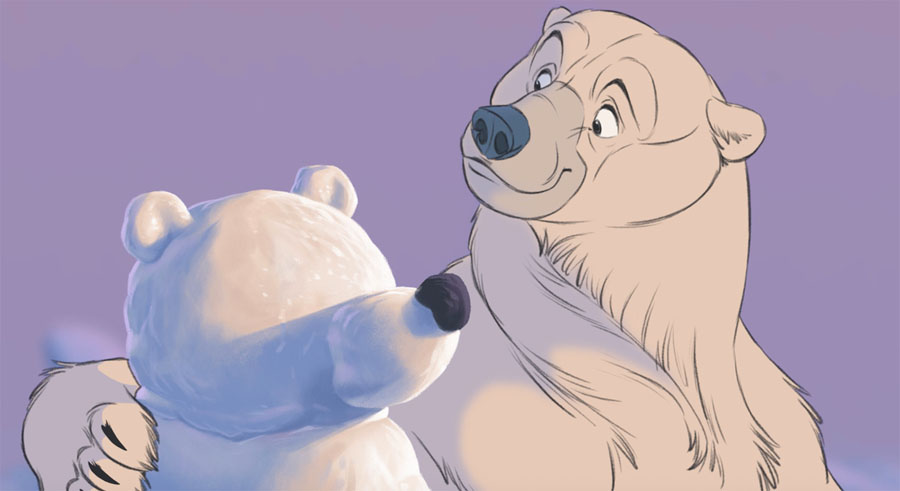
Animation Scoop begins its interview coverage with the filmmakers of this year’s 15 shortlisted Best Animated Short Film Oscars finalists. Director Aaron Blaise (Academy Award nominee for Disney feature Brother Bear), shares what went into creating the heartwarming Snow Bear, about a polar bear seeking a companion. Snow Bear screened earlier this year at the Woodstock Film Festival and in the Tribeca Festival’s Whoopi Goldberg animated shorts showcase. (This Animation Scoop Interview was conducted as an Email Q&A and was edited for length and clarity.)
Jackson Murphy: What do you find so beautiful about nature?
Aaron Blaise: Nature has a quiet honesty to it. It doesn’t perform or pretend. There’s beauty in its simplicity and its indifference. When you slow down and really observe it, you feel small in the best possible way, and deeply connected to something much bigger.
JM: How did you want to present the themes of friendship and belonging?
AB: I don’t think I was striving for that. It was more about how we handle loneliness. How we will do anything to feel connected, even build a friend out of snow. But I also wanted it to be about sticking it out. To never give up because some will find you or you will find someone else when you least expect it.
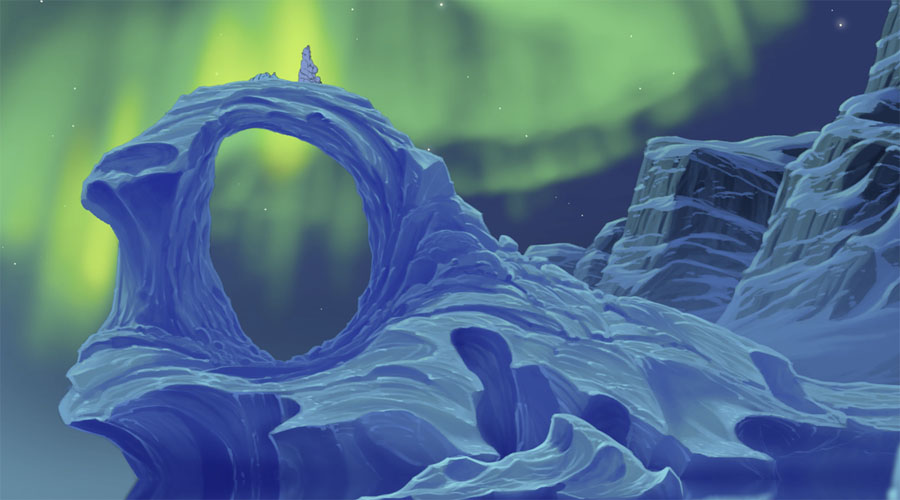
JM: What is the most challenging aspect of animating snow, especially the clumps and depth of it?
AB: Snow is deceptively hard. It’s not white, it’s a thousand subtle colors and textures. The challenge is making it feel soft, heavy, cold, and alive all at once, especially when characters interact with it and leave weight behind.
JM: The music, especially the timing of it in key moments, is one of the reasons why “Snow Bear” works so well. What goals did you have with the score?
AB: I wanted the music to breathe with the story. It had to support emotion without telling the audience what to feel. When it works, you don’t notice it, you just feel something shift inside you. It also needs to be the voice of the characters.
JM: What do you hope audiences take away from the messages of protecting our creatures and their habitats?
AB: I hope people walk away with a deeper empathy for the natural world. These animals aren’t symbols or props. They’re living beings with real struggles. If the film makes someone care just a little more, that’s everything.

JM: You were Oscar nominated for Best Animated Feature in 2004 for co-directing Disney’s “Brother Bear”, which I really liked. It was the third film I ever saw in an indoor movie theater! What do you remember most about that awards season and Oscars experience?
AB: That time was surreal. I was still processing being part of something that big. The thing I remember most was the sense of community, being surrounded by artists I admired and realizing we’d all poured our hearts into our work.
JM: How was it working with Phil Collins? I think “On My Way” is one of the most underrated Disney animated movie songs.
AB: Working with Phil was incredible. He has an instinct for emotion and storytelling that’s rare. “On My Way” captured the soul of the film perfectly. It wasn’t just a song, it was Koda’s inner voice and a chance for the two characters [Koda and Kenai] to bond. That was the arc of the song.
JM: What would an Academy Award nomination for “Snow Bear” mean to you?
AB: It would mean a great deal, not for the trophy, but for what it represents. That a quiet, hand-drawn, deeply personal film still has a place. It would also garner attention and hopefully lead to some bigger opportunities.