Mickey Mouse is an cartoon character co-created in 1928 by Walt Disney and Ub Iwerks.











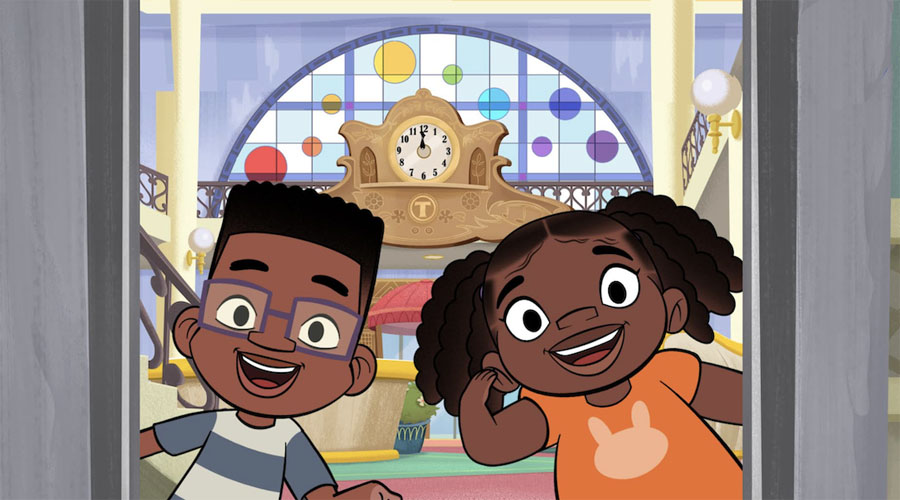
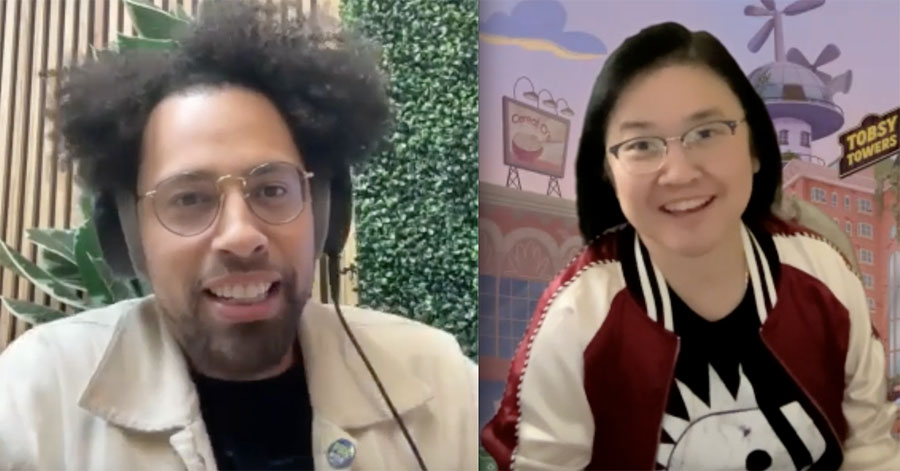
Genie Deez and Thy Than are the creators of the new PBS KIDS series Phoebe & Jay, about twins who move-in to a new building with their dad and grandma. They learn so much, including from meaningful friendships with people of all ages. This animated family program premieres Monday February 2nd.
(This Animation Scoop Q&A was edited for length and clarity.)
Jackson Murphy: This is such a sweet show. I love these characters, the family atmosphere, the friendship, atmosphere, all of that. Genie, we have these 6-year-old twins moving into this new building with their dad and their grandma. They have so much spirit. They have so much curiosity. They learn so much. What do you love about your central two characters?
Genie Deez: I love that there’s some of Phoebe and Jay in all of us, I think. There’s a lot of me and Thy’s dynamic in there, just how we balance each other out. But it also reminds me of my relationship with my brother growing up. Me and my brother passed as twins for a little while, and so all of the mischief and camaraderie that comes along with that I think Phoebe and Jay also represent the same thing. But I love how they balance each other out.
JM: Yes, they’re a perfect pair. They’re a great complimentary duo. When one thinks about something, the other bounces off of that. Thy, was that a real goal for you in creating these characters?
Thy Than: For sure. Very much so. It was very intentional. Just like peanut butter and jelly. Phoebe and Jay are just complimentary. They go great together, right? Even with the design… they really visually compliment each other’s personality. They compliment each other. And that’s totally on purpose. ‘Cause I think a lot of kids will recognize themselves in one of them, and so that was totally on purpose.
JM: Genie, when you look at this building that they go into, The Tobsy Towers, and the world that it creates, and the world that you open up, what were your goals with creating it?
GD: Part of our goal is to create a space in which not only Phoebe and Jay will inhabit and explore, but kids at home will watch and enter into too. You should see the research Thy did in laying out the place. We give a Bible to the writers with character mockups and floor plans and overviews. It’s so expansive and intentional that Phoebe and Jay are literally like real characters.Thy always jokes she could pass off her plans to an architect and they could build the thing, and that’s just for Phoebe and Jay. So that comes through the screen for kids. It’s logical, it makes sense, it’s a safe place. There’s all these neighbors to encounter and different ways of thinking and collaborating those opportunities as well. So really it’s a chance for Phoebe and Jay to become real people that kids will want to hang out with every day.
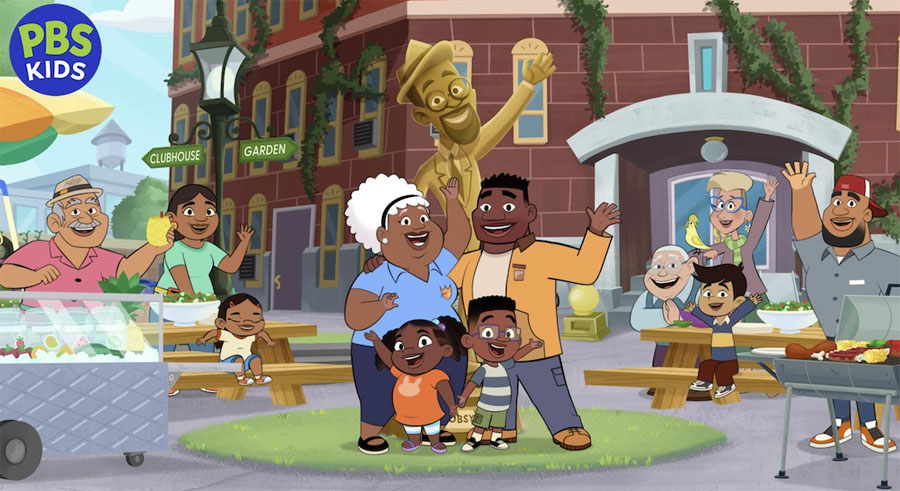
JM: That’s really cool. So Thy you really went all in on the design of this and also who they meet along the way. They’re friends of different generations. I love they get to meet older people in the building. That’s really cool to see that dynamic.
TT: We really want parents and uncles and caregivers and adults and teenagers and everybody to watch with the kids. We want this to be a full family community type of watching. We purposely put dad jokes in there. The writing is very much for all generations ’cause we want everybody to enjoy it together and learn together. And we wanted to make sure that the community, all the neighbors… I live in Los Angeles and you see the melting pot of everybody, all these different types of people. And so we wanted to represent that in the community and in the neighbors. And we wanted kids and everybody to see, “Yeah, there I am. Or that character’s more me. And that’s character’s more me.” I think it makes it more personal for everybody. And then the apartment living was a big part of it. A lot of families live in apartments. They don’t live in single family homes. So we wanted to represent that and the whole aspect of community living and helping your community, participating in your community. It’s like an extended family, so we really wanted to show that.
JM: Participate in activities inside, outside with the gardens. That’s really important as well. That’s terrific. Genie… you really focus on very well is showing kids the steps in any kind of process, whether it’s delivering mail, washing clothes, doing a dance. Here are the steps. That’s really core to this, and it’s really smart in how you show that.
GD: Thanks for calling it out. That’s exactly the process. The goal is that Phoebe and Jay encounter text that kids at home will encounter every day. So there’s some things we don’t even really recognize as text. When you get on the elevator and you ask mom and dad before you go into it and you hit the button. My daughter… When she says, “Put my lunch in that cubby hole”, and she’s looking for the picture of the lunch, she knows where it goes. All those things are engaging the skills that are burgeoning in pre-readers. And so to your point, we’re modeling the types of texts that kids will encounter. In everyday life, but also the thinking strategies and the skills to become better readers. We’re really fortunate. Our lead advisor is Dr. Kelly Cartwright who we say literally wrote the book [on] reading comprehension and functional literacy. Having her insights into the ways we’re modeling these early literacy skills have been crucial, I think, to the success of the show.
JM: That’s really important. Reading is so important. The rewards of reading are endless. It’s fantastic. And Thy, what you do mid-show in between the two episodes [of] the half hour, is have a live-action, “Everyday Exploring” element. And I remember growing up watching shows on PBS Kids and another channels and platforms where the live-action element had as much of an impact on you and your memories as the animation.
TT: Exactly. I think the thing we wanted to show specifically is this is everyday text all around us. So not only is it in the animated environment and our animated Tobsy Towers, it’s there in real life. And so we wanna model that and show it to kids. So when you go out with your parents, with your grandma, with your friends, you’ll see this text too, and how you can interact with it anduse it and learn from it.
JM: And Genie, in an emotional element of the show, Phoebe and Jay love to remember their mom. Their mom meant a lot to them. Why was it important for you to have this aspect, andbringing about this emotional connection in this way?
GD: When you watch kids TV, it’s typically and historically, a nuclear house owning, car owning family, which isn’t necessarily the lived experience of a broad swath of Americans. And so their mom Paris passed away a couple years ago and they’ve moved into the Tobsy Towers with their dad and [in] part to be closer to Grandma Annie. Grandma’s a carbon copy of my grandma Annie. The grandma in the Black community is the pillar. There’s all these ways of modeling family that we think is resonant with kids. Their mom Paris has passed. Paris was partly inspired by… One of my favorite musicians, Parris Bowens, passed during COVID and he had young children. Me and Thy would talk about how kids will watch TV and not see themselves necessarily. They’ll always see this nuclear family. It’s a chance for kids to recognize themselves. We think that’s really empowering. They’re recognizing these early literacy skills and types of texts, but they’re also, to your point, recognizing emotions. Phoebe and Jay might have emotions that they’ve had that they haven’t been able to put language to or have a chance to talk about. And so we really just want kids to see themselves… that’s the whole goal — to see yourself and be empowered.
JM: I think you’ll accomplish that with this show. And t one of the great things about what PBS KIDS has been able to do with this series and so many other live action and animated shows over the years is to create that sense of family through the screen and the many layers of memories. Can you talk a little bit about what that really means to you?
TT: For sure. I grew up as a PBS kid. It’s generational. I learned from PBS KIDS. I learned how to count to 12 from that pinball animated one. I learned near and far from Grover. So between the live action and animated, I felt part of the PBS family. It’s basically an honor to be able to make a PBS show and to bring that good to the next generation of kids today, and to help them learn and to help them form these core memories that will be a great foundation as they continue learning and continue reading.
JM: A line in the theme song is about moments you’ll treasure. What are some moments you will treasure from the experience of making these first episodes we’re gonna see of “Phoebe & Jay”?
GD: I think part of the reason the show will be so resonant is because it was alive at each stage in ways that even we couldn’t anticipate. And so of course it’s me and Thy getting in the lab and coming up with ideas and having fun with each other. But then we write the scripts so that the actors can come in and have fun in the booth and embody these characters in the booth. I remember one time Jonathan Langdon, who plays Pete, came in… We have a barbershop episode. Jay goes to the barbershop, reads the clipper numbers, and he conquers his nerves to get his hair cut. But I remember Jonathan coming in saying, “I haven’t seen this on TV before. It’s gonna be cool to go to the barbershop.” So the ways in which the show resonated in the different departments really surprised me. Those are moments and unanticipated things that I’ll treasure when I think back on the production of season one.
TT: I think the thing that I remember most and I’ll treasure most about this production is the team we’ve built. We’ve built a great group of people. They’re our extended family. When we talk about family, we have our PBS family. We’re part of this great PBS family, but our production crew, our “Phoebe & Jay” crew are amazing people, and we want to encourage them to bring their own ideas and bring their own life experience to it. So it brings the authenticity. So my moments that I treasure is when a writer or a designer is like, “Oh, my kid did this” or “When I was little, I remember this, can we put it in?” I’m like, “Of course we can put it in.” So we put it in. I love putting Easter eggs in. I have a cameo. When we were designing Tobsy, who’s the creator of Tobsy Towers, my designer was like, “Who should it look like?” [I said] “Well, I think it should look like Genie. Here’s some photos.” And so I gave him some photos. We didn’t tell Genie. I was like, “I’m just gonna surprise him, see what happens.” And it was an amazing reaction.