Mickey Mouse is an cartoon character co-created in 1928 by Walt Disney and Ub Iwerks.













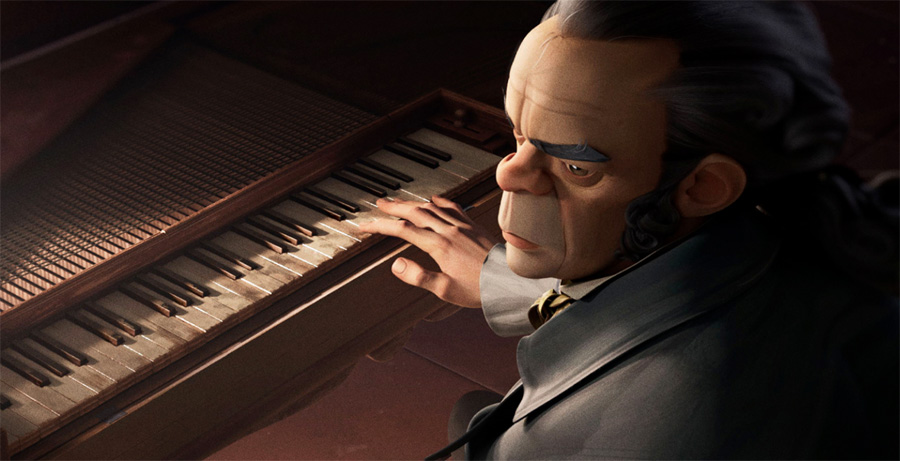
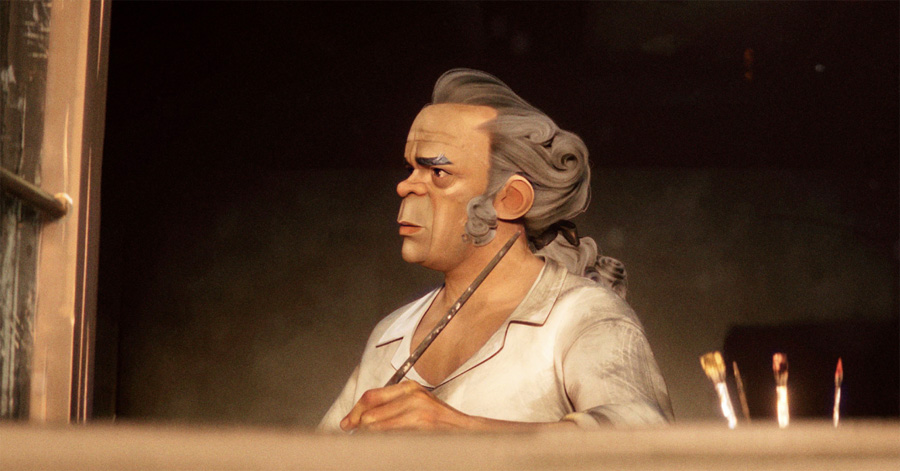
Emmy-winner James A. Castillo is the director of one of the 15 shortlisted animated shorts for the 98th Oscars. It’s the dramatic horror / thriller The Quinta’s Ghost, which I first screened last year during its Tribeca Festival run. Francisco de Goya’s new, remote home in 1819 was supposed to be a place of comfort, allowing the legendary painter to focus on specific projects. But illness and the unpredictable nature of this haunting house tear his mind apart. (This Animation Scoop Interview with Castillo was conducted as an Email Q&A and was edited for length and clarity.)
Jackson Murphy: I remember learning about Francisco de Goya in school. What fascinated you about his life and art?
James A. Castillo: I think, like most, I also learned about Goya in school. I think Goya is one of those artists that takes a little bit of time to like. He is definitely not for everyone, but the more I searched for artists that dared to show truth and pushed the social conventions of their time, the more I got closer to Goya’s work. He was an artist unwilling to compromise his vision at any cost. Someone who even risked being chased by the Spanish inquisition on more than one occasion. The more I studied about his life, the more the image of a self made man came to focus; he was someone who did not fit the cannons of his time. His painting style was not as refined as it was expected for a baroque artist. He came from a very poor background. He didn’t quite fit with the royalty his career depended on and, despite all of that, he managed to thrive. He found a way to study abroad. He found a way to belong among his peers and to tap onto the zeitgeist of his time. His work is a testament of a man who never lost sight of where he came from and dreamed of reaching far and wide.
JM: What was most challenging about creating such a distinct, dramatic atmosphere?
JC: The most challenging part was, by far, trusting our gut. When you are working with a body of work as meaningful and dramatic as Goya’s you have to make sure that you honor it, that you don’t simplify it too much or you wash out its darker aspects. You have to show it as it is and that means, in this case, embracing some difficult imagery. There were times when we discussed censuring ourselves, but at the end of the day we realized that it would be cowardly of us to do so. From a more technical point of view, it was very important for us that we delivered on the promise of a horror film. We wanted to tell an emotional story about grief and the artist process but it also needed to be scary. So finding the right tone to balance both things was pretty challenging.
JM: How did you want to craft the unique narration of the house?
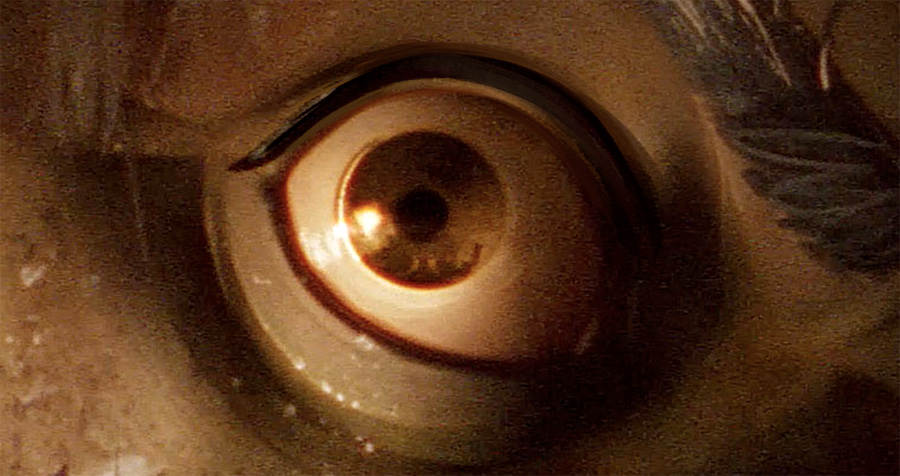
JC: Early on, as we were crafting the story for the film, we hit a wall. We were having trouble making the audience empathize with Goya and a lot of the nuance we were hoping to imbue onto the film got lost. At some point, while trying to find novel ways to approach the narrative, we realized that we were telling a haunted house story in reverse: Instead of having a person arriving at a haunted house, we had a house being haunted by the ghosts of its new tenant. That made us realize that, actually, it would be much more interesting to follow the house’s emotional journey than that of Goya’s, turning the house into the actual protagonist of the story. This not only gave us an interesting angle, but it gave us a central relationship as the engine of the film; the relationship between the artist and the spaces he inhabits. It made it personal, it elevated the stakes.
JM: What were your goals with the arc of the story and building the tension?
JC: Well we knew that at the very centre of the whole thing was a realization inspired by real events in my life, that of understanding that acceptance is the only way to move forward from certain traumas in life. Now, in order for that realization to land, we needed Goya to reach a dramatic state of vulnerability and the only way to take the audience to a point where they could empathize with him was to “punish” him as much as possible. They couldn’t just be told that Goya was a tortured man, they needed to know it in their hearts. At the end of the day, it was all about empathy, about empathizing with a very vulnerable man who was trying to deal with his traumas the only way he knew how: painting.
JM: How did your work on “The Mitchells vs. the Machines” and “TMNT: Mutant Mayhem” prepare you for directing “The Quinta’s Ghost”?
JC: I owe so much to those two films, especially to the teams I worked with. They were incredibly bold and pushed me to do art outside of my comfort zone. Sometimes to the point when I doubted it would work in CG. Seeing those films succeeding in pushing the aesthetics of animation, embracing new techniques and being so experimental was foundational for me to dare to make this film. Very much like in the case of the TMNT or TMVSTM, we approached this film’s looks from a place of experimentation. We developed pipelines to use VR painting techniques to make the ghosts. We created shaders that allowed us to create a more painterly style. We printed the film onto actual 35mm stock to give it a particular texture… We wanted it to be as bold as Goya’s work. I have to say that this was only possible because Illusorium, my partners, were incredibly brave.
JM: You won an Emmy for “Madrid Noir”. What is the most fun and exciting part about making animation in 2026?
JC: I think the possibilities are endless. The way people consume animation is changing, as well as the expectations of said animation. Audiences are looking for bold, uncompromising art that challenges the way stories were told and things looked. We are already seeing a lot of independent animation appearing on YouTube before going into private platforms, communities rallying behind the names of creators, not brands, supporting artists around the world that represent the change they want to see. The type of stories we are allowed to tell now in animation would have been impossible to tell ten years ago, and that is a good thing.
JM: What would an Oscar nomination for “The Quinta’s Ghost” mean to you?
JC: It would mean many things. It would mean that our thesis was correct; not only that making horror in animation was possible, but that it had an audience that was willing to watch it and appreciate it. It would mean that all the trust we put on our team was worth it, because they delivered something beyond the world’s expectations. It would mean that our risks paid off. But I think, more than anything else, it would mean that there is a reason to keep telling stories, to keep pushing boundaries and to carve a place for genre animation to enter the mainstream.