Mickey Mouse is an cartoon character co-created in 1928 by Walt Disney and Ub Iwerks.












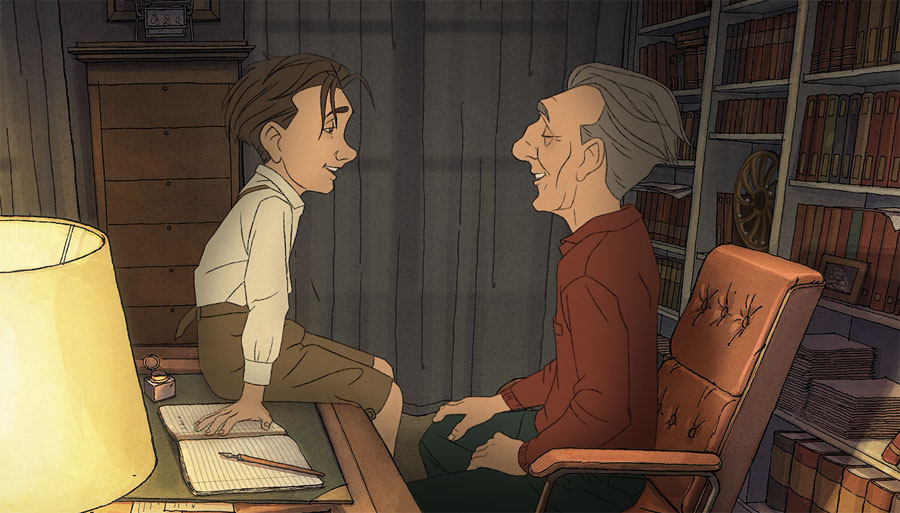
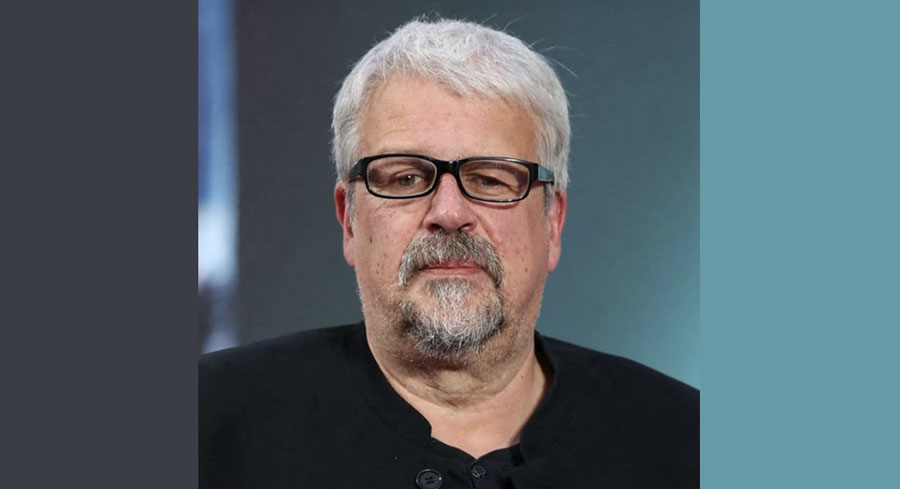
Four-time Academy Award nominee and BAFTA and Caesar Awards winner Sylvain Chomet (director of The Triplets of Belleville and The Illusionist) joins me to discuss his latest animated feature, A Magnificent Life, about French playwright, poet and filmmaker Marcel Pagnol. It opens in select theaters for an awards-qualifying run this Friday Nov. 21 and will officially release in North America on Feb. 20, 2026. Chomet also teases his next feature: a follow-up to Belleville. (This Animation Scoop Q&A was edited for length and clarity. Images Credit: Sony Pictures Classics.)
Jackson Murphy: Have admired your work for a long time. Got to screen this last month at the FilmColumbia festival in Upstate NY in a big [100-year-old] theater that recently got renovated, and it played beautifully to the crowd — so congratulations.
Sylvain Chomet: Oh, I’m very happy to hear that. It’s great to hear that.
JM: This movie was publicly announced a few years ago, and it has been 15 years since “The Illusionist”. Why was now the right time for you to dive back in and make another animated feature film?
SC: I think I was taking a break from animation after “The Illusionist” just because it’s very complicated to make an animated film — not just to make it, but actually to finance it and to have people be attracted to the project. I was living in the south of France… I was not really thinking of going back to animation. But then I was contacted by the grandson of Marcel Pagnol [Nicolas]. It was supposed to be a normal documentary… and it’s basically an animated biopic — and I think one of the first. From the meeting with Nicolas Pagnol, it took eight years to make the movie. That’s very long. Most of that being how we wanted to do the project — doing the documentary first and then going back to do something different, and also raising the fundings, which was very complicated. Happily, we found a great producer, who has also become my friend, Aton Soumache. When he saw the Pilot we did he said, “Okay, let’s go for it.” The making was basically three years.
JM: What’s amazing about the movie is you cover his entire life in 90 minutes, with such attention to detail and pace. What was the most challenging aspect of it for you?
SC: Well because it was in animation, I think it was the aging of Marcel Pagnol. We see him as a child… and then we have him from 20/25 to 62. He’s aging every five years. He has to be aging in a controlled way. That was quite complicated to do. We had to use some special techniques to say to the animators, “This is his face. This is his face when he’s 35… or 40.” And the passing of time with objects, clothes and fashion design. The fashion was changing every five years. The cars were changing. Now you see pictures from the ’80s and it’s not much different from the world we live in today.
JM: You cover many decades in the film. He was a playwright, poet and filmmaker. The first half focuses on different scenes in his plays, and you name them on screen for us. How did it feel depicting specific scenes from the works of his career?
SC: I had to choose things in the scenes which were important in his life at that moment — his mood at that time or what he really thought about life. To tell with his own work what he was going through at that time. To see what kind of man he was.
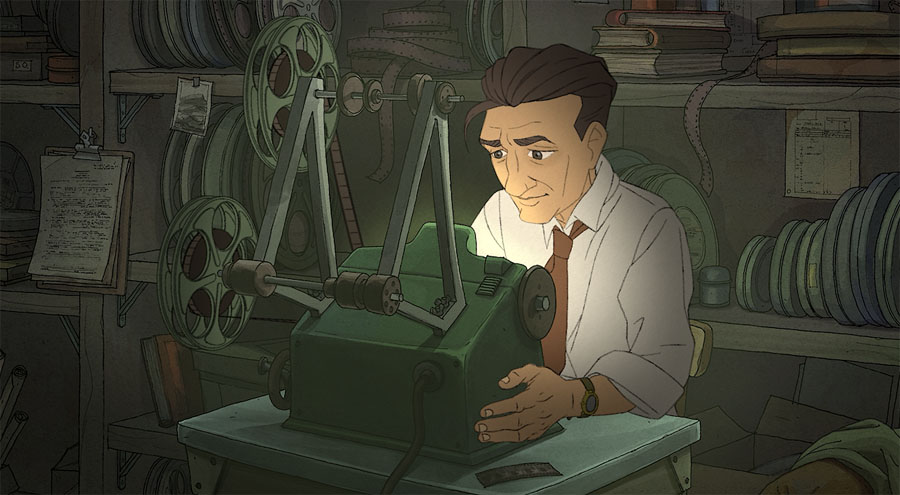
JM: One of the big moments in the movie, in terms of commentary, has to do with Americans’ interpretation of what the arts is, with Marilyn Monroe, Elvis, and consumerism. A sequence of that towards the end of the movie that I think is going to make people think and surprise people.
SC: I didn’t write the dialogue. It’s from Marcel Pagnol in 1945. That is the amazing thing. I didn’t put any new words in what he’s saying. But he was a visionary because he knew how much cinema was important. American cinema in the ’40s was getting really, really massive. He knew that was carrying the culture. He really liked American cinema as well. One of his best friends was Orson Welles. French people are a very cinema-going people. They love all kinds of cinema. We love cinema in France. But we don’t want to have just one cinema in the world. It’s great there is American cinema, French cinema, Japanese cinema, all these… because they carry their own culture, and it’s great to see different cultures and ways of thinking. It was a great opportunity to remind that.
JM: Throughout the movie we have the younger version of Marcel, spiritually, with the progressively older Marcel, through different points of his life. Was it difficult to decide when to put him in and how long you wanted those moments to last?
SC: Yeah, it was quite tricky. It didn’t want him to be there all the time, and I didn’t want people to not remember he was around. But there was a big scene with him and Marcel which I took away, because I thought it was a bit too much. But I tried to put it in where it needed to be. Feeling the pain… some of the things in his life that were really sad. It is the little boy in Marcel… we all keep in ourself the little kid asking the question, “What am I going to achieve in life?”
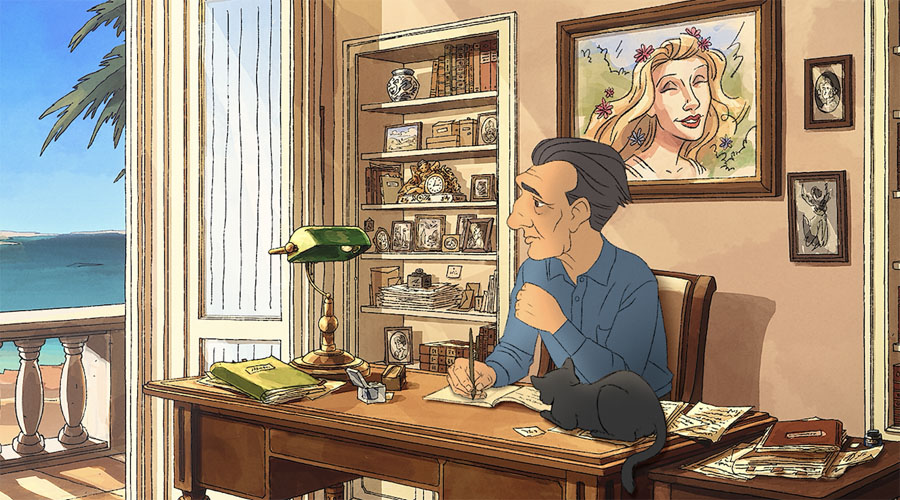
JM: How has this experience for you made you look back on your own life? All these accomplishments. You have excelled in the arts, just as Marcel has. How has “A Magnificent Life” made you look back on your own magnificent life?
SC: His magnificent life was much more magnificent than mine. So many things. He had my magnificent life but times 10, in one life, because he was doing so many things. When I was approached by Nicolas Pagnol, I was eight years younger, and now I’m exactly the age that Marcel Pagnol was when he decided to stop doing cinema, and then he got approached to tell the story of his life. It’s very bizarre. (laughs) And in a very bizarre way, he wanted to stop everything, and that’s the moment when I want to do more. I want to do more and more films, and that’s actually what I’m doing at the moment. I’m working on another film straight away — another “Triplets of Belleville”.
JM: Wow!
SC: That’s a scoop! (laughs)
JM: Can’t wait to see that. Is that gonna be another feature film as well?
SC: Yeah. It’s a spinoff, basically taking the big, tall ladies from Belleville. So it’s basically a North American movie. That’s going to be interesting. There are things in life that make you stop, but it’s very important to have the people around you, and the people you meet in life that truly believe in you. And Marcel was very much like that. He wasn’t sure of his own talents. He had to have people to encourage him to do things. That’s the way life is about, and listening to them is very important.