Mickey Mouse is an cartoon character co-created in 1928 by Walt Disney and Ub Iwerks.














Action drama Dragon Heart: Adventures Beyond This World, about teens enveloped in an epic journey, with their futures at stake, was released earlier this year and is now seeking Best Animated Feature consideration this awards season. Director Isamu Imakake dives deep into the themes, visuals, music and more. (This Animation Scoop Interview was conducted as an Email Q&A and was edited for length and clarity. Images Credit: HS Pictures Studio.)
Jackson Murphy:Why did you choose to focus on two young cousins and explore a youthful outlook/energy in life?
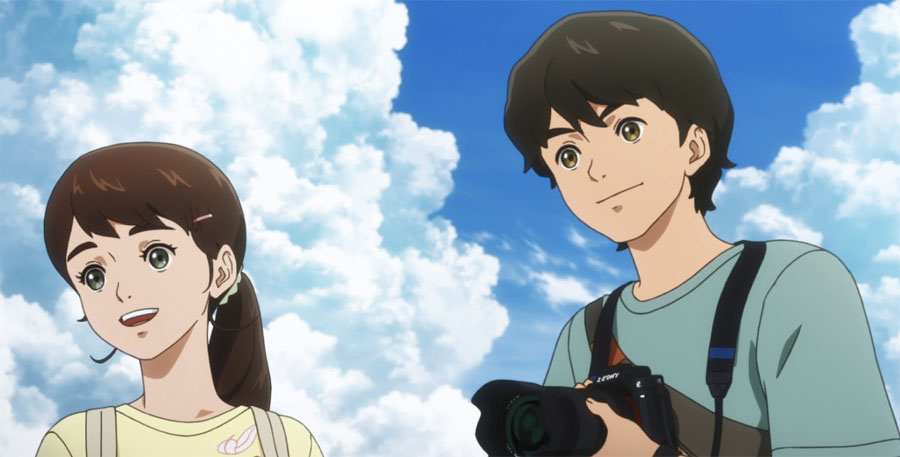
Isamu Imakake: This film focuses on the two teenage cousins, Ryusuke and Tomomi, because they embody the essence of youth. It is at this age that we begin to grapple with worries about life, hopes for the future, friendships, and many other challenges—experiences that help us grow into adulthood. The story is set in summer because the season itself symbolizes youthful energy and a vibrant outlook on life. When we look back on our childhood, our most vivid memories often come from summer. It is also around this age that we start to learn not only about the world we live in, but also about the unseen realms—uncharted territories waiting to be explored. By stepping into these new worlds, we discover our own path forward. This period of life is meaningful because it captures those sparkling moments of summer that remain deep within our hearts.
JM: How did you want to approach the dangers and threats in the afterlife and all the locations Ryusuke and Tomomi are transported to?
II: Ryusuke and Tomomi are teenagers in the modern world so they are portrayed as characters who have no prior knowledge of the afterlife. So my primary focus was on how they would react to and process their experiences in the afterworld. While I gathered extensive materials on hell and the spirit world, I always kept in mind that they are just ordinary kids of today who know nothing about these worlds. Based on that premise, I sent them on this journey to explore the unknown. We also portrayed the Hell of Villains as a realm set in 1960s Japan, so we scouted locations that retained the atmosphere of that era. The building in the Hell of Lust also has a real-life model. By visiting these actual places, I tried to immerse myself in the same experiences the characters go through.
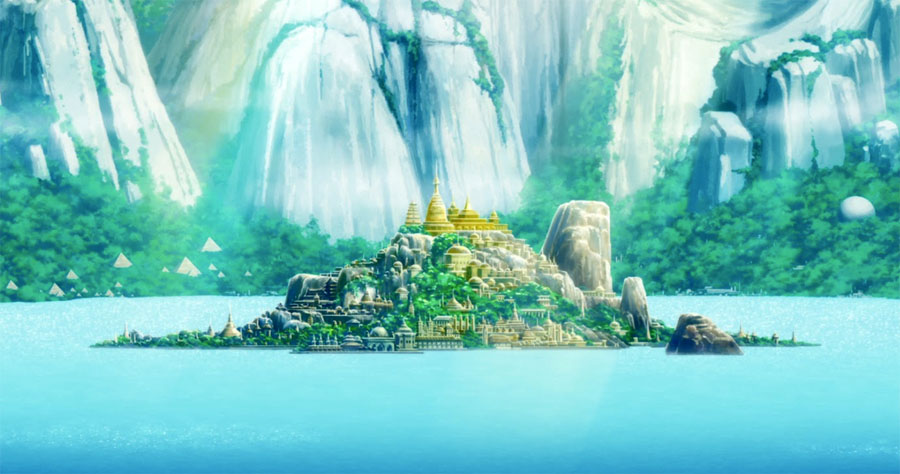
I also wanted to make the modern worlds of hell very realistic places that people can relate to. To depict modern hells, we scouted actual places existing in our own contemporary world, so that we can experience firsthand what Ryusuke and Tomomi would encounter. For example, we portrayed the Hell of Villains as a realm set in 1960s Japan. We visited locations that retained the atmosphere of such places in that era. The building in the Hell of Lust also has a real-life model. By visiting these actual places, I tried to immerse myself in the same experiences the characters go through. Actually, the biggest challenge was not depicting hell, but the heavenly realms. The production team and I studied various books and practiced meditation to visualize these beautiful places—like Shambhala and Mount Meru. We tried to paint this World of Light by drawing on our own internal experiences.
JM: The film talks about finding your purpose. When did you know that animation/filmmaking was your purpose?
II: I started working in the film industry when I was 20, so I’ve been in this field for 35 years now. In my twenties, I found the craft simply fascinating and I was immersed in the work of animation. The real turning point came in my thirties when I worked on the film The Law of the Sun. I realized the true potential of animation for the first time. This project was based on the original work of Master Ryuho Okawa, who is also the Executive Producer of our current film, Dragon Heart. Working on The Laws of the Sun triggered a 180-degree shift in my values compared to my twenties. I encountered a spiritual perspective—specifically, Spiritual Truths and the Laws of the Universe. I realized that animation had the potential to express these profound concepts. It could depict not just the physical world, but the spiritual world—the invisible world of thoughts and mind. I discovered that animation is a truly free medium. That was the moment I became convinced that this was my mission. Today, as I continue to work on Master Okawa’s projects, I am grateful to be able to explore that potential further and to be involved in work that shares these themes and spiritual thoughts with the world.
JM: How did you want to showcase the beauty of nature in the movie?
II: I approached this from a spiritual perspective as well. I tried to visualize how the nature of Tokushima, of Japan, and of the Earth would appear when viewed from the spiritual realm beyond this physical world. The original writer and executive producer of the film, Ryuho Okawa, asked me to portray the beautiful landscape of Tokushima. I believe the beauty of this region lies not just in its physical scenery, but in the fact that it is a spiritual environment protected by a special energy field. I feel that there is a special energy or environment that has been long protected and sanctified in Tokushima. I think that is the secret of its beauty. Because it is such a protected, sacred sanctuary, Ryusuke and Tomomi were able to tune into the spiritual vibrations necessary to enter that mystical world. In that sense, Tokushima serves as a special place of guidance for them. We made a conscious effort to depict the scenery not through our everyday eyes, but from the perspective of the invisible world looking upon our Earth. If you could see the beauty of nature in the film, it is probably because you can also see the spiritual beauty of this world too.

JM: The lyrics of the songs are descriptive and emotional. What was most important to you about the music in “Dragon Heart”?
II: The five songs play a crucial role of guiding Ryusuke and Tomomi through their adventure into the spirit world. The theme song “Dragon Heart” musically portrays the grand theme of riding a dragon to explore the spirit world. “Exciting Love” expresses the various emotions the two experience—excitement, anxiety, and anticipation—as they set off on their spiritual journey. “From Hell to Hell” depicts the atmosphere of the different realms of modern hell. “Shambhala” conveys the longing for the invisible and mystical world that resides in everyone’s heart. The film visually shows Ryusuke and Tomomi being led into the unknown, filled with a mixture of anxiety, hope, and yearning, while the songs express their emotions and the significance of each scene. I listened to these songs repeatedly to grasp the overall tone of the film, and I came to feel that the music weaves the entire story together. In fact, the whole production team was encouraged by these songs. They gave us the courage to take on the difficult challenge of creating Dragon Heart and to overcome the obstacles we encountered—just as Ryusuke and Tomomi do in the film.
JM: What went into the distinct design of the large, green dragon?
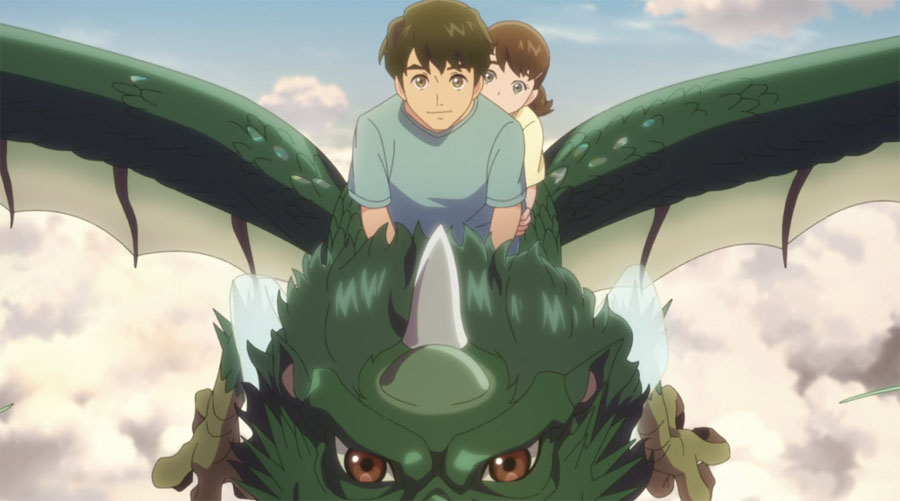
II: I had an image of the green dragon as one rooted in ancient Japanese tradition. In the original story, it is described as a 20-meter-long dragon with a deep green color. From other film reference materials, I learned that dragons are considered guardians of God. I imagined that this green dragon had protected the beautiful nature of Tokushima for hundreds or even thousands of years, waiting for Ryusuke and Tomomi to arrive. Although dragons are said to have come to Japan through India and China, I wanted this particular dragon to embody an ancient Japanese design, as it is meant to be the dragon that had been sleeping deep in the Anabuki River in Tokushima. I referenced the oldest dragon painting from the Heian period and also drew inspiration from a sculpture of a winged, unicorn-like dragon found on Kotsu temple, which is one of the locations featured in the film.
Since ancient times, dragons have been regarded as divine protectors. The green dragon guides Ryusuke and Tomomi on their spiritual journey—from the worlds of hell to the realm of the gods. I believe this dragon protects their spiritual experiences. Through this “Adventure Beyond This World,” they encounter the universal principles that govern both the physical world and the spirit world. And through this journey, they come to believe that these principles apply to everyone—from souls suffering in hell to divine beings in the heavenly realms. In other words, I believe the dragon protects their power to believe—their faith—believing in the very existence that created the laws of the universe. After this journey, Ryusuke and Tomomi will grow into adults and live their lives while influencing the world around them. I believe that this experience allows them to firmly grasp their missions in life.
JM: What is your advice to aspiring storytellers, and how should they seek courage in the work they do?
II: When working on Dragon Heart — Adventure Beyond This World, what I valued most was cherishing the images I received. So my advice to aspiring storytellers is to treasure the images that come to you. As you explore those images, the themes, messages, and concepts you wish to express will naturally emerge. When developing them, I recommend training yourself to view them not only from your own perspective but from a higher one. If you try to tell a story solely from your own viewpoint, you won’t be able to create a work that surpasses your own limits. In my case, by believing in the invisible world, I strive to look at my work from a higher dimension—a perspective beyond what I could conceive on my own. Of course, knowledge, experience, and technical skills are important for a storyteller, but I believe the most essential elements are the message, theme, and concept. So I encourage you not to confine yourself to your personal viewpoint, but to make an effort to adopt a higher one.
During the production of Dragon Heart, I practiced meditation to receive inspiration and guidance from a higher perspective. Once the concept and theme became clear, I began to see what I needed to do, and courage naturally arose. By contemplating the theme, you can begin to believe in the future that awaits you. Believing in that future gives you courage. And once you have courage, you will begin to see what tasks or challenges you should take on. I believe it is important to first look within yourself and gain confidence that you can accomplish it. I hope that many aspiring storytellers will emerge to share their visions and stories with the world.