Mickey Mouse is an cartoon character co-created in 1928 by Walt Disney and Ub Iwerks.









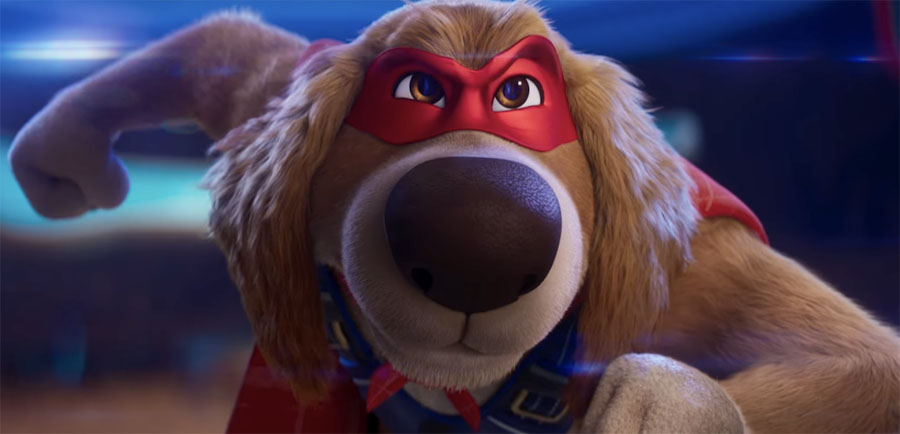
Shea Wageman, President and CEO of ICON Creative Studio, is also the director of new animated feature Charlie the Wonderdog, which opens in theaters nationwide on Jan. 16. Wageman discusses the superhero comedy adventure, including working with star Owen Wilson, and even teases a Charlie sequel. (This Animation Scoop Q&A was edited for length and clarity.)
Jackson Murphy: ICON is having a huge impact on animation, working on projects like “WondLa”, “Monsters at Work”, “Prep & Landing: The Snowball Protocol”, “Batwheels”, new “Cars” and “Sofia the First” series and many more. What do you love about what you’ve been able to accomplish over these last few years at ICON?
Shea Wageman: Our whole thing at ICON has been putting it up on screen. We’ve always been animated filmmakers at heart. Since we started, the idea was, “How do we maximize artists on the floor? How do we get more quality into every frame? It’s been a really great journey to see, even from a preschool show up to an animated feature film, we’ve been able to push that quality bar. A pipeline for a smaller show for kids can still work at a feature film level. Animators just need to get to their shots and change the artistic things and not have a lot of stuff in the way. We’re excited about how that’s worked out at all the programs at ICON.
JM: Good quality programming for sure. Now we have this movie. Right from the opening scene, we get these vibes of “Superman” and “Underdog”, with some new flare. Were you always inspired by [them]?
SW: I wanted to be an animator, and then I went and saw the 1989 “Batman” movie, and then I wanted to be a filmmaker. So you’ve got a lot of that animation stuck with the love of superhero movies. You’re seeing that and throwbacks to a lot of our favorite superhero movies in this film, in the form of a lovable dog and his owner. “What if your dog could be a hero?”
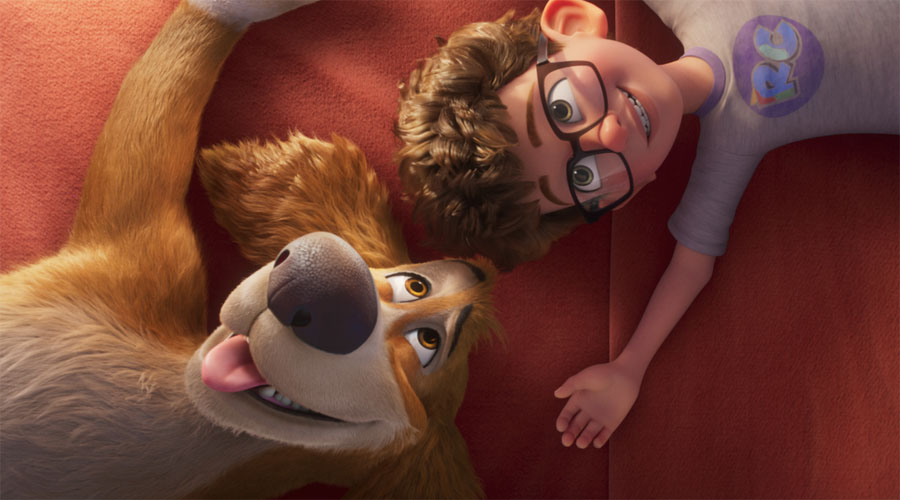
JM: There’s a montage early on in the film of Charlie and Danny, the young boy… we see them growing up and then we get to a moment where Charlie starts to get weaker and older, before he gets the powers. That scene is really well done.
SW: We really felt like you’d care a lot more about the characters if you connected with them and saw them grow up. But we didn’t have a lot of time to do that in the movie. “Can we do it in six minutes? Can we park the dog at a point where we feel like the boy is going to lose him?” We love how we got everybody to understand their relationship before he’s even a hero.
JM: So tell me about the ways that Charlie gets his powers and gets to use them. There are some comedic and dramatic situations… a lot in the opening act of the movie.
SW: We had to come-up with a way to get his powers to him quickly. A spoiled brat who’s an alien who’s looking for a pet and they don’t make the cut — we thought that was a lot of fun. It’s about pets. We have some fun with the aliens, and their magic is critical to the plot of the film.
JM: I like a moment where Danny’s on the bus and other kids are watching videos of Charlie. One kid is like, “Oh, that can’t be real. It’s CG or A.I.” It kind of made me wonder: there is this power to believing something extraordinary and out of the ordinary — and convincing kids of that. And in an age of a lot of digital transformations, you have to do that as an artist, “We really wanna make kids believe what’s on the screen too.”
SW: Yeah. It was trying to make the film current as well. We see all sorts of great stuff on the internet and we don’t believe half of it. We watch it. At first we wanted to bring a focus to that: it may not be real. But then it quickly becomes real as we see him show up at all these different places and save airplanes. We have a podcast in there as well, with an influencer. That’s how the world works right now and we wanted it to feel like a current film that kids today could plug into vs. back when I grew up.

JM: You have a lot of current themes but also this timeless theme of dogs vs. cats. Puddy the cat gets some powers too — some evil ways. What is it about this rivalry of dogs vs. cats that’s so appealing and what you wanted to accomplish with this?
SW: Cats aren’t always the bad guy. We’ve had a lot of great cats. We’re not trying to say that, and I think in some ways you love to hate Puddy. He’s a fun character. He’s just trying to fit in himself. I think it was just, if the dog’s gonna be the good guy, the cat’s gotta be the bad guy. It really is that simple.
JM: Working with Owen Wilson, who has done such incredible voice work, from Lightning McQueen in “Cars”, “Marmaduke”, “Fantastic Mr. Fox”, “Free Birds” — a lot over the last two decades. How did you get him on board to voice Charlie the Wonderdog, and how was it working with him?
SW: We were really fortunate he wanted to do the film. He loved the script and felt he really connected with it. The relationship of the boy and the dog and the themes of loyalty — a good message. He did a fantastic job. He’s a pro. It was amazing to see him kind of create the character in the voice recording booth and come-up with somebody special, lovable, fun and still Owen Wilson and still comedic — and different from his other animated characters that we’ve seen and heard. He’s been a very big supporter of the film.
JM: That’s terrific. And ICON is part of the new “Cars: Lightning Racers” series, so you’re teaming up with Owen again for that.
SW: Yeah. We’re hearing a lot of him in the studio. We’re animating “Cars” now. I walk downstairs and we hear him as Lightning McQueen, and I walk upstairs and I hear him as Charlie. It’s great. He’s a very big part of our company now.
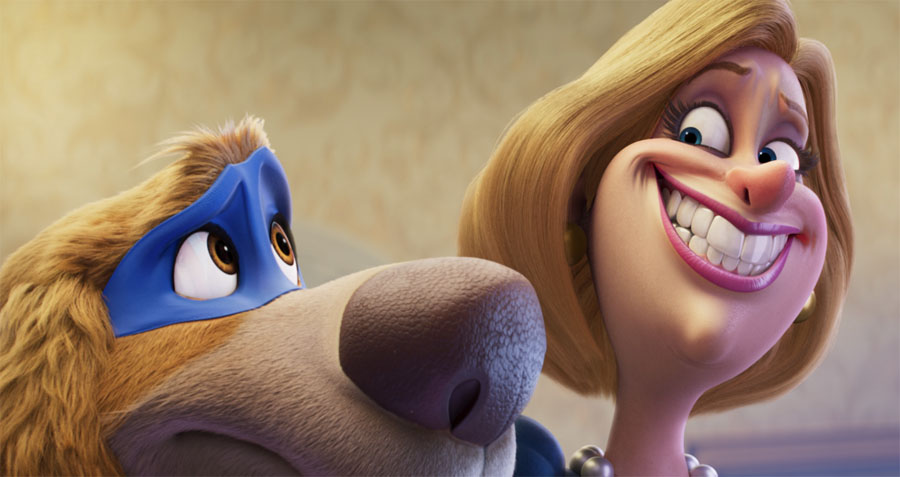
JM: And then you have this other comedic angle with the President of the United States. It took me back to “Monsters vs. Aliens” and what that movie did with the President — this could be this generation’s experience of that.
SW: The only way to make [Charlie] a world hero is for him to meet the President. Of course she wants to be associated with him. They get into a scheme. It was a great way to make [the movie] big and global. At the end she’s there with Charlie and… happier. In the sequel, you’ll see.
JM: Ok. So wait, is there a sequel coming?
SW: Maybe. Yeah. (laughs)
JM: Very good! You’re kicking off 2026 in terms of animated features. What does that mean to you to be the first big animated film of 2026?
SW: We like the position in January. There’s a lot of really big films I’m hoping to all see coming out after us, from Pixar to Disney, to “The Mandalorian [and Grogu]”. We felt January was a great place to put “Charlie” for everybody to take their theater gift certificates from Christmas and go to the theater in January — and hopefully own the month a bit and become something everybody sees in January before all of the rest of the great films come out in the year. It’s a busy year, and it was a good slot. We finished the film in June last year. This has been a nice lead-up — enough time to market it. We think it’s gonna be a great start to the year.