Mickey Mouse is an cartoon character co-created in 1928 by Walt Disney and Ub Iwerks.












Japanese animation is often associated with high intensity, top-of-the-lungs performances. The kind you hear in Dragon Ball Super, My Hero Academia, Naruto, Black Clover, One Piece. But there is anime with a quieter, more natural approach. Spirited Away, Monster, Frieren: Beyond Journey’s End.
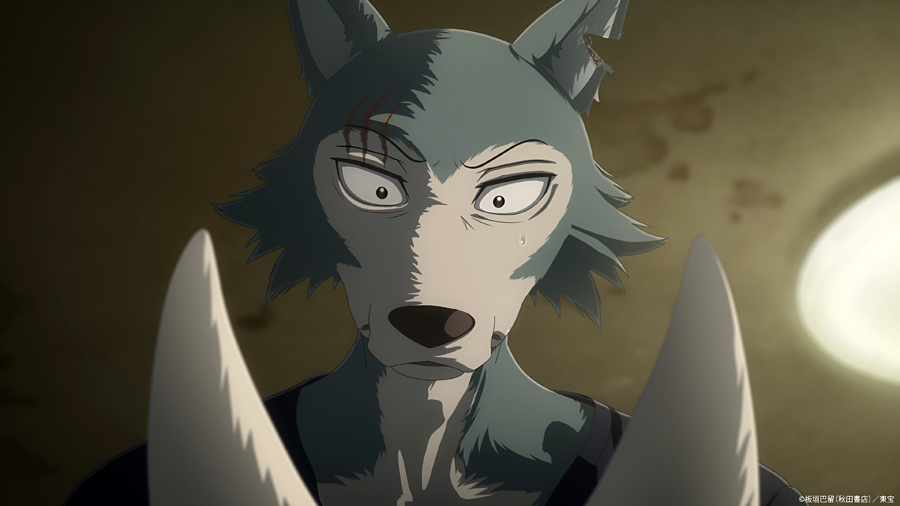
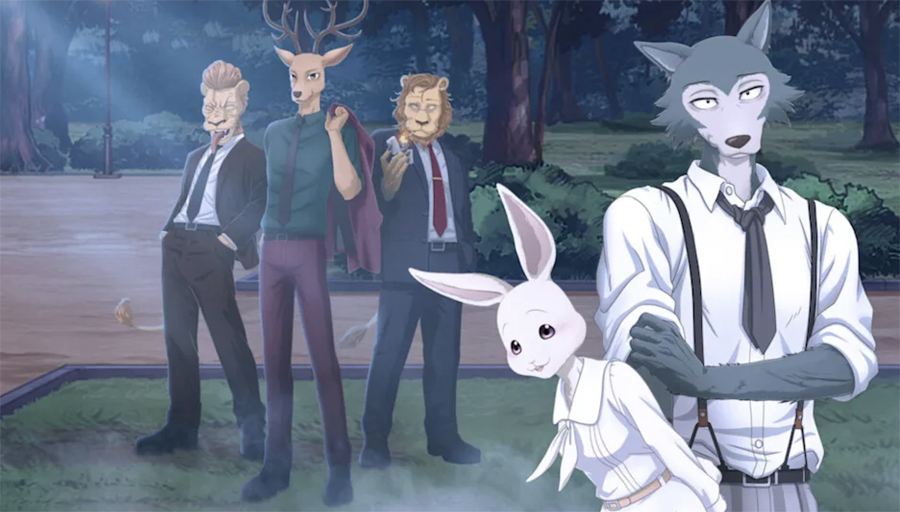
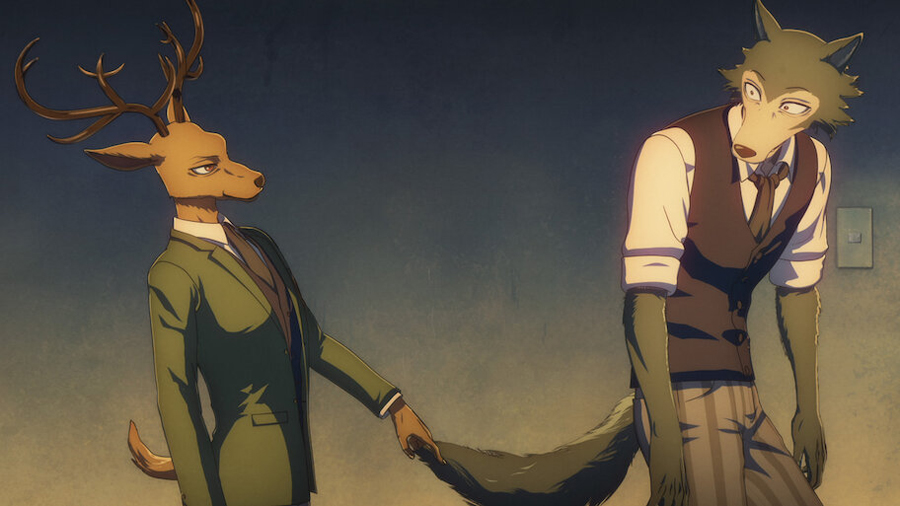
And Beastars. This is a Zootopia-like world where anthropomorphic carnivores and herbivores navigate an uneasy coexistence. Legoshi, a teenage wolf, struggles to reconcile his predatory instincts with his feelings for Haru, a rabbit. The performances favor intimacy over spectacle—an approach that English voice actor Jonah Scott brings to his portrayal of Legoshi.
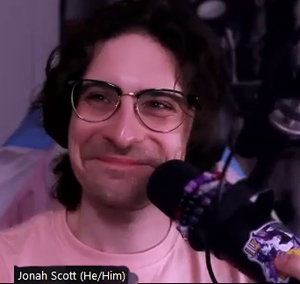
In a March 12 interview, Scott discussed his path into anime, the technical demands of ADR, and how something as simple as a breath can transform a performance. Scott hails from Cincinnati, Ohio. From eight years old to 18, he learned his craft from Moss Dance and Performing Arts Academy in Villa Hills, Kentucky, followed by Western Kentucky University for musical theater. Having had local success doing voiceovers for commercials and video games, he decided to take the show business plunge in Los Angeles. It took two years to book any roles, until finally, in 2019, he landed some minor characters in One Punch Man and Kengan Ashura. His first major lead came in 2020, when he was cast as Legoshi in Beastars. Since then, Scott’s career accelerated with the landing of roles as Formaggio in JoJo’s Bizarre Adventure, Courier in Akudama Drive, Vadakin in Drifting Dragons, Sniper Mask in High-Rise Invasion, Oliver Aiku in Blue Lock, and a slew of other characters in anime and video games. He has also engaged in podcasts and fan interaction at conventions. More recently, he reprised Legoshi in the third and final season of Beastars on Netflix, the second part of which premiered March 7.
Jonah Scott: I was out in L.A. for two years. Put in my dues a little bit, and I didn’t book anything. And what I did during those two years was learn how to do ADR [Automated Dialogue Replacement, or “dubbing”], because I was a stage actor. Didn’t really know too much about it. The thing about anime in any sort of dubbing or localization is that it is an immensely technical process of acting. You are acting in a box, and that box gets smaller and bigger depending on what project you’re on or what your character does or what the animation even looks like. So I was cutting my teeth, learning, practicing a muscle, flexing that stuff in figuring out those technical aspects. My buddy Jalen [K. Cassell], who I lived with, is an incredibly talented writer. They would find a movie that nobody’s going to dub, a movie based on a card game, some silly anime movie that is never going to get made. They’ll write a script for that, and then we’ll get people into their booth.
We did these practice dubs for a year and a half, two years, because nobody was giving us work, so we had to make our own work.
Bob Miller: So how did you actually break in, then? Was booking Legoshi your first major success?
JS: Yeah. Beastars was the first protagonist role that I had. The first major AAA anime title protagonist.
BM: Did an agent help you land that role?
JS: Absolutely not. I did that myself. I got to befriend people and go to Dave and Buster’s and hang out with people. I took classes as well at studios like Bang Zoom, and you’d get to know the people in the industry, your peers who are there as well. But also, you’ll get to know the directors teaching the classes, and that’s how you’re able to be seen almost directly without sending an email with a demo reel attached to it. I got to work on some other projects, like Chinese dubs for movies that’ll never be seen, that I do to make sure that I can pay rent—work that nobody really cares about beyond working on it.
Then the director of one of those dubs was like, “Hey, I do anime too. You’re young. You understand this stuff. You get it. Would you like to try and audition for some of that stuff?”
And I said, “Absolutely.”
And then, after I booked Beastars, a couple of friends who were also on the cast, came up to me and were like, “Hey, do you have an agent?”
“No, I’m doing this all on my own. I do not have an agent.”
“Do you want one?”
And I’m like, “What? What does that mean?”
Within a week, I had a meeting with that talent agency, and they put me in. It was so crazy. I had to meet with almost every single agent. There was an audition process that I had to do, too. But I pretty much got walked into that agency. I was incredibly lucky to know the people that I did at the time. But my mantra is: luck is a combination of preparedness and skill. I was ready.
I had the mission objective and I had the skill to back it up. And, I like to say, I’m a nice guy and I’m easy to work with. That’s another thing, is that I don’t try and rock a boat or anything like that, but I also like to input my own creativity. People enjoy working with me because I’m really collaborative. I’m back-and-forth. I want to hear what everybody’s opinions are in the room. If you’re there listening to what we’re doing, your opinion matters, and it’s very important. So the producer, the director, the engineer, every ear in there is just another opportunity to filter that performance and get some feedback.
BM: I would imagine it’s a challenge to do ADR. Not only do you have to match the lip flaps, but you have to deliver an actual performance at the same time, with different nuances in the breath or the vocal quality. Can you discuss that?
JS: Yeah. That’s what I like about doing ADR. There’s two ends to a spectrum. ADR can be like live action stuff, too. I dub French TV shows. There’s a German version of The Pit, and I play the protagonist in that as the localized version of the English version of that guy. But for ADR in anime, there’s a spectrum. The two ends of the spectrum are things like JoJo’s Bizarre Adventure and Dragon Ball Z, which are like opera in a way, because all the characters are saying how they feel out loud. Even if it’s internal. It’s still out loud and spoken to the audience like a Greek chorus. Right? So you’re getting the story constantly, verbally. At the opposite end of the spectrum, you have Beastars or a Ghibli movie or a Hosoda movie, where it’s very grounded and realistic and intimate.
My goal as an actor, especially an anime actor, is to bring the humanity to it all. What I bring to the booth is, “Hey, can we get a breath in there? Can I exhale through my nose during this line?” Because my mouth will be closed and I’ll be able to have a little bit more… There’s a big difference between saying, “I don’t know,” and then saying [emphasizing with the breath], “I don’t know.” There’s so much more life there.
It is something that I bring over from theater too. In theater, this is not as much of a maxim, but in film, less is more. In animation, more is more. Right? So when you’re doing a show like Beastars, you need to take the less-is-more approach. But since it is animated, you have to heighten it a little bit and sharpen the edges and make it a little bit more lived in, but also feel like an animated character. And that is the needle that you have to thread that is incredibly rewarding when you do.
BM: Well, when I listen to you as Legoshi, I hear a lot of breathing in your performance.
JS: Amazing to hear an anime character breathe, right? [chuckles]
BM: Yeah. As opposed to Dragon Ball, where they shout all the time.
JS: Can you imagine having to scream like that for four hours straight? Projecting your voice like this for four hours! I’ve had to do that before. Way of the Househusband, for example, was an incredibly physically exhausting character, Tatsu, because he’s an ex-yakuza boss. Sometimes he gets really down here [low voice] and badass and gravelly. But he has to yell. So there can be spectrum; there can be a swath of those emotions. But yeah, it’s Dragon Ball yelly, JoJo’s yelly, or Beastars quiet, intimate, whispery, breathy. And the really, really fun anime are both at the same time.
BM: On the American side, Batman: The Animated Series was one of the first animation projects that went for realistic acting, as opposed to Super Friends.
JS: Over-the-top and everybody had this strange, like, crazy radio transatlantic voice. That’s very true.
With Kevin Conroy—who was a soap opera actor for the longest time before he was Batman—you can feel the gravitas in his performances, and you can tell that this is a stage actor. Mark Hamill, also. A lot of these guys are seasoned film, stage, screen actors distilled into this animation. People like Kevin and Mark can have it be real and intimate, and also dial it up just a little bit because it’s animation, because it’s heightened.
BM: Do you reference the Japanese version of the episode before you record?
JS: Absolutely. Most of the time, anime is based on manga, so you can read ahead and know what’s coming—sometimes years in advance. Manga reads like a storyboard, so you can visualize how scenes might be framed. When we go in to record, the first thing we hear is the Japanese performance. We see the animation, the subtitles, and the English script. Then we give our own take.
The most actor input comes in that first take. You hear the Japanese and think, okay, he’s in a lower emotional space—but I like to add things the Japanese might not, because we’re working with the finished product. If the animators added a sneer or a subtle movement, we can “cover” that—enhance it vocally and make it feel more lived-in. That’s what I enjoy: adding small details that elevate the performance.
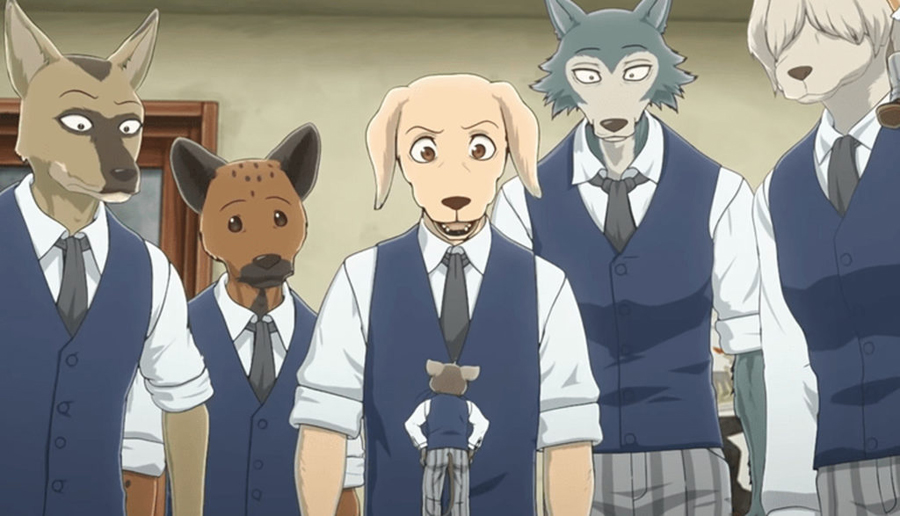
BM: The show began in 2020 and then there were hiatuses between seasons, so you had to jump back into the character. But did your knowledge of where the story was going in the manga help you, because you could see Legoshi develop as a character? I assume your performance of him was different in the first season as opposed to what it is in the final season.
JS: Absolutely. That’s really cool because Beastars is inherently, from a literary perspective, a Bildungsroman. It’s this coming-of-age story, kind of like Catcher in the Rye, where it’s this teenager who is lost and confused in a big world and is trying his hardest to navigate emotions and discovering himself and finding his friends. And we’ve all been there, right? That’s why it’s so accessible and so real to a lot of people. With Beastars, reading the manga was a way for me to actually realize that. I didn’t read the manga until I did the first episode or so, my first session, and then I sat down and read the entire thing as much as it was out, because it was still being produced while the anime was being produced. So I caught up and got as far as I could and yeah, I was able to see where Legoshi was going to go.
Some actors don’t like doing that. There are some actors that like to stay in their ignorance, which is a positive ignorance, right? It is a creative choice because they feel it will affect their read. And more power to them because everybody acts in a different way. I don’t want to cast shade on that. It’s a very respectable way to go about getting a performance out.
I’m curious, though, and I like being informed. Beastars is a really prime example. In the end of season one, we have this dark night of the soul for Legoshi, and at a certain point, he’s like, “Alright, I’m gonna run off and tell this girl that I love her.” And he’s chasing Haru up these stairs. It’s very metaphorical. He’s seven feet tall. She’s three feet tall. But you can see they’re on the same level with these stairs. Really beautiful. It is poetic. It’s very well animated. It’s well acted in Japanese. And he says “suki desu.” In Japanese, there’s a lot of idiosyncrasies between the languages. “Suki desu” is a phrase that means either “I like you” or it is an endearing phrase to say “I love you,” right? And the adaptation [translation] said, “I like you.”
And I’m like, “That’s not what he’s saying. He’s saying, ‘I love you.’ The reason I’m chasing you is because I love you.”
Could you imagine running up the stairs; you’re getting winded; your heart’s pounding. He has these internal thoughts and this external verbalization of it all. He’s “tête-à-tête” with this person that he loves. “Because I like you.” That’s so weak. There’s so much more power behind “I love you.” So being able to read the manga and know that he said that, he’s like, “No, this is an ‘I love you’ moment. This isn’t an ‘I like you’ moment. Can we get an option at least?” Far be it for me to act as a writer, because anime writing is incredibly difficult and again, another technically nuanced form of vocalization. But that’s when you have those informed choices and being able to be like, “Hey, this is what it says in the manga. Do we want to do it?”
BM: What advice do you have for budding young actors?
JS: Be a good person because it can take you a lot further than you think it can. And it sometimes is hard to be a good person. Sometimes it is a difficult choice to be a kind person and to be empathetic. Sometimes you have jealousy or animosity or something like that, but it always pays to be cordial and kind in any way. It is always beneficial. Some of the best relationships that I have had in the industry have been me getting to know receptionists at these studios, getting to know the engineers that are working on your shows, and asking how their dog is, asking how their girlfriend is, asking how’s the family, did you get your car taken care of, that guy threw a baseball through your window yesterday, did you get it, is the garbage bag off the window or did you get a new one? I got some guys. I love the real meat and potatoes of being an actor and going in and just talking to people. Doing the job, yeah, having fun on the job, exactly. But when the job is over, you still need to engage as a human. You can’t just turn it off and then leave, right? You have to be there for people, invite people out to go eat lunch. Going out with your friends and having a good time, fostering that community is very, very important.
_____________________________________________________________________________________________
An expanded version of our talk will be published in an upcoming edition of The Animated Voice.
______________________________________________________________________________________________
Some additional statistics for Jonah Scott:
_______________________________________________________________________________________________
Special thanks to Ta’shja Turner, Katz Public Relations.