Mickey Mouse is an cartoon character co-created in 1928 by Walt Disney and Ub Iwerks.










After six years in development, Pixar’s latest feature debuts on March 6th, and it doesn’t fit neatly into a box. Director Daniel Chong and producer Nicole Grindle reflect on building a layered, comedic, and meaningful film while embracing challenges and letting the story lead the way.
(This Animation Scoop Q&A was edited for length and clarity.)
LAUREN ASHTON: The film is full of surprises. When it begins, it feels like it’s going to be a really fun comedy (which of course it is), but as it progresses, it sort of becomes a deeper and more complex viewing experience. What was your approach to telling such a layered story?
DANIEL CHONG: Well, it took six years to make… and we needed every minute of that to make this movie. And when you talk about the layering and the complexity of the film, it came through the process of time as we were making it—as we looked at it and we screened it, we gave ourselves notes and we got notes from other people in the studio. During that time, the movie just gets deeper as we’re changing it and shifting it. We’re also growing ourselves with the movie as we’re changing it and finding the voice of it over time. So I would say that it was all a process to get to where we needed to go.
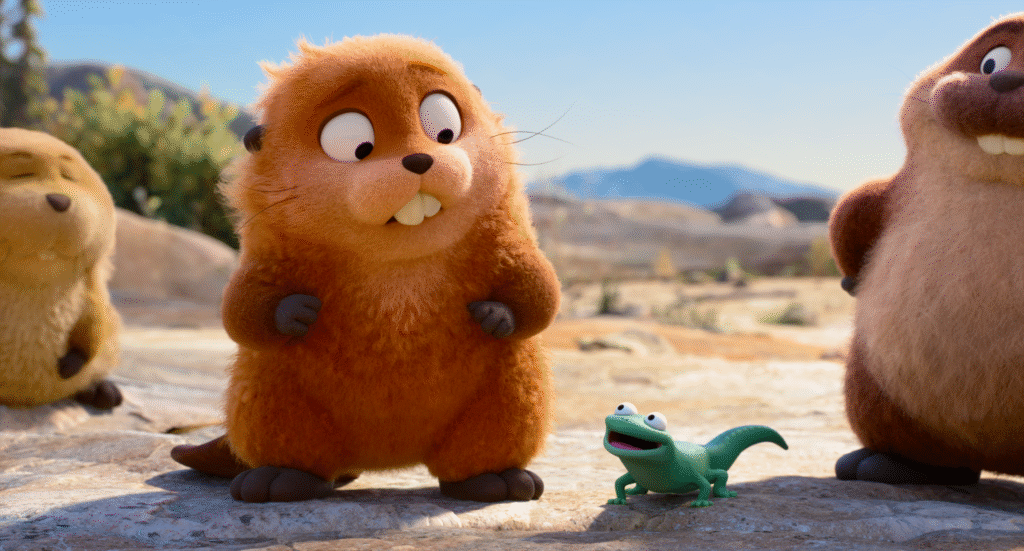
DC: For me, the starting-off point was always the comedy. I knew that comedy had to be a huge part of this movie. It was a thing I had spent all this time on while doing a TV show, working on a comedy. And I knew I could infuse that into the movie. So that guided a lot of my process. From there, we would just layer in all the different parts on top.
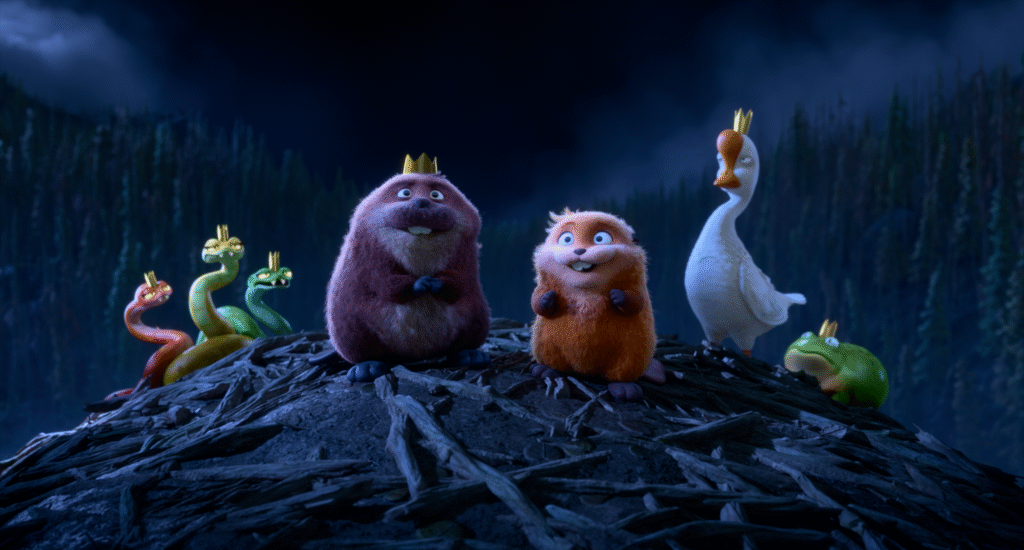
NICOLE GRINDLE: Yeah, for sure. We always knew it was funny. People always told us that they enjoyed what they were watching from the humor perspective, and then we would get notes like, “Do I really care about Mabel? Is Mabel somebody I like? What about Jerry? Is Jerry ever going to change? And King George—what’s up with him?” Those are the kinds of questions people would pose when they’d come out of the screening, and it really helped us to dig in and figure out what’s most important and how to go deeper.
NG: Grandma Tanaka, in that scene at the beginning with young Mabel—that wasn’t there the whole time. It was something that we ended up adding in order to give Mabel more depth and to give us a little more emotional grounding in who she is.
LA: This film is very funny, and it moves very fluidly between comedy and then, at times, really intense, nerve-wracking moments. There were times I was crying with laughter, but then I’d cry from… horror… but then I’d also cry because of the tenderness in the story, which is so much fun to experience in a movie. How do you guys approach this really unique intersection of tone?
DC: I mean, to me, those are the movies I love. I love it when the tone is kind of hard to really pinpoint, and when it vacillates between scary, fun, weird, but also kind of dramatic, you know? I think that’s always attracted me.
DC: And to be honest, on my TV show, we made 140 episodes. And essentially, you’re trying different genres all the time in TV because you have to make so many episodes. So we’d be parodying a movie, or we’d parody a TV show, and we’d try so many things. By the end of that, I think I had a taste for so many different genres, and I think I just used all of those skills when I was wanting to see things put together. To me, that’s one way to make something really feel fresh and original—you just mix and match tones.
LA: Life is that way, too!
NG: It’s true.
LA: That aspect was really satisfying for me. I didn’t know what to expect, and I loved that all the characters developed the way that they did.
LA: So there’s a really lovely through line of community and togetherness in the film. I’m wondering how you guys—throughout all of this comedy and all of these various aspects we’re talking about—how did you approach weaving that into moment-to-moment pacing in the story? How did you come back to that core of community and working together?
DC: Great question.
NG: It is a great question. I love talking about the film at the end as if we knew exactly what we were making and what it was all gonna mean by the time we got to the end.
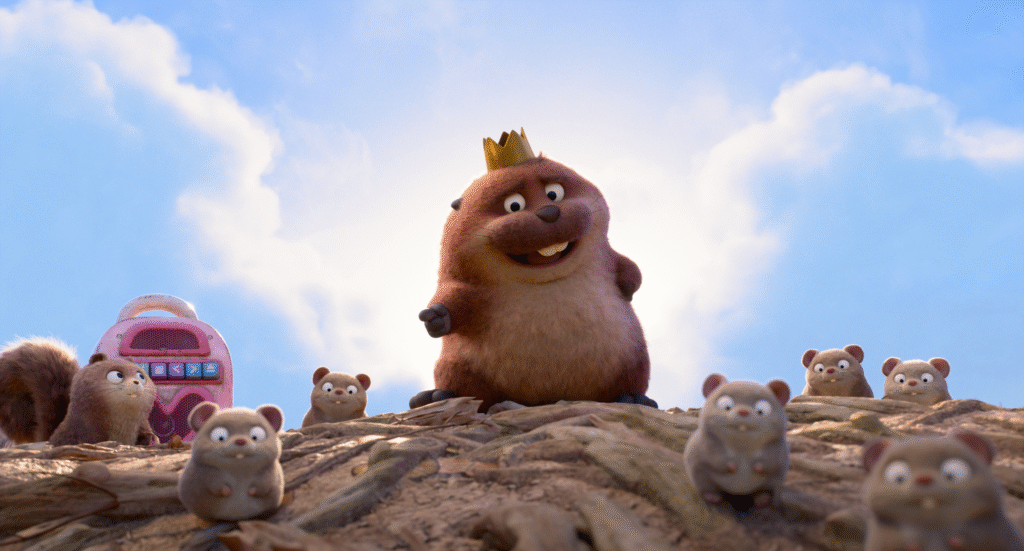
NG: But I think we decided on this world and these characters. We stumbled upon beavers, who are the best community builders. It wasn’t that we picked beavers because they were the story we were telling; they became the story we were telling because of who they are. Figuring out that Mabel was someone who loved animals but was alone—this was something we discovered along the way that was gonna be her trajectory. How does Mabel connect with others? That’s the thing she needs to learn along the way. You know, you can’t just change the world all by yourself. You can’t fix these things without community. But it was something we discovered. It wasn’t something that we set out to do. The story told us, as we were making it, what it wanted.
LA: I think that’s really special. She’s also super relatable. Like, she’s going through all this frustration and trying to fix everything around her, but then it turns out there’s a lot going on within, too, and you know she gets to explore that with the beavers and the rest of the animals that we meet!
LA: I don’t feel like this film can fit into a box. It is a comedy, but it feels like it’s its own genre in a way. It’s really unique.
DC: Thank you!
LA: It’s bold and feels ambitious, especially coming from Pixar. I do think it’s something really fresh and different. What were some challenges that you faced along this journey? Were there things that you were able to embrace? Were there ever moments that you thought, “This might be really hard, we may shift gears?”
DC: To be honest, the biggest challenge turned out to be the main character, Mabel. I think she was. In conception, we wanted her to be this chaotic, like, “We don’t know what she’s gonna do next” kind of character, and I really think that’s why the movie feels the way you described—you just don’t know where it’s going, and that’s a good thing, you know? That’s one way that the story kind of progresses, but at the same time, you also need to ground the audience in a way so that they care about this chaotic character. She has to have context so that we understand why she’s acting this way. So we kind of had a long journey of trying to understand who she is, how to make her a real character that people would believe in and root for.
DC: Honestly, it’s a magical process—not just seeing a character come to life, but trying to give life to a character that people will believe and really side with. I think a lot of work went into the writing and into the shaping of who she is. Her voice, obviously, was a big part of it, so when Piper Curda came in, that gave us a lot of context for how she could sound and how she could navigate tricky scenes so that she was still lovable.
NG: Agreed. Mabel was the hardest character for us to figure out. I was thinking about how a little goes a long way. I was also thinking about all the little scenes we had to add, such as her returning to pet the dog as she’s skateboarding, her scene with Grandma when she’s taking care of her and pushing her hair back. It took us a long time to add all those little scenes, so it amounted to someone who was rootable.
NG: At one point, we started the film with her on the dam yelling at Jerry. And folks just did not like that girl who was so angry. But we thought it was funny! We had set it up as a comedic scene, but people were like, “I don’t know. She’s yelling too much.” So we had to go back and set her up with Grandma as a little girl, as well as add all these other moments. We also show her caring for animals as she’s going to save the day at the dam. Then when she gets there, you’ll think, “Oh, I understand why she’s yelling at Jerry. She’s protecting this place that her grandmother told her to take care of. Now I love her. Now she doesn’t bother me!”
LA: If there’s one thing you hope audiences—especially young people—take away from this film, what would it be?
DC: For me, I wanted to make a really funny film. So when I think about the experience of people going to watch this in the theater—and we’ve been lucky enough to get to experience it with some audiences already—you can just see the joy and feel it in the room when people are having a good time, when they’re on the ride. That, to me, is a very connective thing, and it is what the movie is about. It’s about how we connect with other people, and that alone is already really lovely to see.
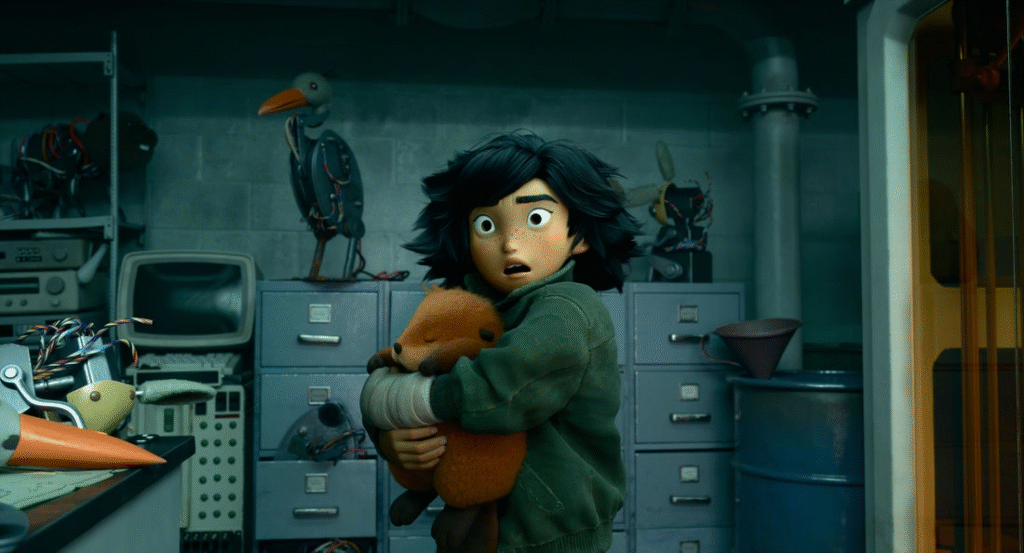
DC: But if the movie also makes people want to go outside and be around nature, that’s great. If it makes people want to be around animals and look after them, that’s great too. But it extends out to an even bigger point of view, because we’re also animals. So if it makes people treat each other better because they see that we’re all connected in some way, that would be pretty good too. I’ll take any of those things. I think it’s all part of the equation of this movie.
NG: Be kind. Love beavers. That’s it!
LA: I think that’s beautiful. For each of you, on a personal level, what does this film mean to you, and how is it unique within your careers at Pixar?
NG: I’ve worked on a lot of different films. This one means a lot. I’ve been involved with it since literally the very first second that it existed. I think that’s very meaningful. And working with Daniel, who’s been a new voice in the studio—I think he’s someone, if I may say so, who may be characterizing the future of Pixar. It has been a real privilege. And I care so much about the message of the film. So it’s meant everything, really.
DC: For me, there are a lot of different things, but I would say I was very conscious coming into this movie, being aware of my responsibility as a leader and my responsibility to the crew, in a lot of the same ways George is in the movie, you know? He is very much me in this movie! And so I think it was a learning process for me—I was hyper-aware that I had a responsibility to all the people on this crew to make sure they had a great time, a collaborative time, and that they enjoyed making this movie. I wanted to make sure they felt challenged, and that they also felt they were making something meaningful.
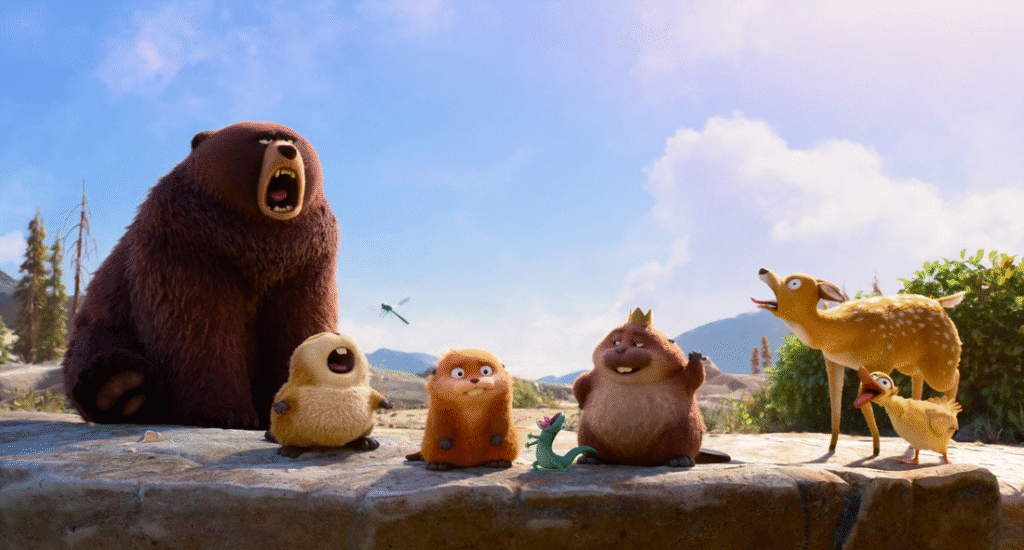
DC: So I think because I was coming in with a very, very clear sense that that was part of my job, it’s very meaningful that a lot of people will come up to me and say they enjoyed working on this movie. That means a lot to me, and I think that’s an important part of my career at this point.
Tickets are on sale today for Disney and Pixar’s new animated comedy Hoppers.