Mickey Mouse is an cartoon character co-created in 1928 by Walt Disney and Ub Iwerks.










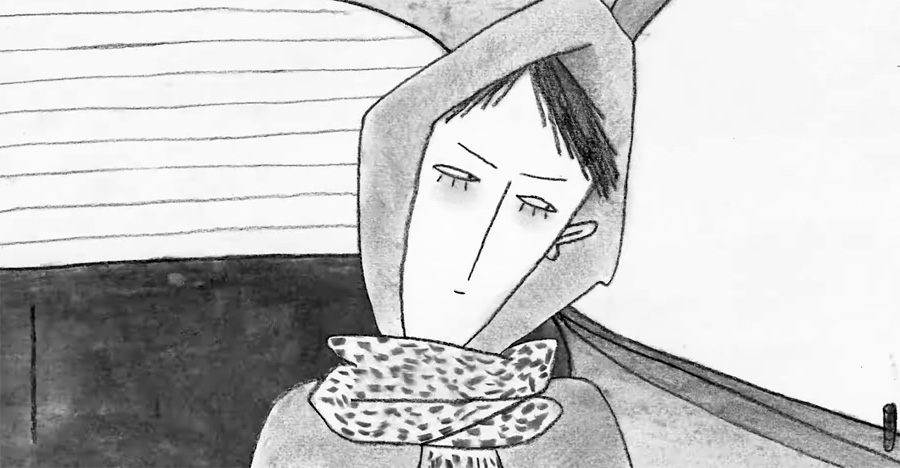
I Died in Irpin is on the 2026 Academy Awards shortlist for Best Animated Short Film. Director Anastasiia Falileieva’s docu-drama focuses on her experience going from Kyiv to Irpin with her boyfriend at the start of Russia’s invasion of Ukraine in 2022.
(This Animation Scoop Interview was conducted as an Email Q&A and was edited for length and clarity.)
Jackson Murphy: This film is based on your real-life experiences from nearly four years ago. How close is this story to what you witnessed?
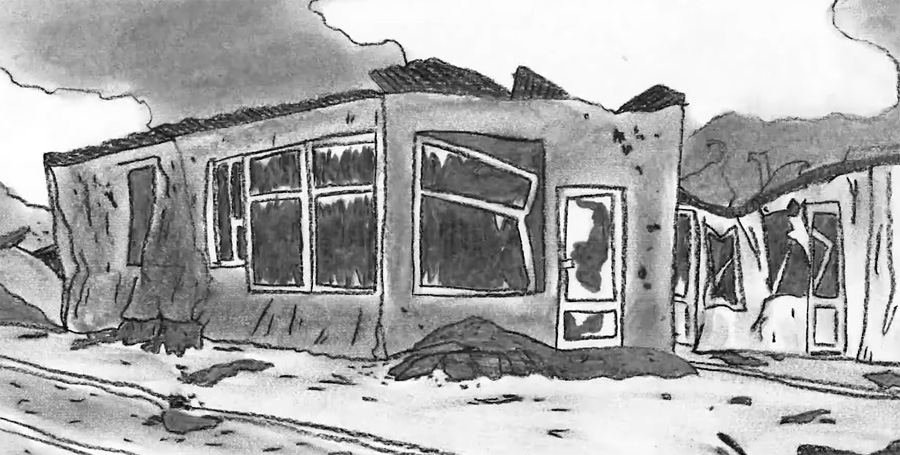
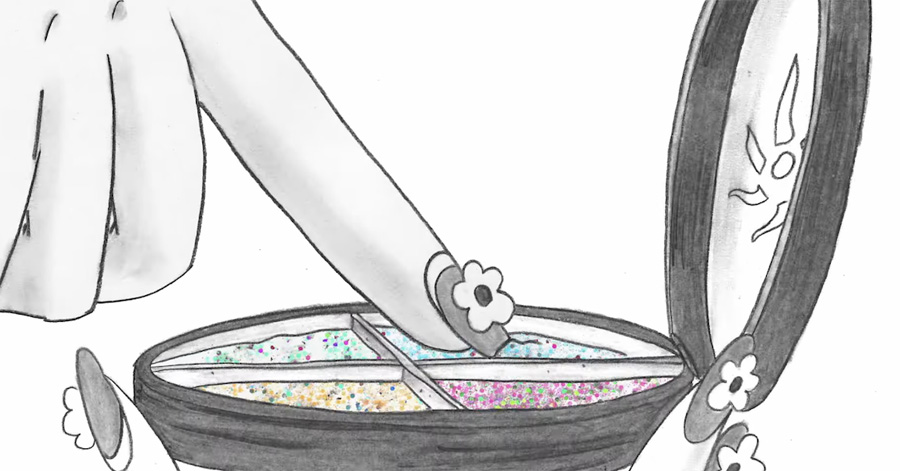
Anastasiia Falileieva: While doing this film I became keen on factchecking. I’ve been gaslighted for years by my ex, and even when we just left Irpin I was told that “nothing happened”. So I aimed to make this story precise to the tiniest detail. The nails, the chicken cup, the apples – everything was built on a real life experience. Lots of shots were copied from photos or videos. The evacuation was rotoscoped.
JM: What was most challenging about taking real, dramatic and dangerous moments and translating them into animation?
AF: Balancing between documenting reality and surrealism of artistic approach was a challenge. But at the same time it was the most exciting part. I adore inventing metaphors and building analogies between reality and my own perception. Another challenge was the electricity cuts in Ukraine caused by Russian attacks on infrastructure. We were navigating between our own duties and work in those 5-6 hours of electricity per day, and that was exhausting.
JM: What was most important to you about your narration?
AF: To be true about everything. And to show both sides of the problem equally. The “external” enemy that is violating the borders of your country on a big scale, and the “internal” enemy that is ruining your personal security and independence. I can understand the war intentions and political purposes – Russia wanted to take Ukraine for hundreds of years. But I will never get abuse in the relationship and why someone decides to ruin another person. The film shows 20% of the subject of abuse in those relationships. And the scariest thing is that you only notice that when you are out of the situation. The victim of abuse most commonly is not aware of what’s going on, that’s how it works psychologically. And the most clever and successful people can seamlessly get into this situation without knowing. That’s why it is so hard to leave such relationship, and so hard to process it after – because you think you was the reason of the bad things, not somebody’s else wicked desire to suppress.
JM: How did your work on previous animated shorts prepare you to take-on something so personal and emotional?
AF: All my films were personal. So is “Irpin”. So is my next piece. Cinema is my main coping mechanism. With every film the degree of openness is rising and I love this. But not as an oversharing but in a vulnerable way. It is painful but very healing and freeing and I can see how it heals other people. So this torture is worth it. If someone felt heard and seen because of my film – my goal is completed. Unfortunately too many people felt connected to the film, because they also experienced abuse, and that breaks my heart.
JM: What is your advice to aspiring documentary and animation filmmakers about telling stories?
AF: Being honest and straightforward. Making films about subjects that they had been thought and are highly interested in. I believe that experiencing the thing you are filming about is essential. And I believe all good films are necessarily deeply personal in a way. It could be hidden, not obvious, etc, but it will be definitely noticeable.
JM: Your short screened at Annecy and has won honors at several festivals around the world. How has the reception been?
AF: I worried how people will welcome the film but everything turned out better than I expected. I received dozens of support, and every kind word was healing me. I felt like I finally confirmed that I am not crazy and my experience is valid. But the sad part was that I found out how many people had been through the same in terms of abuse. Especially women. I appreciate all heartbreaking stories that they shared with me. Some of them were very similar to mine – girls who occurred in Russian occupation with their abusive partners or just very wrong people. Others were from another corners of the world and were no less cruel. I hate how universal this experience is. That’s why it resonated. For some people my personal story helped to connect better with the war theme – which was also essential to me. Because war is happening to real people, and it is not just numbers of casualties and news on TV. Sometimes from the side it can be perceived as just historical events, forgetting that it is all happening to real Individuals.
JM: What would an Oscar nomination for “I Died in Irpin” mean to you?
AF: That the world is ready for tough conversations. That Ukraine is still heard and seen. That is the huge war in the middle of Europe which affects all the world and we need to talk about it despite society’s fatigue, in order to prevent Russia from getting further. I find highly necessary bringing abusers into the spotlight, from the individual people to the scale of countries and dictators. Because remaining silent normalizes violence.