Mickey Mouse is an cartoon character co-created in 1928 by Walt Disney and Ub Iwerks.








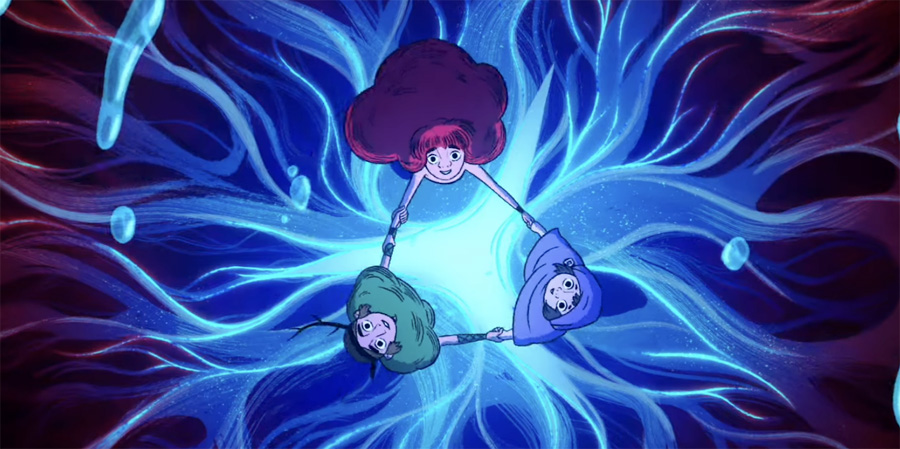
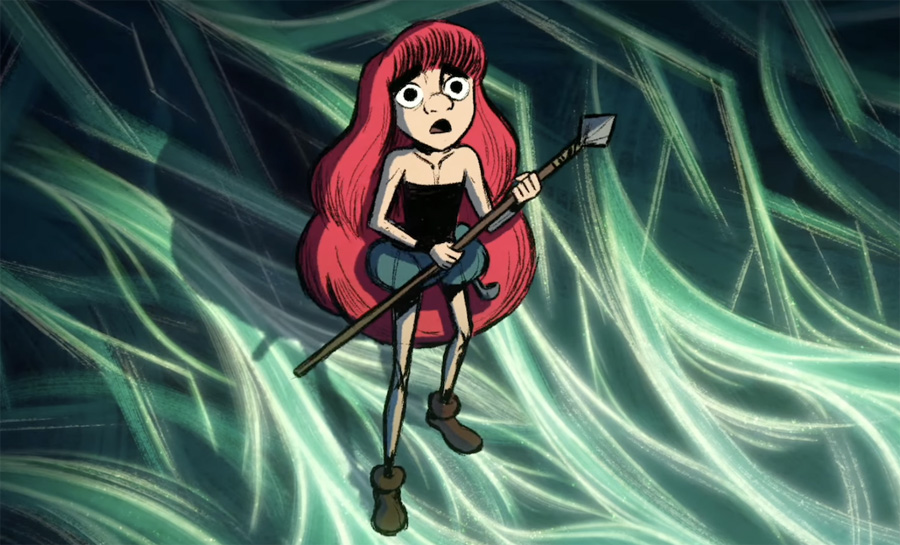
Cartoon Saloon has earned five Oscar nominations to date: four for Best Animated Feature and one for Best Animated Short Film. CS is back in the Animated Short conversation — on the 2026 Academy Awards shortlist for director Giovanna Ferrari’s Éiru, about a girl in a warrior clan who seeks to find missing water and may discover much, much more. (This Animation Scoop Interview with Ferrari was conducted as an Email Q&A and was edited for length and clarity.)
Jackson Murphy: Éiru is a child who wants to be taken seriously and prove herself, discovering so much about humanity on her journey. What do you love the most about your lead character?
Giovanna Ferrari: I like that she opens up with others and creates new connections rather than shutting down and allowing herself to be defined by her clan’s mockery and indulge into the easy scapegoating trope of “it must be the other clan’s fault”. I like that she uses her drive to connect people and share resources with people around her rather than to obtain things for herself. I would love to think that this kind of gesture is contagious. We need that nowadays.
JM: What was most challenging about crafting the story arc?
GF: I guess it was giving it a satisfying ending, something that could be uplifting without being Pollyanna-ish or obvious. I really didn’t want her to sacrifice her life at the end. That would have played into a hero narrative that is part of the problem (her clan’s warriors mentality sees people that die in battle like heroes). I wanted her to learn something through sacrifice, but the sacrifice needed to be something we could all do, and it is something children do with less pain than adults: step out of your own comfort zone, let go of “your” way, in order to build a larger community and network and just be curious and trust other humans!
JM: How did your work on Cartoon Saloon features such as “The Breadwinner”, “Wolfwalkers” and “My Father’s Dragon” prepare you for “Éiru”?
GF: I have worked mainly in story departments and very close to directors, which really taught me a lot. On one hand it gave me the chance of knowing my producer Nora Twomey so well and we really trusted each other deeply, which proved very useful on “Éiru”. For example I didn’t have to waste too much time refining my storyboards because Nora is used to working with me as her head of story, so she could read my roughest sketches without issues. On the other hand I learnt a lot of how things work in the studio and in general in moviemaking so that it wasn’t daunting for me to direct a short, and I was excited rather than anxious. I truly enjoyed it.
JM: What went into how you used shades of red, green, purple and blue?
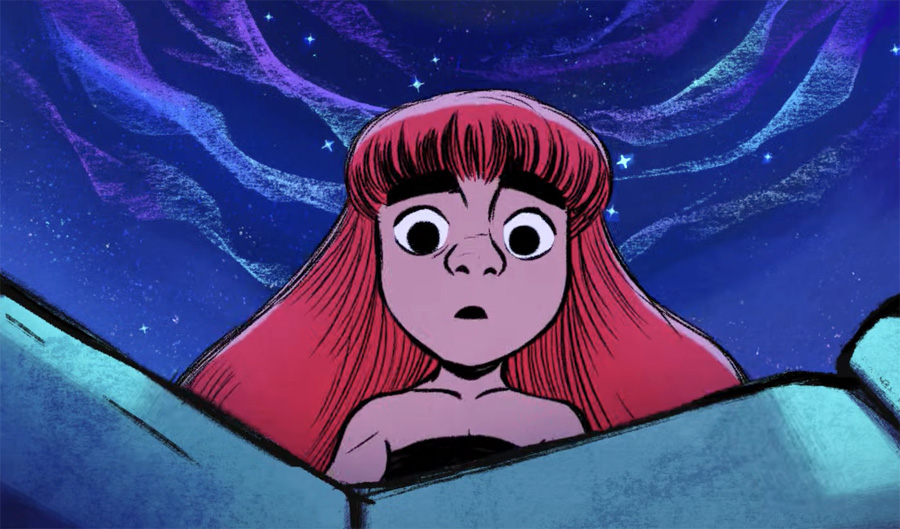
GF: Aine McGuinness, our art director, worked a lot to figure out how to make each symbol in the movie resonate with colors. Of course there are the clans, and each one has a different color, and they need to clash against each other at certain times but also look good together. But there are also other symbols more pertaining to Irish folklore, specifically to the Goddess Brigid, like the water, the fire, the forge, the healing. These all had specific chromatic choices that Aine tested until we were happy with the look. The color board was very useful to see the whole short together chromatically.
JM: At the core of the film is the theme of connection. What was most important to you about presenting this theme?
GF: I think lack of connection on a big scale leads to disaster. It’s very easy to create friction between people when they are disconnected, and history should have taught us what happens when we don’t make the active effort of connecting with each other. Creating connections is hard, it’s a journey, it doesn’t come easy, but it’s extremely vital that we do so especially in this historical moment. Unfortunately I cannot create policies that facilitate connections among humans, but as I’m a filmmaker I can make something that helps create the conditions for that shift to happen.
JM: Who are your animation heroes?
GF: I don’t like the concept of heroes, really, but I look at the women around me who are doing incredible work and art, and are pushing the limits every day, while having to take care of a thousand other things, while having patchy healthcare and childcare, and think, wow. I think about Mailys Vallade, who is an incredible animator, story artist, director, and is paving the way for so many more people, I think about Nora Twomey, who has been such a mentor and an unbelievable producer and director. But I also think about all the less famous people who just carry on with a smile, although times haven’t been easy, and just show up for their team every day. I think at this moment pretty much the entire industry is doing the heroic job of keeping cool and carry on.
JM: What would an Oscar nomination for “Éiru” mean to you?
GF: I am incredibly aware of how hard the animation industry has been for many, many people, in the last years and I cannot express enough gratitude for being shortlisted for an Oscar in this moment. I already feel so lucky. Being nominated would be beyond amazing and also feel a bit unreal. It would be great to know our film would get even more visibility and its message would travel even further. It would also feel like a warm hug, to think that many voters appreciated it, especially because of the message of the film, and because of it being traditionally animated, it would make me feel optimistic about the future not only for myself, but for a world that still cares about humanity, art, and peace.