Mickey Mouse is an cartoon character co-created in 1928 by Walt Disney and Ub Iwerks.







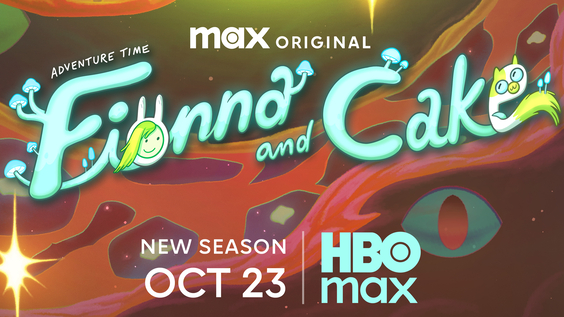
As spin-off series based on the fan-favorite episode from Adventure Time, Fionna and Cake follows the gender-swapped counterparts of Finn and Jake on their very own adventures in the multiverse, and season 2 is live now on HBO Max! This past week, we had the opportunity to interview showrunner and executive producer Adam Muto. (This Animation Scoop Q&A was edited for length and clarity.)
Haylie Baker: For my first question, I wanted to say—Fionna and Cake has received a lot of praise for its mature themes and emotional storytelling. Has that positive feedback influenced your approach going into season two?
Adam Muto: It resonated enough to get a season two, showed us that we could continue down that path. I think just getting enough views and having enough of a response was very validating. It’s very awesome.
HB: Having been part of Adventure Time’s creative team since the early days and now leading its spin-offs, do you ever feel any pressure to live up to the expectations of long-time fans who’ve grown up with this world—and has this affected the development of Fionna and Cake in any way?
AM: Something we were very conscious of when we first started doing any kind of follow-up series was that the original run was beloved enough that people got an attachment to it. When you add more to it, there’s always a risk of either ruining it or detracting from it. It’s part of bigger companies—now it’s IP for lack of a better word, there will probably be more Adventure Time stuff. Maybe not constantly, but for the foreseeable future in some form or another. Definitely removes some of the pressure, because it’s not necessarily any one person’s responsibility, but you definitely don’t want to be the one who drops the ball.
HB: Yeah, that makes sense. In telling a multiverse story, there’s definitely a lot of possibilities to be explored. How do you decide which worlds or characters make sense to explore within a story?
AM: There’s definitely a blue sky period where you’re just trying to write down as many ideas as you can, like what would be cool to see, what would be interesting to see, what would be different, what would be something that we’ve established within the show that we can build off of. I think it’s the latter that you end up following the most because at some point you realize it’s very cool to do a multiverse thing, but that’s not necessarily a story. It’s like, oh that’s cool visual, or that’s a cool piece of art, or that’s something that could be explored in fanfiction, but it doesn’t necessarily add up to multiple episodes. I think you get a lot of self-contained episodes that way, so a lot of time when we were deciding for the first season what world they should go to, it was always based on what would put something else in relief. You know, what would reflect on Fionna or Simon or Cake in a way that a visually crazy but maybe not a very character based world might not.
HB: That makes sense. That kind of leads into my next question. Are there any plot points or characters that you didn’t get to explore as much as you wanted to in season 1 that you’ve gotten to explore more in season 2?
AM: I want to say that Finn’s presence in season 1 was more of a cameo. We didn’t want to feature him too heavily, so I think finding a way to thread him through this season without drawing too much attention was something that was appealing, for sure. Even though the episodes are longer, that is a finite amount of real estate. There’s one-off things that end up getting moved completely that would have been funny, but had to be sacrificed for time. There was a stinger at the end of season one that would have led directly into season two, but at the time we didn’t know if we were getting a season two. Even though it was animated, we removed it as an after credit scene because it felt too depressing that it was the last scene.
HB: I see. With Fionna and Cake taking on a more adult tone than the original series, was that an intentional shift to reflect the fact that many fans have grown up since Adventure Time first aired, or was there more to this choice?
AM: Probably a combination of things. The characters had grown older and the actors had grown older, and it feels kind of hard to freeze them in amber. Because even over the course of the series, the way we would treat Finn changed over time because it was a little harder to write him as the season one version by season eight or nine. But definitely having viewers that were in a different phase of their life made it easier as a pitch to HBO Max and Cartoon Network. And generally just because we had the volume of episodes from six to eleven there wasn’t a ton of interest, at least at the time, to do more not being that bold. So it kind of coincided with even how programming has changed. Just that sort of confluence of factors.
HB: Well, that makes sense. So since there’s been sort of a multiverse craze in the media in recent years, how do you feel Fionna and Cake has put its own spin on the concept or particularly does well exploring?
AM: The fact that it was organically grown out of the series, like the first couple that they go to, is something that showed up in the original series. We tried not to approach it as like a complete gimmick, but more as part of the world that we already established, and even sort of the origin of Fionna and Cake, as like, fanart tropes, just leaning into that as opposed to trying to make them a distinct version of Finn and Jake without any sort of justification. Anything we could do to avoid just having a portal gun, because Rick and Morty has done that, so if we’re just repeating something that another show’s done, then it felt like that was not the right path. We also didn’t want to underdo it, because there is a way to tease the idea and never actually explore it. We definitely wanted to place episodes within those worlds so that they could be in a stranger’s land and have time without just showing a multiverse in a montage and then basically staying in the world. So trying to find the balance between those two.
HB: That makes sense. What role do you think nostalgia has played in Fionna and Cake for you personally?
AM: For me personally, it partially fuels why a show even gets picked up like Adventure Time at this point in its life. But I feel like if it was just that, it wouldn’t be enough to sustain it. So if nostalgia is like a return to home, I haven’t actually left Adventure Time in a while. I haven’t left for a substantial amount of time to actually be nostalgic for Adventure Time. I think other people sometimes will get nostalgic and come back to return to work on it. But I’m the kid who didn’t leave home, so it’s very hard to get nostalgic when you’re still in the studio.
HB: Yeah, that makes perfect sense. What inspired the decision to make Simon and Betty’s story and the theme of love such a central focus in Fiona and cake thus far?
AM: Where the original series left off, it left Simon in a state that we knew we couldn’t really do earlier than the final season, which was to have him be completely changed from Ice King. But that wouldn’t necessarily cure him in any substantial way, it would just change him and actually might make him worse off. So taking where he would naturally be after the events of the first season and the conclusion, and using that as his starting point for season one. And the things that led him to be there in the first place, which, you know, we had been seated throughout the series and his relationship to Betty, but it didn’t necessarily get a happy ending. It was more…an ending driven by people being unable to change and being too rooted in their past. So though it is like a love story, it’s not a completely sentimental one. Their relationship was always a little more complicated than they wanted to admit or were able to see, so I think that layered element to it was something we could do easier in this series than if it was like the b-story of an 11-minute episode in the original series. It felt like it was still organically grown off of like what we had seen.
HB: That’s awesome. Thank you. My last question is, without spoilers, was there any part of season two you feel has been the most rewarding to see come to life?
AM: Getting to see all of the stuff that we were just brainstorming two years ago, seeing it fully animated now, seeing the gorgeous background work—it’s like seeing it come together, because to me it really doesn’t exist until you get the work with that and you get the final mix. It feels like that is the moment that it actually exists and then it has its own life. I feel like everything up to that point is waiting for it to be a thing. That’s more what my personal takeaway is. I think what people will take away can be completely different. I think the things that people respond to mostly are characters that they feel like they already have a relationship to. If they see Huntress again, or a version of Fionna or Prismo, as long as they’re acting in a way that feels recognizable, that seems to have a bigger reaction than a cool spectacle or a character that has a very cool design. Which, you know, can go a long way. But I don’t think it necessarily has the same emotional impact as something a lot simpler like the characters that show up. You also don’t want that to be not enough to justify their appearance, or as a story point, you don’t want that to be just, I remember that, I recognized that. I think that’s the risk of every long running franchise and IP thing.