Mickey Mouse is an cartoon character co-created in 1928 by Walt Disney and Ub Iwerks.










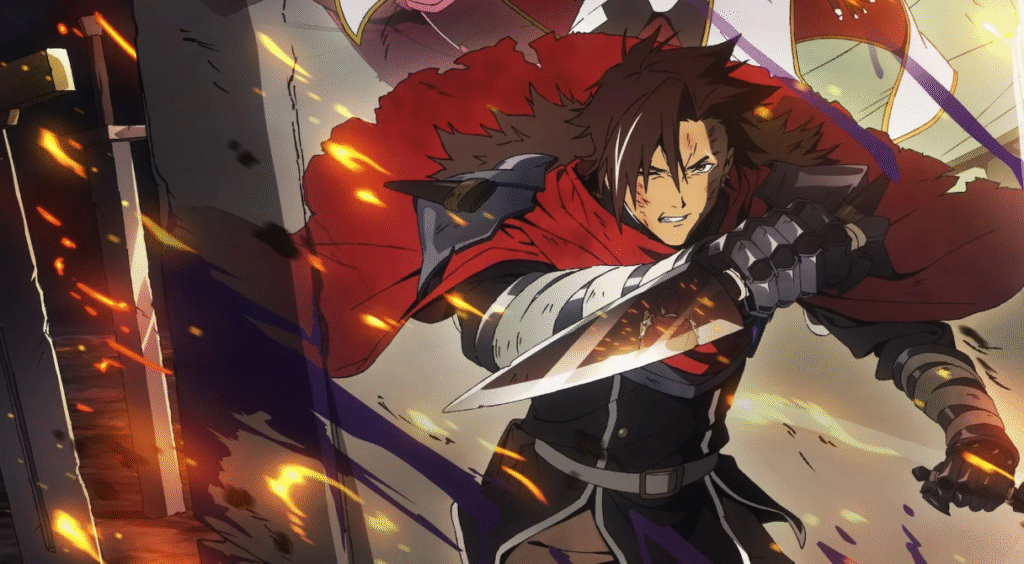
Derek Kolstad, the creator of John Wick, is now the showrunner of animated action series Tom Clancy’s Splinter Cell: Deathwatch. The video game adaptation, with plenty of cinematic inspirations, premieres this Tuesday Oct. 14 on Netflix. (This Animation Scoop Q&A was edited for length and clarity.)
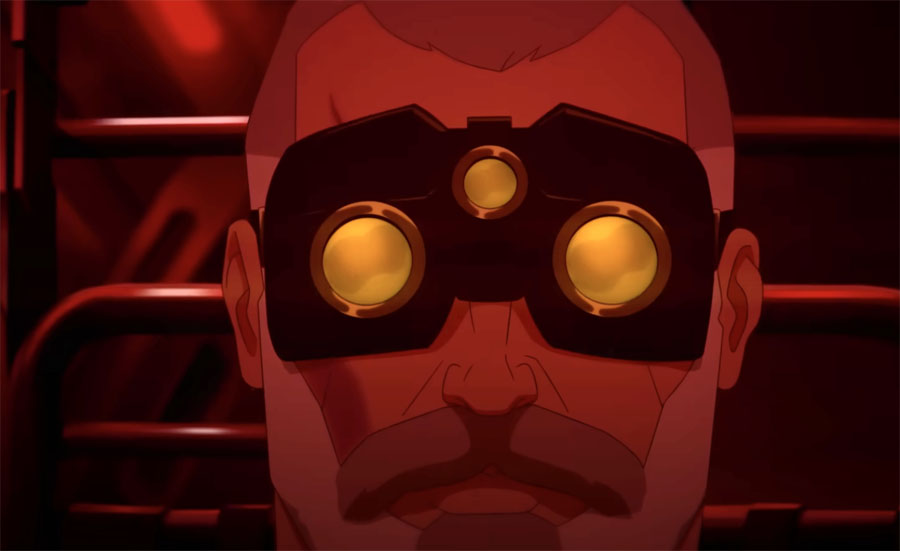
Jackson Murphy: I have enjoyed some of the Tom Clancy adaptations. I love “Jack Ryan: Shadow Recruit”. I’ve screened the first couple episodes of this show, and it is so immersive and effective. Were you a Tom Clancy fan? How did you first get involved in coming into animation television with this?
Derek Kolstad: I’m a child of the ’80s, so when Clancy came out, all my uncles were reading it. And then aunts as well, grandparents, and I came from reading. I would always track down those old paperbacks, like the extensions of James Bond or “Man from Uncle” or “Bourne Identity”. I loved Alistair MacLean and Dashiel Hammett. And you go down that rabbit hole. I knew Clancy quite well, and I still remember my jaw gaping at “The Hunt for Red October”, that original first one. And when this came my way… because of Clancy, I’d never played in that kind of arena before. And I’d never done an animated series. I like doing things I haven’t done before, so I get to learn it. And it was a delight.
JM: Any surprises for you as far as your approach to crafting scenes in animation versus writing scenes for live action, which you’ve done to great success now for a long time?
DK: I’m a movie guy first, and even with live-action TV, it’s just a 3% perspective shift. The scripts are a little bit different. And in fact, when I do the comic book thing, I partner with a comic book writer ’cause they look at it very differently. They look at the way a comic book needs to be. And I think here it was very fun to write up an action sequence. But you turn that over to an animation studio and they’re like, “Thank you…” On the one hand going, “Yes, this is awesome!” And… “It’s still a lot of work.” And yet Guillaume [Dousse], the director, and that whole crew… we got excited because if I got a note from them that created work but made it better or vice versa, you get excited about it ’cause you made it better. And there are things that you can do in animation that you cannot do elsewhere. It’s this fertile territory that even now I learned a little bit more, but there is this chasm / this divide between what we’re doing with the scripts and what the animation studio was doing on their end, but ultimately, in order to make that work true collaboration is to trust each other. And we did.
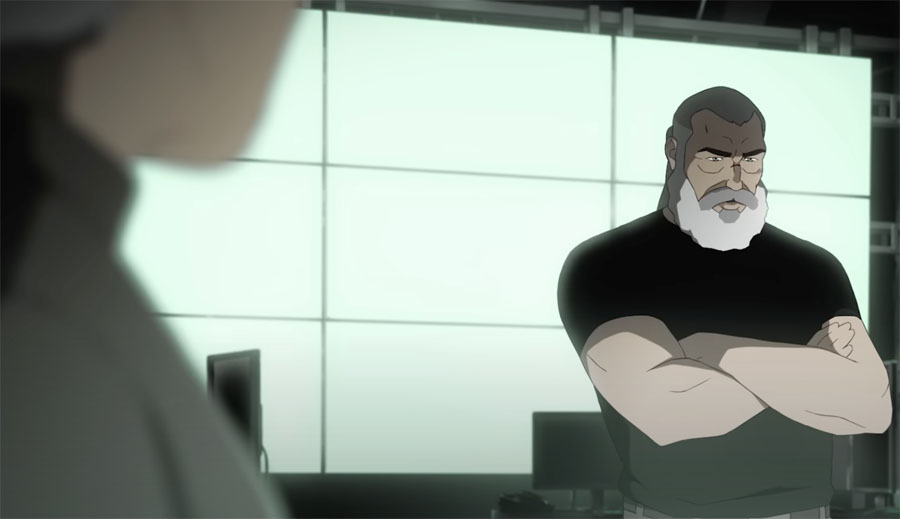
JM: I love how you bring us into the first episode with action scenes that don’t have a lot of dialogue, have some very cool editing, but the lighting, especially in various rooms and what you do in dark rooms versus light rooms, nighttime, daytime, street lamps… There’s a lot there. What interested you the most about the lighting aspect in working with the animation team?
DK: That’s on them, man. They did a phenomenal job. Usually the way I describe how I like a scene, or even the script, but in dialogue with my writers is… Bring it up on YouTube. Look at this scene from “Ronin” — De Niro and Frankenheimer, late nineties. Look at the scene from “Three Days in the Condor” with Max Von Sydow in the book depository. Even if it has nothing to do with the scene that we’re working on, it has everything to do because you’re going for that tonal shift. You’re going for that feel / that appeal. Kind of like the beginning of “Point Blank” over the opening credits… Lee Marvin is just walking down the hallway of the airport and you’re like, “This is a great white shark.” So when it comes to lighting, they’re the masters. And yet, at the same time, when we discuss things in the room, we discuss things with them. “Remember that shot in that movie that we loved? Something like that.” And then they bring their own magic.
JM: That’s very cool. Sam Fisher, the agent, is brought back. He’s voiced by Liev Schreiber, who has such a great voice. What does he do for you and for the show as far as the layers to his voice and the approach he has to dialogue?
DK: It’s funny… it would be easy for him to come in and try to do what Michael Ironside did back in the day. But instead he brought in this kind of weathered gravitas. I think that Sam kind of went the other way in his old age. Instead of being mired and anchored by cynicism, he actually gained empathy. Maybe not hope, but empathy. What I love about Liev’s work is that there is a kindness even amidst the brutality and the hopelessness and this matter of factness at times, that could in other voice actors’ hands go bleak. But in his, it’s just the acceptance of fate and it’s almost as if he’s saying, “I know what I need to get out of this. I think I can. But let’s see.” And a lot of times too, it’s some of the dialogue that he chose not to say that makes the dialogue that he says all the better still — just rendering it down.
JM: What a good actor. The story arc of a video game is very important, just as much as the action, and that goes along with a television series as well. What were your goals with the arc that we’re gonna get over this season and in working with the team at Ubisoft on making an effective arc, especially for the fans?
DK: Well, one of the things we talk a great deal about is, “If there was one Die Hard”, you’d be happy, right? It’s fully encapsulated, but because of the strength of the character, you got more. Same with “Dr. No”, the original Bond movie with Sean Connery… and even with “John Wick”. The movie has a beginning and an ending. If there’s only one, I’d be just as proud of it. I think people would like it just the same, but [if] there’s enough seeds of creative thought that you could bring to harvest throughout — then let’s do the franchise. So I think here… we’re looking at this world going, “Let’s make sure it works as a series that no one has ever heard of the IP. Let’s make sure that if someone stumbles across this and doesn’t even like anime or cartoons, in those first couple of minutes, it’s like, Ooh.”The big thing was just to cast as wide a net as we could in such a way that you’re not ostracizing the fan base — and you’re not slamming the doors on those who are kind of curious. And when you look at the arcs that we chose here… you have the plot, and the plot happens. The plot works, but really you care about the characters. You wanna see Sam and McKenna survive. You wanna see Thunder come into his own and to see this team that had been splintered come back together. And I think we talked more about the character and the evolution of said character that at the end of the season here, I hope we earned our way into more. Have another season with these guys. Splinter off and see what Thunder does in a decade… McKenna… go back in time. There’s any number of places we could go, but you gotta make sure the first one works.