Mickey Mouse is an cartoon character co-created in 1928 by Walt Disney and Ub Iwerks.









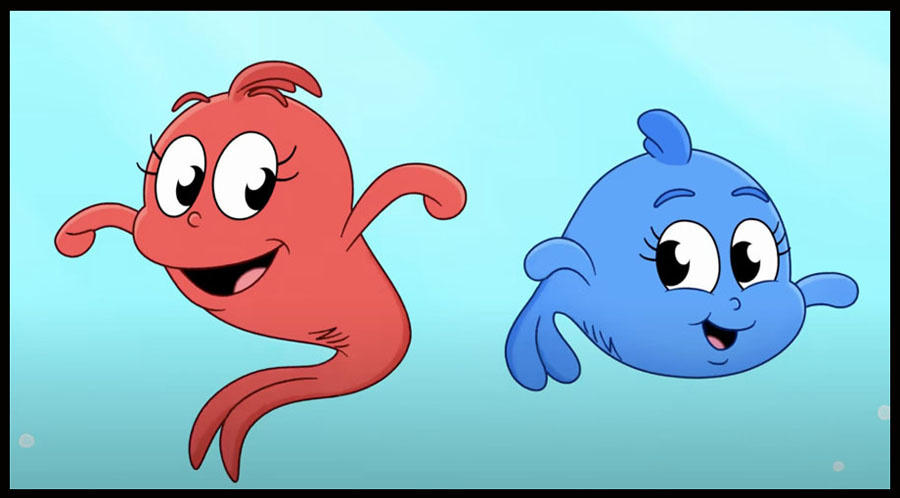
Dr. Seuss: an iconic author and an iconic brand when it comes to film and television. Three new animated programs are coming to Netflix this fall — Red Fish Blue Fish (starting this Monday Sept. 8), Horton! (Oct. 6) and The Sneetches (Nov. 3). Two-time Emmy winning executive producer Dustin Ferrer (Peg+Cat) discusses all three, with glee. (This Animation Scoop Q&A was edited for length and clarity.)
Jackson Murphy: First of all, how does it feel to take on three adaptations and have them come out at basically the same time?
Dustin Ferrer: It’s strange. It’s wonderful. It at times was overwhelming, but mostly like shockingly all went off without a hitch, without too much stress. It was a wild adventure to be working on three shows at the same time, but it was also nice. They all sort of are very unique and different from each other, but they definitely share a common DNA.
JM: When you think about taking on these Dr. Seuss classic works, and you work with the folks at Dr. Seuss Enterprises, what are the goals and the collaborations that you and them have in mind for all of these?
DF: It’s a great question. First and foremost, I think all of us just want to do justice by Dr. Seuss. We want to be true to the spirit of his work, of the visuals, while also making something new and modern and fresh. Working with Dr. Seuss Enterprises, they really wanted all of the projects to be very distinct from each other and be visually distinct from each other. I think a lot of people might think that they want everything to be 2D and more in that drawn style, but they didn’t. They wanted everything to have its own distinct look and to have all of those be different. But like I said, we wanted everything to share a common DNA. So we did try to visually be as true as we could to Dr. Seuss. And sometimes that meant his distinctive pupils — having that across all properties. They were wonderful to work with, and they’re as excited about creating something new as we are.
JM: I love how all of them look. We start with hand-drawn with “Red Fish Blue Fish”, and as I watched the first couple episodes, I just… They’re so happy. They’re so positive. There must have been a lot of joy in working on this because you have characters who are so joyful in all the different occupations and tasks that they have.
DF: Yes. It feels really special. It feels really unique, as I’m sure you noticed, it’s verbal light. The curriculum for that show is oppositional vocabulary words. So each episode has an opposite pair that we’re trying to teach. In having such a limited vocabulary, we really had to focus on visual storytelling, which was an exciting muscle to flex. I learned so many lessons. I’m glad that it came across as joyful because it certainly was, but it was also very difficult at times to tell a story without words — and to make sure that it’s clear and concise and understandable for preschoolers, but also funny. We had a lot of boxes to check, but we had an amazing team and I really think that… it ultimately all works. So I’m excited for people to see it.
JM: For young kids to look at these characters and go, “I wanna do that. I wanna take on that challenge.” They’re babysitting. They’re pet groomers. They’re on the farm. There’s so many possibilities in life, and there’s so many possibilities you have with these characters. And the lessons I’m sure are a huge component of something like this as well.
DF: I’ve never worked on a vocabulary show before, so that was top of mind, making sure that the words were clear. Without any language, how do you show their friendship? How do you show their distinct personalities while also servicing a story that goes back and forth between these opposite words? So we had our work cut out for us. (laughs)
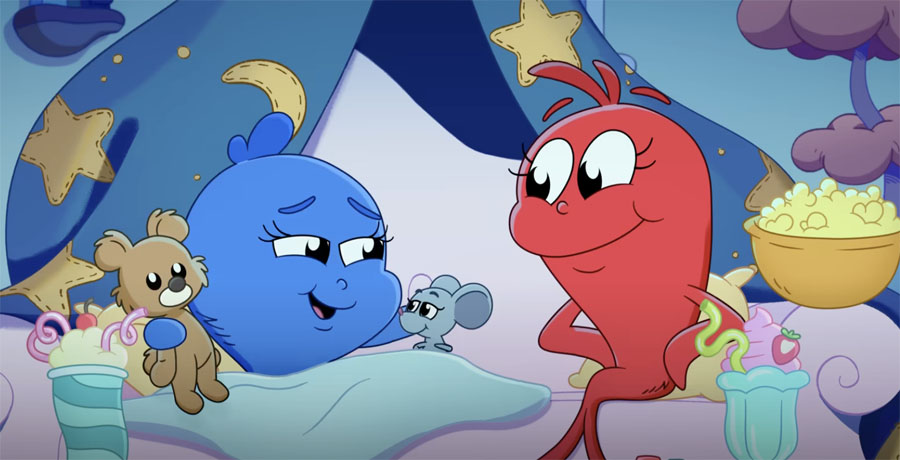
JM: And you get little vignettes before each episode starts to explain the contrasting words. I’m sure a lot went into even these little ten second vignettes we see.
DF: You would be shocked how much time we spent on those vignettes. (laughs) We had a really unusual, but I thought it was a very cool, workflow process. We had something called a Brainstorm Team. They weren’t necessarily writers. They were artists. And so once an outline was done, we would work with this team to just sketch out… we’d come with ideas for what that vignette might look like, but they’d all come with sketches and we would kind of as a group work out, “Which one is the clearest? Which one is the funniest? Which one is the most character based?” So yeah, you’d be surprised how much effort went into those little… even just the lessons for the words in the first 10 seconds.
JM: And that’s all very important, as well as having rhyming narration. Of course, that’s what Dr. Seuss books are all about. Was that a no-brainer decision in how you make sure that that works too?
DF: You know, it wasn’t… because Netflix is so global and because rhyme doesn’t always translate across languages. So for example, if you’re rhyming cat and hat, in another language those two words don’t rhyme. I’m really glad that we ended up having rhyming narration, but we had to be careful that it could be something that could be translated in some and that the essence of the rhyme didn’t depend on two specific objects. So yeah, a lot of thought went into that as well.
JM: Interesting. Let’s go to “Horton!” The 2008 “Horton Hears A Who!” animated film from the folks at Blue Sky was wonderful — and now we have Horton depicted as a child in this. Tell me about that decision and watching this character over this series.
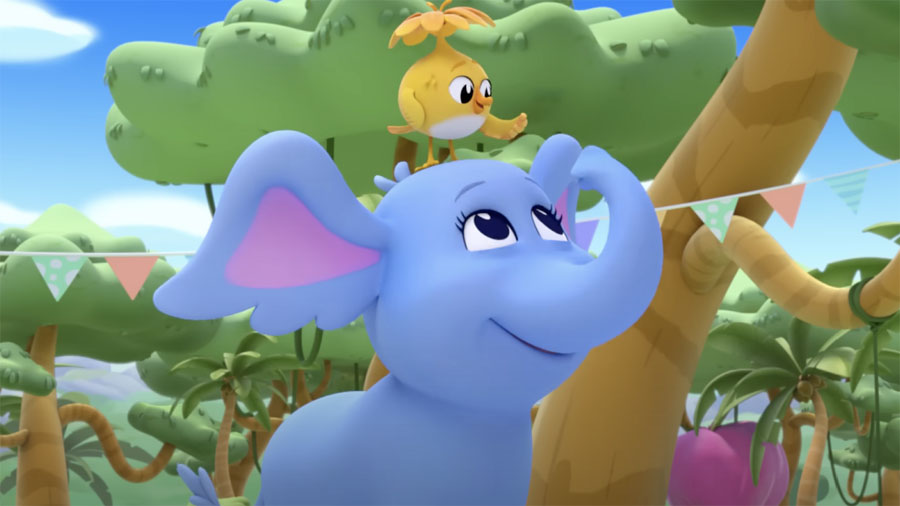
DF: This series is for preschoolers. The audience / target age group is three to five. For us, that decision was pretty easy to make Horton a younger version of himself and to think about the elephant who means what he says and says what he means and always sort of stays true to his words and will go to great lengths to keep a promise. What was he like as a kid? Spoiler: he’s very similar. (laughs) But we gave him a little sidekick, a best friend named Samson, who’s a bird, and together they help other people in the jungle of Newell. It’s a very sweet, funny 11-minute show for preschoolers.
JM: Nice. CG — and lots of adventures and also themes of loyalty and bravery. That’s what Horton’s all about. And for so many, Horton is one of the cornerstone characters of childhood and growing up. So for the parents and the grandparents watching these shows, how do you think they’re gonna feel emotion-wise, seeing this Horton on the screen and then watching their little ones take it all in too?
DF: I can only hope that the parents and grandparents love it along with the kids and that we can extend Seuss’s legacy. I do feel like we were definitely true to the essence of Horton and the characters in the book. We have a very fun villain in Jane Kangaroo, who is from the multiple Horton books. Very light comic foil. They’ll get to know and love the jungle of Newell, and I hope we bring people to the books as well as people who know and love the books come to the show.
JM: Yeah, that’s gotta be a goal: the value of watching something and the value of reading something and taking in the illustrations. And yes, to continue the Dr. Seuss legacy for another generation. The works are so important and you took on a huge responsibility with these. I’m sure you felt the pressure, but I think it’s gonna pay off because these are gonna be embraced so much.
DF: Thank you. Yes, I do feel the weight of that responsibility, but like I said I really hope that kids and families will come to love these shows as much as the books.
JM: Including “The Sneetches”, which starts Monday, November 3rd. So this is a special — about 45 minutes long. And so how did you want to approach this as a special versus a series? And the story of “The Sneetches” is very interesting, about being different and being together.
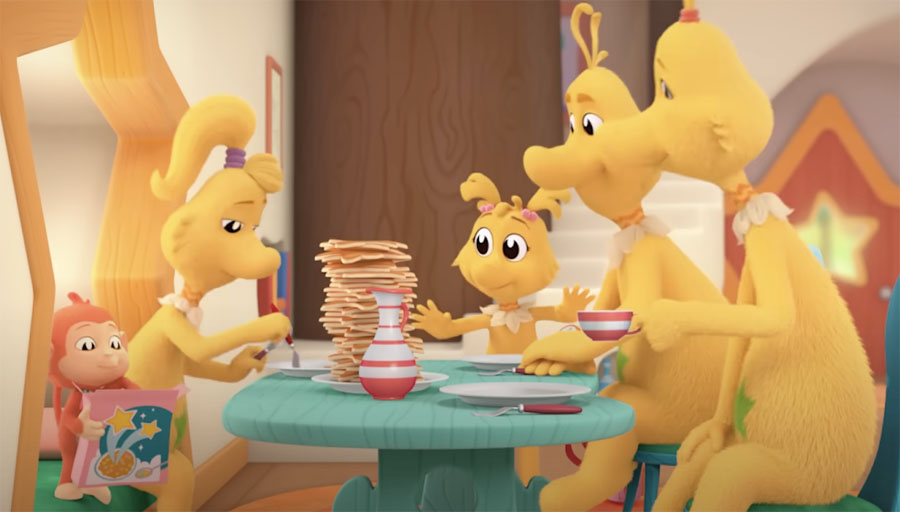
DF: The process was different again because we’re translating a one-time story and then making it much longer. A different way of thinking about it. This special is near and dear to my heart. I grew up with the original story. Even though ours is updated and different… In the book, there’s plain belly Sneetches and star belly Sneetches. We have star belly and Moon belly…. Our story focuses around two girls who are different types of Sneetches, but they meet and teach their larger communities that differences can be celebrated and accepted. So I think the message is very much the same, even though the story is slightly different.
JM: Cool. Looking forward to that. Do you wanna do something like this again? Do you wanna take on three more Dr. Seuss adaptations at the same time?
DF: (laughs) You know, I love working on multiple projects at the same time. I think as a writer and just working on development projects, you can get really stuck, and it’s helpful to be able to turn your attention somewhere else and then come back and have something feel fresh. So I actually do really love working on multiple things at the same time. If anybody wanted me to do Seuss again, I would do it in a heartbeat.