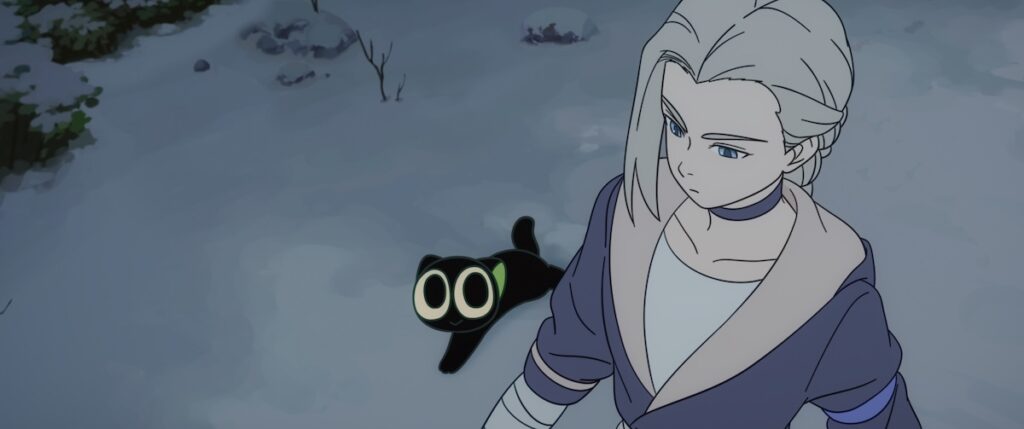
Mickey Mouse is an cartoon character co-created in 1928 by Walt Disney and Ub Iwerks.










Get ready for the start of 40 new wild adventures on The Wonderfully Weird World of Gumball, from executive producers Ben Bocquelet, Erik Fountain and Matt Layzell. It premieres next Monday July 28th on Hulu. (This Animation Scoop Q&A was edited for length and clarity.)
Jackson Murphy: Ben, it’s been about six years since the end of season six of “Gumball”. What excited you the most about getting to do new episodes that are so much fun?
Ben Bocquelet: I mean, having a job for starters was quite exciting. But also it’s very familiar and comfortable territory for me. So I just felt like putting on old slippers or something.
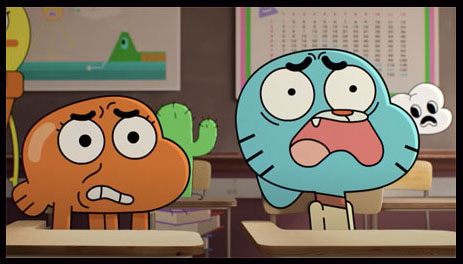
JM: And Erik, you tackle a lot of contemporary topics like health food and A.I. …with comedic commentary, and when that is done well, it’s very effective. So congrats on pulling that off. How does it feel making sure you incorporate comedic commentary into what you do?

JM: You all do a great job. And Matt, how do you decide at the beginning of this season which topics you wanna tackle? Is there a big board with tons of ideas? How do you throw ’em all out there?
Matt Layzell: Yeah, like you said, we start off by just throwing a lot of spaghetti at the wall and seeing what sticks… what themes, what stories excite us. Sometimes a story will come from a wish to dig into a certain character a bit deeper. Oftentimes the stories are coming from a personal place, personal experiences, things we went through in high school when we were younger… embarrassing situations. I think those are the best stories — the ones kind of rooted in some kind of reality or relatable place.
JM: Ben, there’s an episode about distance and separating the siblings, and as I’m watching it, I’m going, “This is legit. This is real. You don’t wanna be away from those you care about the most.” And you tackle that in very funny ways, but in very honest ways as well.

JM: And Ben, one of the most amazing things I think about the impact of “Gumball” over the years is how you blend the multiple forms of animation. What do you love the most about the multimedia aspect, visually, of the show?
BB: It suits what kind of stories and what kind of jokes we wanna make. It’s basically designed to be a big sandbox with all sorts of toys that you can use, and you can integrate other toys because it’s such a mess visually in the first place that it doesn’t look out of place when you bring something new into it. I think it’s a good way for the show to keep evolving as well visually.
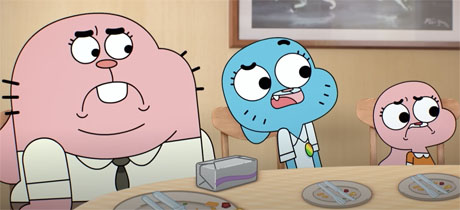
JM: Erik, how did it feel the first time you saw live-action even be incorporated into some moments and knowing when to put live-action in, in the best possible ways?
EF: The answer is sparingly ’cause it’s surprisingly the most difficult because we’re working in animation. So that’s what we know how to do, and the live-action stuff is outside of our wheelhouse. But coming into this a huge fan of the show and having worked on a lot of productions and knowing the insane limitations just of getting something made and delivered on time. ‘How does a show like “Gumball” get made?’ So seeing how the sausage is made, getting to peek behind the curtain, has been really fun.

ML: In terms of freedom, I definitely think Ben’s created that sandbox where you can tell a vast amount of stories. Inherent in “Gumball”‘s DNA is this kind of punk rock spirit trying to push boundaries, trying to explore things that other shows haven’t explored. So we always felt super supported by Ben and the rest of production staff to kind of push things and go for it and try new weird, interesting ideas. So in terms of working on the show, I felt a lot of freedom. And then I think maybe inherently in the show itself, there’s that sense of freedom or vastness of that universe.
JM: Ben, are there similarities between the relationships that you have with these characters and the relationships you’ve found the fans and the audiences have with these characters?
BB: Possibly. The Waterson family is loosely based off of mine. My mom’s called Nicole, my dad’s called Richard, my sister, who’s the clever one in the family, is called Anais. And I think that is what makes it relatable for others because I just dig into all those shameful stories, and I share it with the rest of the world. (laughs) I think people find a connection to that because it’s stuff that happens to people every day.
JM: And now we’re in a streaming age. This show is on Hulu and there’s a lot of technology involved. Erik, [the] modern day sensibilities of a storyline like [in “The Assistant” episode] and having this be on a streamer this time around… does a lot of thought about that go into the process of crafting these episodes?
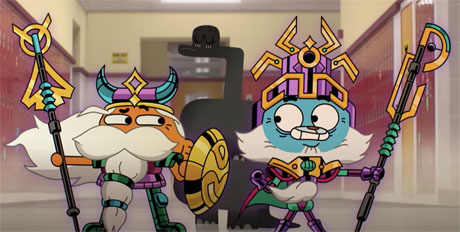
EF: Sure. Yeah. Cartoon characters are frozen in time. They’re children forever. They’re Peter Pan. But in order for them to be children and relate to children, they have to be experiencing things that children today are experiencing, not what they were experiencing six years ago, the last time we saw “Gumball”. So it has to comment on those things to keep them locked in the present time.
JM: Matt, in that “Assistant” episode, I think a big theme of it is trust. How does trust speak to you as you’re making this big show? 40 episodes are coming, which is incredible.
ML: Trust that all 40 of those episodes are gonna be great. (laughs) We were just so supported by the studio and the rest of our crew. There was a lot of trust within our team to kind of just do their best work. We were really lucky to have some great artists work with us, like Xav Clarke and Joe Sparrow, composer and art director. And finding those people that we could trust to just do their thing and knock it out the park each time was definitely helpful in making the show.
JM: So Ben, you don’t have to confirm anything, but we’re not gonna have to wait another six years if we want more adventures out of this gang, right? I’m sure you wanna maybe do more in a quicker amount of time than that.
BB: Yes. We’re all waiting to see how this season will do once it’s released. So it’s all about the audience. If they tune in, there will definitely be more, I believe.