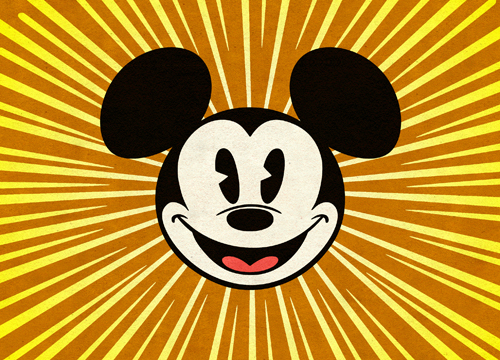
Mickey Mouse is an cartoon character co-created in 1928 by Walt Disney and Ub Iwerks.











Last weekend at the San Diego Comic-Con, Animation Scoop had the pleasure of moderating the Fleischer Studios’ panel at this year’s San Diego Comic-Con, but we also had the privilege of visiting the Betty Boop exhibit at the Comic-Con Museum. Aside from discussing the familiar joy of the iconic character’s image, we took an exciting and insightful dive into the cultural significance of the great Betty Boop.

Moderated by Jerry Beck, the panel featured the chairman and CEO of Fleischer Studios, Mark Fleischer (grandson of the legendary Max Fleischer) the Director of Marketing, Kristi Ling Spencer (co-author of Betty Boop’s Guide to a Bold and Balanced Life), the VP of Business Operations, Susan Wilking Horan (co-author of Betty Boop’s Guide to a Bold and Balanced Life), the Creative Director and Cartoonist, Frank Caruso, the VP of Digital Media and Historian, Jeni Mahoney, and the President of Global Icons, Bill McClinton.
Starting with a montage of some of the studio’s most celebrated characters (Betty Boop, Popeye, Superman, and more), the discussion covered the historical gravity and societal importance of Betty Boop. Noting that it was impossible to describe a century’s worth of information in only an hour’s session, the panel still covered some of the major milestones that the character of Betty Boop achieved, as well as what that name has come to represent with time.
Mark Fleischer reflected on the origins of the studio, explaining his “grandfather, Max, and his brother, David loved movies. They decided in around 1912 or 1913 to open a movie theater. Now, they couldn’t afford a building. So they opened an outdoor movie theater in Brownsville, New York. They opened the doors, and they came in hoards.” The discussion continued to highlight the Fleischer’s Studio’s exciting history, as well as the creation of Betty Boop.
“Betty was created in 1930- just ten years before was the Emancipation Act, which first gave women the right to begin voting. And women in this country were excited; they were filled with a sense of new freedoms and empowerment and independence. They had hope. And not only did Betty become a full-fledged flapper in her appearance (she embodied the style, the hair, the skirt, the pursed lips, etc.) but she also began to embody that spirit and energy that you were finding in women in this country at that time,” explained author Susan Wilking Horan.
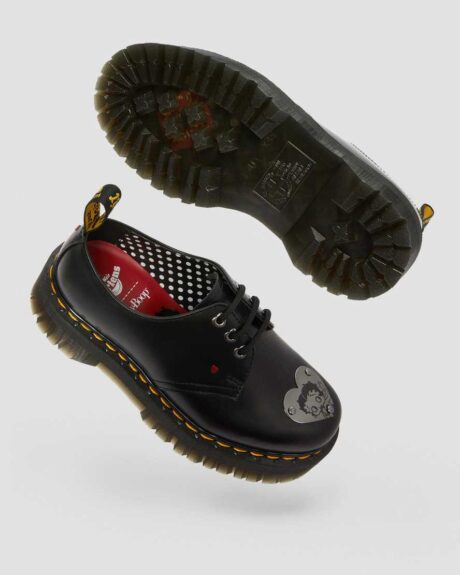
The panel continued to describe how Betty made history- not just in the world of cartoons, but how she further represented something greater. The character was an animal advocate, she ran for president, she could fly planes, and more. While the changing of the times affected the way Betty appeared on screen, she has remained a symbol throughout the years, transcending now into the digital space where she continues to bring people enjoyment. There was also a discussion on her cultural impact, where Bill McClinton talked about the ways in which Betty Boop works with brands, such as Dr. Martens and Marc Jacobs.
“I’ve been with Fleischer Studios for over twenty years. I’ve been in public relations and marketing for over 25 years, and I’ve worked with many celebrities during that time. But I have to say, Betty Boop is the one that people get the most excited about. When I call media and say ‘I’m calling about Betty Boop,’ they take my call,” said Kristi Ling Spencer. The character has organically amassed a large online following across all platforms, which truly highlights her ongoing relevance. Today, Betty aims to promote positivity, self-confidence, kindness, and more admirable themes.
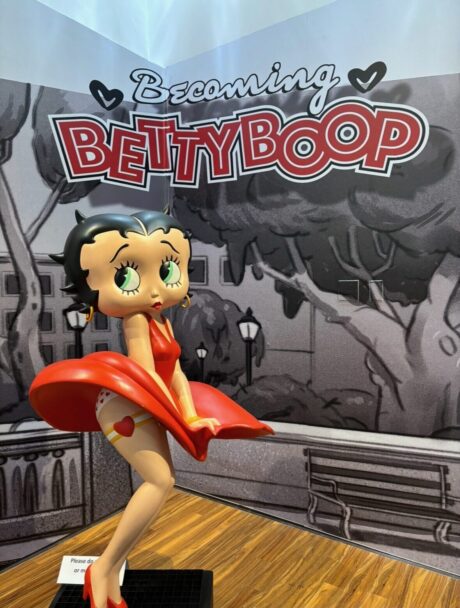
At the Comic-Con Museum, visitors can experience an ongoing exhibit that celebrates Betty Boop’s legacy. The space is historically informative while geared toward families, featuring photo opportunities and interactive activities. On Saturday, July 27th, there was also a book signing that took place at the exhibit. Mark Fleischer, Kristi Ling Spencer, Susan Wilking Horan, Frank Caruso, and Jeni Mahoney, were present.

The exhibit explores the rise of Betty Boop, from her early beginnings as a dog-like singer in Dizzy Dishes to her current status as a global fan favorite. In collaboration with Fleischer Studios, BECOMING BETTY BOOP is now on display at the Comic-Con Museum and will be open to the public into 2025.