Mickey Mouse is an cartoon character co-created in 1928 by Walt Disney and Ub Iwerks.











Something unexpected happened in movie theaters during December of 1996. The latest big-budget family film or potential Oscar contender, prevalent during this season, were pushed aside in favor of a pair of famous animated, teenage lazy slackers, who spent the majority of their time on their couch, watching TV, tossing out the phrases: “Cool!” and “Sucks!”
Beavis and Butt-Head Do America, a big-budget feature film version of MTV’s hit animated series, debuted in theaters twenty-five years ago this month on December 20, 1996. The film would generate $63.1 million in its opening weekend, becoming (at the time) the biggest December box-office opening in history.
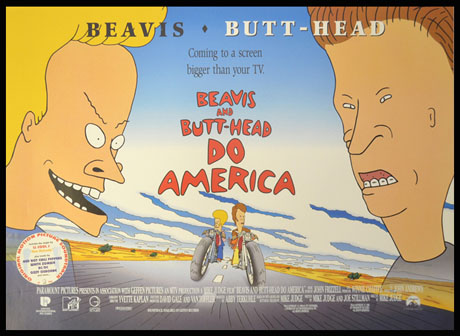
The two characters of Beavis and Butt-Head and their self-named series were wildly popular, one of the most iconic shows, animated or otherwise, of the ’90s.
In a 1996 interview, Beavis and Butt-Head creator Mike Judge talked about how he was surprised by the popularity of his creation but didn’t let it cloud his focus on the show or the movie. “I try not to think about it too much,” he said. “I’ve always tried to go for the belly-laughs stuff, just following my instincts and never questioning them.”
Beavis and Butt-Head debuted in 1991, when Judge made animated short subjects with an old movie camera. These featured two wild-looking teenage characters, one blond, and bug-eyed, the other, a dimwit, saddled with braces. The looks for the two characters came to Judge while trying to draw a caricature of a high school classmate.
The characters themselves actually made their debut in an independent short, Frog Baseball, part of 1992’s “Sick and Twisted Festival of Animation.” Judge said he saw a potential audience connection to the characters even while this first film was in production, “I remember a girl at the film lab saying, ‘They’re cute.’ And I thought, ‘Really?! These are ugly, obnoxious guys, batting around a frog and acting like idiots.'”
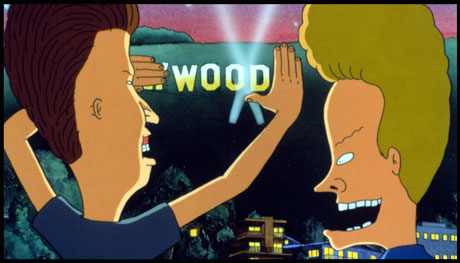
In 1993, Beavis and Butt-Head became part of MTV’s popular show Liquid Television, which featured cutting-edge animation and filmmaking. The Beavis and Butt-Head serieswas a huge hit that ran for seven seasons. Their images and catchphrases were everywhere during the decade, from T-shirts to comics to video games. They were solidly part of the zeitgeist.
Beavis and Butt-Head were not without controversy. A 1993 episode is said to have inspired a young Ohio boy to set fire to his house. After that, the show became the target of many groups criticizing violence on television. In 1996, Judge defended the show, saying, “I still maintain that they’re not mean-spirited. It’s all very innocent. They may be doing awful things, but it’s motivated out of just screwing around and not knowing any better.”
Despite this controversy, Beavis and Butt-Head remained so popular that they eventually inspired the big-screen, full-length animated feature Beavis and Butt-Head Do America.
“I was really into it,” admitted Judge when the idea of a feature film first surfaced. “It wasn’t like I was going around saying, ‘This must be a movie!’ But when they called, I was like, ‘Oh yeah. You bet ya.'”
In Beavis and Butt-Head Do America, the two titular characters are forced to leave their couch when their TV is stolen. They set out in search of this most prized possession and run into a sleazy hood named Muddy, who mistakes the teenagers for hitmen he’s hired to kill his ex-wife. The boys are then off to Vegas, where events continue to snowball, with them on a cross-country trip with Muddy, his ex-wife, and two ATF agents, all while being chased by a group of tourists.
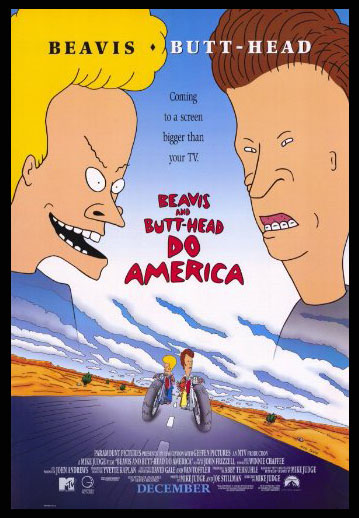
In addition to a successful box-office run, Beavis and Butt-Head Do America received praise from many critics. Stephen Holden in The New York Times wrote: “There is something (dare one use the word?) reassuring about these nincompoops, who are cruder and geekier than their most loutish fans.” And Siskel and Ebert awarded the film “Two Thumbs Up!”
Reflecting on Beavis and Butt-Head Do America just before it debuted, Judge said, “It’s funny to see these beautifully painted backgrounds and huge things happening and then cut to Beavis and Butt-Head going, ‘Huh-huh-huh.'”
There were rumors of a sequel for years, but they didn’t materialize. Although a new movie for the streaming service Paramount+ was announced recently, which provides fans tremendous hope.
Twenty-five years later, Beavis and Butt-Head Do America is still funny, even as it’s solidly attached to a time and place in our pop culture. Now, a new generation can discover it, ironically, from the comfort of their own couch.