Mickey Mouse is an cartoon character co-created in 1928 by Walt Disney and Ub Iwerks.











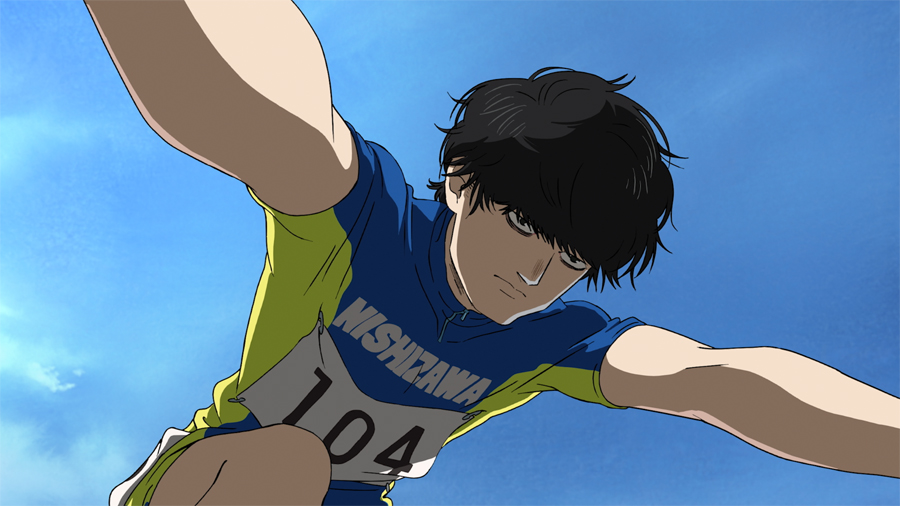
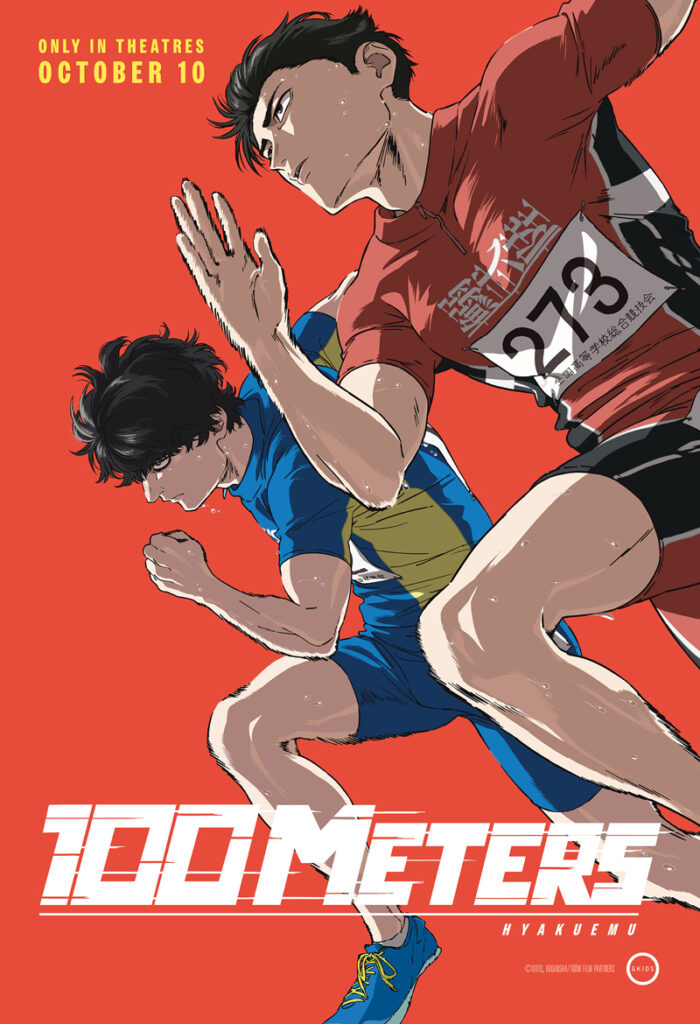
For director Kenji Iwaisawa, 100 Meters (GKids, opening in select theaters October 10 and going wider October 12-14) provided the perfect opportunity to advance his skillful use of rotoscope in concert with 2D character animation and hyper-real 3D backgrounds, courtesy of Japanese studio Rock ‘n’ Roll Mountain.
Adapted from the manga series by Uoto, 100 Meters brilliantly achieves the naturalistic movement and adrenaline rush that goes into running the short distance race. The story focuses on the friendship between gifted runner Togashi and struggling transfer student Komiya in grade school, when Togashi motivates Komiya to train harder, and then later on during their professional careers when Togashi struggles to improve and Komiya becomes a formidable rival.
The appeal for Iwaisawa, who previously honed his rotoscope method for On-Gaku: Our Sound, was to explore the obsession to run as a life-defining metaphor. “First of all, I wanted to express the idea of running as an existential study of this very talented young man,” he said via a translator. “Yes, it’s it’s a sport, but it’s really about having a passion toward something. And I think that is something that everyone experiences. So then, I think it really resonates with the audience. And not just kids, but also young people. I wanted to lead as an example to push toward a goal.”
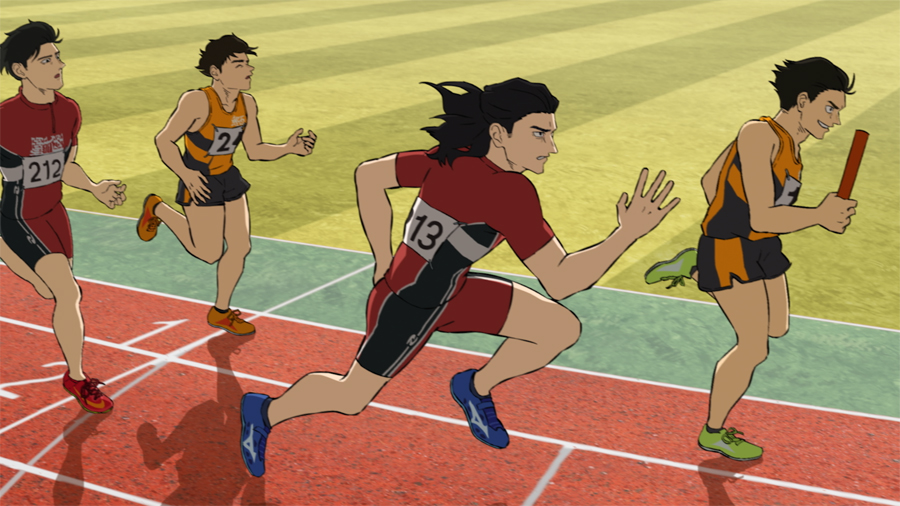
The contrast between Togashi, who effortly wins every race in grade school, and Komiya, who painfully runs to escape his social awkwardness, was particularly fascinating to the director. “Togashi, who was a born genius for running when he was a kid, was a character that could overcome that kind of pressure [to win].” added Iwaisawa.
“And Komiya’s character was not good at running, but by meeting each other, the two of them were caught up in each other’s speed,” he continued. “But Togashi started to feel the pressure and it was really hard on him to be at the top. I really wanted to depict that. And Komiya, after he got good at running, really got caught up in the records, beating his time, beating another person’s time. They have different idealogies on what [running] means to them.”
Working with the talented animation team at Rock ‘n’ Roll Mountain on a larger budget was a new experience for Iwaisawa. He worked alongside character designer and animation director Keisuke Kojima, art director Keikankun Yamaguchi, and producers Yusuke Terada, Yuki Katayama and Akane Taketsugu. The nature of the immersive running action allowed the director to achieve a whole new level of visual artistry and excitement.
But he could only achieve the physical realism of running combined with the subjective experience of being in the zone with the use of rotoscope. Each race had its own particular animation style. They captured the races in live action; then the animators translated that into 3D models and embellished with graphic flourishes. The blocky faces of the runners became stylized and stretched because of the intensity of the G-force, and the line work emphasized the nearly 10-seconds of pressure.
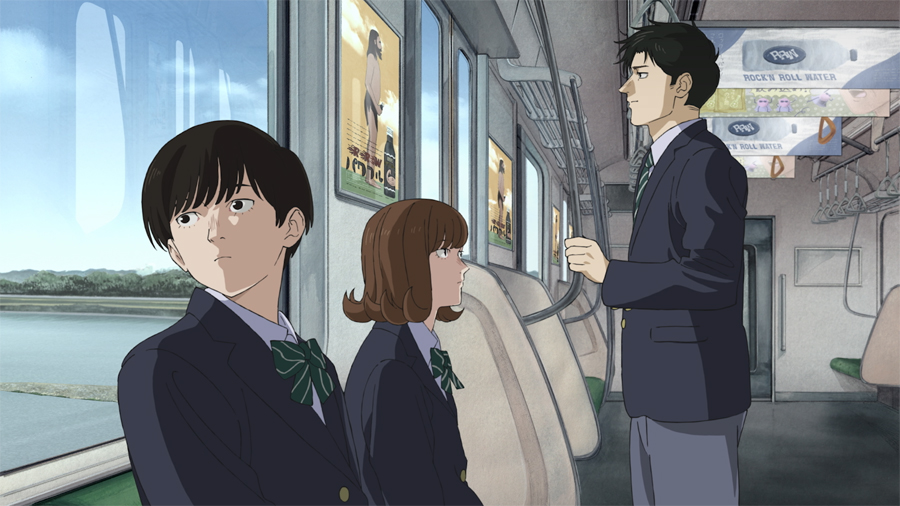
In addition, the camerawork was very dynamic and the exqusite 3D backgrounds really popped. “I think, for me, rotoscoping is really a necessary method to animate…to create a world that the audience could get deeply involved in,” Iwaisawa explained. “In terms of the facial expressions, I tried to put in a lot of emotion. Because it’s a big play, I tried to make the actors play their roles in a big way. But it’s really hard for using rotoscope to depict all that. So I made a conscious effort to have the animators really exaggerate on their faces. We used more normal animation styles, so it’s really a blend of those two.”
Yet the workflow was challenging to the team at Rock ‘n’ Roll Mountain because they were unaccutomed to rotoscoping. “Because rotoscoping is not that common or shared in the Japanese animation industry, I was really thinking about how would I create the workflow because a lot of animators don’t know the process,” said Iwaisawa. “I really had to rely on the character designer, Mr. Kojima. He worked in commercial animation, but he was also really interested in the process that I did with rotoscoping, so he actually created the workflow on how to adjust to give instructions to the animators.But I wanted to make sure that his own unique style could blend well.”
One of the standouts is a nearly four-minute continuous shot of the runners preparing and competing in the rain. “That’s the scene I wanted to show the most,” the director offered. “The characters, the camera work, the backgrounds. It was a lot of work. I did a lot of team work. The colors of the backgrounds were all done by hand. I wanted the scenes to blend in well, there we so many components. We even had art students help out with that sequence. So I’m really proud of that.”